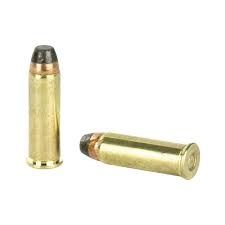
A police officer serving with Gyeonggi province has come under formal investigation for attempting to board an aircraft while carrying live ammunition, marking a rare breach of South Korea's tightly controlled firearms protocols. Jeju Island police announced the probe on July 3, after the man in his 30s was discovered with two rounds during a boarding procedure at Jeju Airport on June 28 at approximately 8.40pm local time. The officer, assigned to Jeju Seobu Police Station, was preparing to fly to Gimpo Airport when airport security detected the ammunition in his possession.
What distinguishes this incident is that the officer was not carrying an actual firearm—only the ammunition itself. The National Forensic Service subsequently confirmed that the bullets were chambered for a .38-calibre pistol, the standard-issue sidearm distributed to the vast majority of South Korean law enforcement officers. This detail is significant because it suggests the rounds were not random contraband but rather equipment potentially associated with his official duties, raising questions about how they came to be in his possession away from secure facilities.
The investigation centres on the officer's alleged violation of the Act governing the safety management of guns, swords and explosives, one of several rigid statutes that form the backbone of South Korea's approach to weapons control. The inquiry specifically focuses on understanding the circumstances that led to the ammunition being transported to the airport in the first place. The officer's account to investigators indicated that he had received the bullets from a former colleague who had recently retired from the force, though authorities are examining whether this explanation adequately accounts for the security lapse.
The timeline of events suggests potential confusion or negligence in asset management. Airport officials at Gimpo conducted a standard security screening when the officer boarded a flight to Jeju on June 26, and nothing was discovered during that earlier journey. Two days later, during the return leg from Jeju, airport security flagged the ammunition before he could board the aircraft bound for Gimpo. This discrepancy indicates that the officer either acquired or improperly declared the rounds between the two flights, underscoring gaps in either his personal recordkeeping or institutional oversight.
South Korea's firearms regulations rank among the world's most restrictive and are enforced with particular rigour given the country's historical experience with security concerns on the peninsula. Law enforcement personnel are explicitly required to store all personally held weapons and ammunition within the secure armoury facilities maintained at their respective police stations. This mandate exists to prevent unauthorised access, loss, or misuse of government-issue weapons and their components. The case therefore represents not merely an individual lapse but a potential systemic vulnerability in how these critical safety protocols are monitored and enforced across the police establishment.
For Malaysian observers, this incident offers insight into how advanced democracies in the region approach police accountability and weapons management. South Korea's rapid response—initiating a formal investigation within days of the incident's discovery—demonstrates institutional capacity and transparency in examining official misconduct. The involvement of the National Forensic Service in identifying the ammunition type reflects a multidisciplinary approach to investigation that many Southeast Asian police forces are increasingly adopting.
The incident also illuminates the tension between operational necessity and security protocol. Police officers require access to firearms to discharge their duties, yet maintaining control over these instruments demands systems that are simultaneously practical and impenetrable. The retired officer's decision to transfer ammunition to an active-duty colleague, if accurately reported, suggests potential informal networks within the police service that operate outside formal channels—a phenomenon observed in law enforcement worldwide and one that regulations like South Korea's are designed to prevent.
Retirement transitions in police forces present particular vulnerability points. When officers leave service, their equipment and issued materials must be carefully accounted for and secured. The fact that a recently retired colleague was involved in transferring the ammunition raises questions about exit procedures, asset verification protocols, and whether the retiring officer retained unauthorised possession of ammunition after leaving the force. These procedural gaps merit examination not only in South Korea but across regional law enforcement agencies managing similar transitions.
The investigation reflects broader questions about how professional standards are maintained within police hierarchies. An officer voluntarily attempting to carry ammunition aboard a commercial aircraft—whether through deliberate intent or careless oversight—demonstrates either a misunderstanding of regulations or a troubling disregard for them. Either scenario warrants institutional response to prevent recurrence. South Korea's investigation signals that even mid-ranking officers face consequences for such breaches, a message particularly important in hierarchical organisations where deference to authority can sometimes obscure accountability.
For regional security frameworks, this case serves as a reminder that civilised, well-organised democracies remain vulnerable to human error and procedural lapses involving weapons. No system, however stringent, eliminates risk entirely. What distinguishes effective regimes is their capacity to detect violations quickly and respond transparently. As Southeast Asian nations continue strengthening their own weapons management protocols and police accountability mechanisms, South Korea's response to this incident provides a useful benchmark for institutional responsiveness and commitment to upholding safety standards across the entire force.

