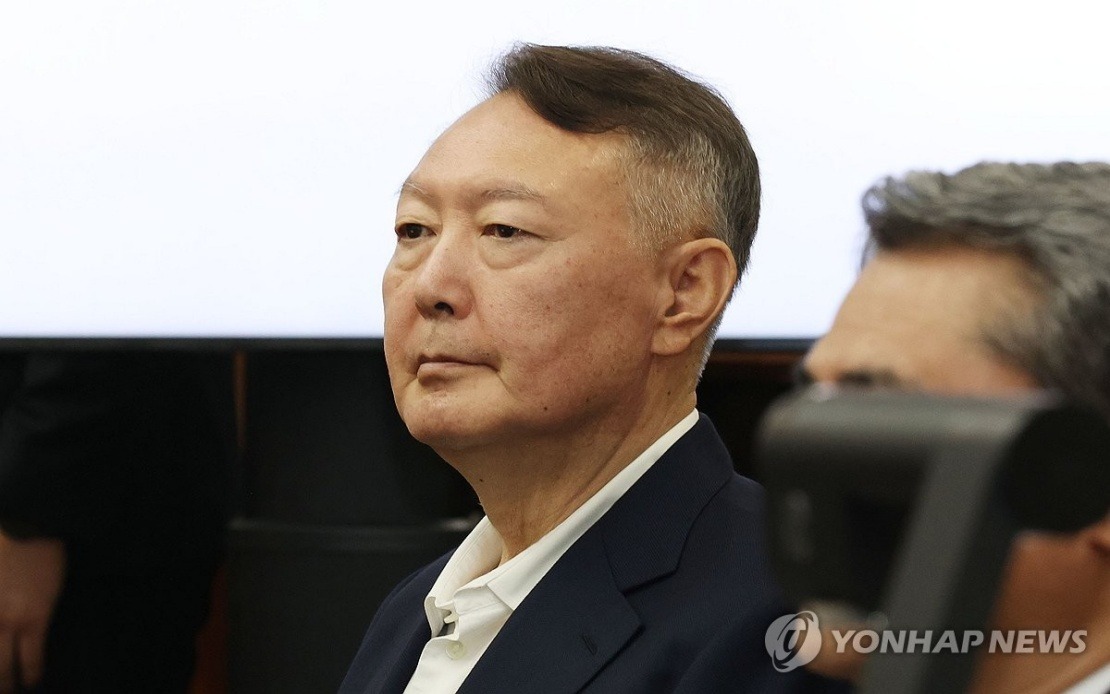
Former South Korean President Yoon Suk Yeol faces significant legal and financial consequences following a Seoul court's conviction on election law violations, marking another blow to the politically embattled leader already entangled in multiple criminal proceedings. The Seoul Central District Court's verdict on Monday finds Yoon culpable of making false public statements during his campaign for the March 2022 presidential election, resulting in an 18-month prison sentence that has been suspended for three years. Beyond the suspended sentence, the ruling carries serious implications for Yoon's People Power Party, which stands to lose nearly 40 billion won (approximately US$27.3 million) in state-reimbursed campaign expenditures if the verdict becomes final through the appellate process.
The court's decision centres on Yoon's misrepresentations made during two separate public appearances in late 2021 and early 2022. Special counsel Min Joong-ki's investigation determined that Yoon falsely denied introducing a lawyer to a former tax official during a December 2021 press conference, and similarly made untrue claims in a January 2022 interview regarding his connection to shaman Jeon Seong-bae and the circumstances of their meeting. The prosecution's case demonstrated that Yoon had indeed facilitated the introduction between the lawyer and tax official, and that he had encountered Jeon through his wife Kim Keon Hee's introduction, contrary to his public statements. The judicial panel accepted the special counsel's factual arguments on both counts, underscoring what it characterised as the severe nature of Yoon's conduct.
The implications for Yoon's political party extend beyond the convicted individual himself. Under South Korea's election law framework, political parties receive reimbursement for presidential campaign expenses provided their candidate secures a minimum 15 per cent of the popular vote. However, this public funding becomes subject to return if the candidate subsequently receives a finalised criminal penalty—either a fine of at least 1 million won or a prison sentence—for violations of election regulations. With Yoon's conviction now on record, albeit still subject to appeal, the People Power Party faces the prospect of repaying the entire 39.7 billion won it received following Yoon's 2022 election victory. This financial exposure represents a substantial burden for the ruling party, particularly if it must divest campaign resources for purposes unrelated to political messaging or organisation.
Yoon's legal team has already signalled its intention to contest the verdict through the appellate system, asserting that multiple judicial errors underpin the court's findings. This appeal marks the beginning of a lengthy review process that may ultimately reach South Korea's Supreme Court. Under the special law governing Min Joong-ki's investigative mandate, cases must conclude within defined timeframes—six months at the trial stage and three months each at appellate and Supreme Court levels. If the case ascends to the nation's highest court, observers anticipate a final ruling by January of the following year, providing months of continued legal uncertainty for both Yoon and his party.
This election law conviction represents merely one chapter in Yoon's increasingly complicated legal predicament. The former president currently stands trial across multiple cases stemming from his controversial attempt to impose martial law in December 2024, an action interpreted by prosecutors and judges alike as an insurrectional movement against constitutional governance. In February, Yoon received a life sentence after the first-instance trial concluded in another case related to his failed martial law declaration; that conviction is itself subject to ongoing appeals. The accumulation of criminal charges and convictions paints a portrait of a former leader whose presidency concluded and whose post-presidential period has been consumed by judicial proceedings rather than the typically quieter trajectory enjoyed by some former heads of state in democratic societies.
The severity with which the Seoul court characterised Yoon's conduct offers insight into how South Korean jurisprudence views election-related falsehoods. The bench stated explicitly that the nature of the offence constituted grave misconduct precisely because the false information had been disseminated regarding matters that commanded substantial voter attention and concern. This framing reflects a judicial philosophy that treats campaign-period deception with particular seriousness, viewing such misstatements not merely as personal dishonesty but as affronts to the electoral process and democratic decision-making. The court's language suggests an understanding that presidential elections warrant heightened protection from candidate misrepresentation, given the consequential nature of presidential authority within constitutional systems.
Special Counsel Min Joong-ki's prosecutorial team had originally sought a stiffer penalty, requesting a two-year prison term rather than the 18 months ultimately imposed. This gap between prosecution request and judicial outcome illustrates the court's exercise of discretion within the bounds of permissible sentencing ranges. The special counsel's investigative work, conducted under a statute imposing strict time limitations on inquiry and prosecution, successfully secured convictions on the substantive charges despite not achieving the maximum penalty its team advocated. The efficiency of this prosecutorial mechanism, designed to prevent indefinite investigations and ensure timely resolution, contrasts sharply with the lengthy post-trial appeals process that now awaits.
For observers across Southeast Asia and the broader Indo-Pacific region, Yoon's predicament offers instructive lessons about the vulnerability of political figures to legal challenge once they leave office, particularly when their administrative actions or campaign conduct attract scrutiny from successor governments. The South Korean case demonstrates how electoral laws, designed ostensibly to ensure fairness and transparency in campaign finance, can become vectors for post-electoral accountability. The financial penalties accompanying criminal convictions in the election context—through mandatory fund repayment—create compounding consequences beyond imprisonment or fines, extending institutional damage to political organisations themselves.
Yoon's position within South Korean politics remains anomalous, occupying a space between active political participation and legal incapacity. While suspended sentences typically allow individuals to remain free during the suspension period, provided no further offences occur, the continuous stream of additional criminal prosecutions complicates Yoon's practical ability to exercise political influence or leadership. The ruling party, meanwhile, navigates the delicate balance between maintaining loyalty to a founder of its political coalition and managing the institutional damage his legal troubles inflict upon the organisation's finances and public reputation.

