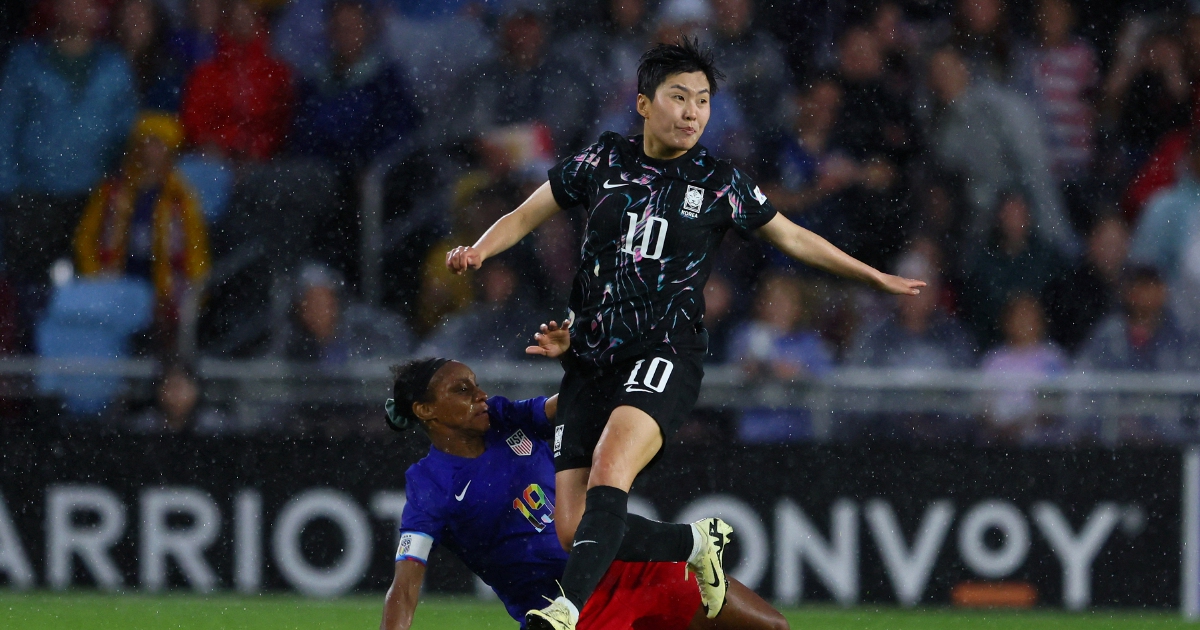
South Korea's women's football federation has launched a formal investigation into allegations involving a female referee who reportedly made insulting comments about former Chelsea midfielder Ji So-yun during a domestic league fixture, citing menstruation as the basis of her remark. The development, announced on Monday, underscores persistent challenges surrounding gender-based conduct and discrimination within professional sports, even among female officials and players.
Ji So-yun, a prominent figure in South Korean women's football who previously played for the English Premier League club Chelsea, found herself at the centre of the controversy during what was meant to be routine domestic competition. The nature of the alleged insult—invoking menstruation to demean or question a player's performance—strikes at broader conversations about how women athletes are treated and the extent to which biological realities are weaponised as tools of disrespect within sporting environments.
The federation's decision to investigate reflects growing scrutiny of conduct standards across South Asian sports governance. Rather than dismissing such incidents as isolated or trivial, officials appear to be recognising that comments linking physical performance to menstrual cycles perpetuate harmful stereotypes and undermine efforts to professionalise women's football. This is particularly significant given that the alleged perpetrator is herself female, raising uncomfortable questions about internalised gender bias within the sport.
Ji So-yun's stature in world football lends additional weight to the allegations. Her tenure at Chelsea, where she competed at elite levels of European football, positions her as a role model and international ambassador for Korean women's sport. An incident diminishing her on such grounds carries implications beyond the immediate match, affecting perceptions of how female athletes of achievement are valued and respected domestically.
For Southeast Asian nations watching this case unfold, South Korea's response carries instructive lessons. Women's football has expanded significantly across the region, yet systemic issues around player dignity, referee conduct, and enforcement of behavioural standards remain inconsistently addressed. Thailand, Vietnam, and Indonesia have all invested in developing women's leagues in recent years; how established federations handle misconduct sets important precedents.
The investigation also highlights the evolving role of female referees in professional sports. While expanding opportunities for women in officiating roles represents progress, it does not automatically guarantee gender-sensitive decision-making or respectful conduct. The incident suggests that implicit bias and gendered language can persist regardless of who occupies positions of authority, necessitating targeted training and accountability mechanisms.
Comments linking menstruation to athletic capability reflect pseudoscientific thinking that has been thoroughly debunked in sports medicine. Elite female athletes train and compete effectively across all phases of their cycle, though individual experiences vary. Using such arguments as the basis for insulting remarks demonstrates not only disrespect but also the spread of misinformation that damages the credibility and professionalism of women's football.
The federation's investigation will likely examine whether any formal disciplinary rules govern referee conduct, whether existing codes of conduct are adequately enforced, and what corrective measures or training might prevent similar incidents. Transparency in the investigative process will be crucial; Korean fans and the international women's football community will be watching how seriously the organisation treats findings.
This moment arrives as women's football globally experiences unprecedented commercial and cultural growth. Sponsorship deals, television rights, and attendance figures have all increased substantially in developed markets. However, cultural attitudes within sport sometimes lag behind institutional investment. The referee incident suggests that even as infrastructure and resources expand, organisational culture and individual behaviour must be actively cultivated and monitored.
For Malaysian readers, the case resonates within debates about how domestic sports bodies manage professional standards and protect athlete welfare. As Malaysian women's football develops through efforts like the Super League expansion, establishing clear behavioural expectations for all participants—players, coaches, referees, and administrators—becomes increasingly important. The South Korean federation's willingness to investigate sends a signal that such matters merit serious institutional attention.
The investigation outcome may establish whether the federation intends to strengthen its conduct policies, implement mandatory training programmes, or impose sanctions on the referee involved. Such measures could influence how other Asian football federations approach similar incidents, potentially elevating expectations for respectful, professional environments across women's football in the region.

