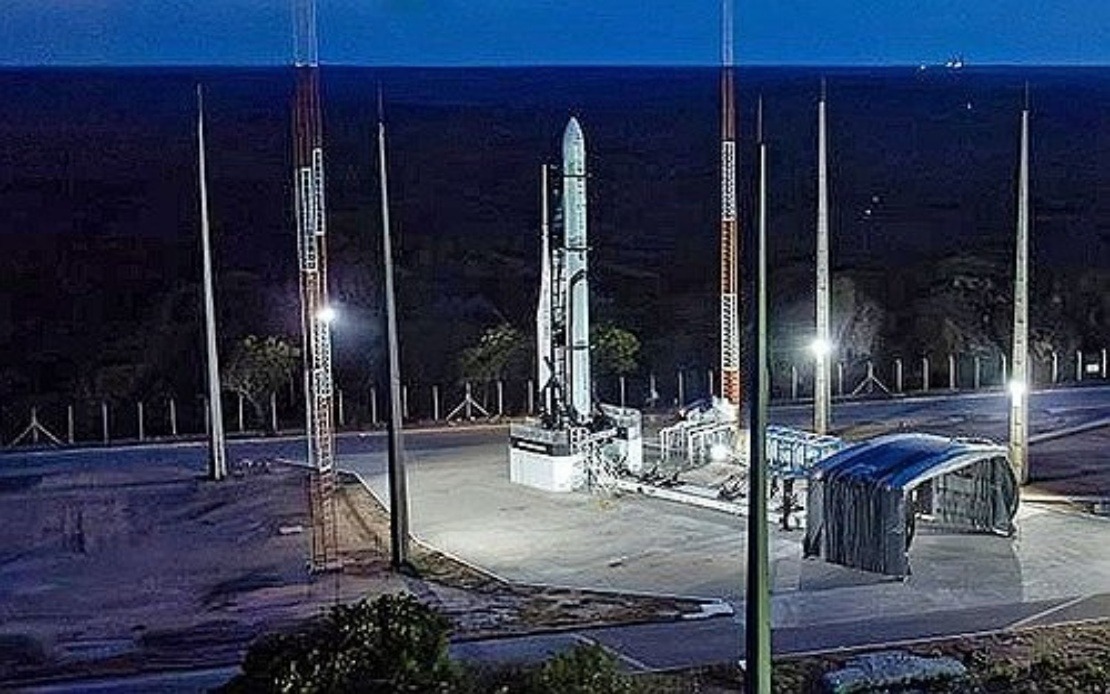
South Korea's defence ministry announced on Tuesday that it was postponing the launch of its Mir solid-fuel space rocket, abandoning plans for what would have been a historic test of the nation's fully assembled four-stage launch system. The rocket was scheduled to lift off at 2 pm from a sea-based platform positioned off the coast of Jeju Island in the country's south, marking a significant milestone in Seoul's effort to develop indigenous space capabilities. Authorities revealed that unspecified technical problems emerged during final pre-launch verification procedures, necessitating the decision to reschedule the test. The ministry provided no specific details about which systems or components triggered the safety review, stating only that a "set of issues" had been identified that warranted postponement.
This delay represents a setback for South Korea's broader military space ambitions, though officials indicated the rescheduled date would be announced in due course. The Mir programme represents a critical pillar of Seoul's strategic independence in space operations, allowing the country to reduce its dependence on allied nations for surveillance and reconnaissance capabilities. The rocket's design philosophy emphasises simplicity and operational readiness: solid-propellant systems are structurally less complex than their liquid-fuelled equivalents and can remain stored indefinitely without degradation, enabling rapid deployment when national security circumstances demand swift launch windows. This characteristic proves particularly valuable for a nation managing constant tensions with a hostile northern neighbour.
South Korea has been engineering this solid-fuel launch vehicle continuously since 2021, conducting incremental validation tests throughout 2022 and 2023 that evaluated three-stage configurations under various operational conditions. Those earlier trials provided the technical foundation necessary for progressing to the full four-stage assembly planned for Tuesday's launch. The vehicle is engineered specifically to deliver compact observation and surveillance satellites into low-Earth orbits below 500 kilometres altitude, enabling persistent monitoring capabilities essential for national defence and strategic early-warning systems. The solid-fuel approach offers Seoul a distinct advantage: whereas liquid-fuelled rockets require complex ground infrastructure and meticulous pre-launch preparation protocols, solid systems can be maintained in operational readiness with minimal ongoing servicing requirements.
The Mir initiative forms one component of South Korea's dual-track approach to achieving comprehensive satellite reconnaissance capabilities. Parallel to this domestic rocket development, the military has pursued an aggressive satellite constellation programme, successfully deploying five reconnaissance platforms into orbit aboard SpaceX Falcon 9 rockets, with the most recent launches occurring through November of the previous year. These five larger military intelligence satellites provide the backbone of current South Korean surveillance capacity, delivering high-resolution imagery to national command authorities. However, Seoul's strategic planners recognise that this reliance on American launch services and potentially American-controlled satellite infrastructure introduces vulnerabilities inconsistent with genuine strategic autonomy. The larger intelligence satellites, while capable, cannot alone provide the persistent, real-time monitoring coverage that a distributed network of smaller sensors would enable.
Under the Mir programme's current framework, South Korea intends to populate low-Earth orbit with as many as 60 compact spy satellites by 2030, creating a tightly interwoven surveillance network that would generate continuous coverage of targets of strategic interest. This constellation approach would fundamentally transform South Korean intelligence capabilities, enabling persistent observation of developments across the Korean Peninsula and surrounding regions without gaps between satellite overpasses. The constellation strategy mirrors patterns adopted by other technologically advanced nations seeking to eliminate surveillance blindspots. By distributing observation responsibilities across numerous smaller platforms rather than concentrating them in a handful of large satellites, Seoul would increase system resilience—the loss or degradation of individual units would not create significant coverage gaps. The planned 60-satellite constellation represents an ambitious undertaking that requires not only successful rocket development but also sustained manufacturing capacity for compact satellite platforms.
The postponement underscores the technical complexity inherent in developing an entirely domestic launch capability, particularly one utilising solid-propellant technology at scale. While solid rockets offer operational advantages in terms of rapid deployment and long-term storage stability, they demand exacting engineering standards to ensure structural integrity and reliable ignition sequences. Any anomalies detected during final verification procedures justify cautious postponement rather than proceeding with launch when unresolved technical questions remain. South Korea's defence establishment clearly prioritises mission success and vehicle reliability over schedule adherence—a prudent stance that recognises the reputational and strategic costs associated with launch failures. A catastrophic failure of the Mir vehicle would not only set back the programme substantially but could undermine confidence in South Korean space capabilities among allied nations and domestic stakeholders.
From a regional perspective, South Korea's progression toward indigenous space launch capabilities carries broader implications for East Asian security dynamics and the technology landscape across Southeast Asia. Seoul's determination to develop autonomous satellite reconnaissance represents part of a wider regional trend wherein technologically capable nations increasingly seek independence from external launch providers. Japan has maintained indigenous rocket capabilities for decades, while China developed comprehensive space infrastructure spanning launch vehicles, satellite manufacturing, and ground control networks. South Korea's efforts to join this exclusive club of space-capable nations reflect not merely technological ambition but strategic necessity in an environment where satellite intelligence provides foundational input to military planning and national security decision-making. The Mir programme's eventual success would validate a development pathway that other regional actors might emulate.
For Malaysia and other Southeast Asian nations, South Korea's space ambitions carry significance beyond Korean Peninsula security considerations. A more comprehensive South Korean satellite constellation would generate intelligence that Seoul might selectively share with regional partners and allies, potentially enhancing collective situational awareness in one of the world's busiest maritime regions. Conversely, South Korea's success in developing domestic launch capabilities contributes to overall regional technological sophistication and the emergence of multiple space-capable actors with independent reconnaissance systems. This proliferation of space capabilities—while creating some security challenges—also distributes surveillance and reconnaissance responsibilities across multiple national actors rather than concentrating them in the hands of a single dominant power or external ally. For maritime nations concerned about freedom of navigation and strategic autonomy, the availability of diverse satellite intelligence sources provides valuable counterweight to potential monopolistic control of critical information.
The delayed Mir launch also reflects broader patterns in modern space development wherein uncrewed space systems have become increasingly sophisticated and demanding. Unlike the space race era when nations launched vehicles with minimal verification protocols, contemporary space programmes operate under stringent safety and reliability requirements. Government space agencies and defence establishments recognise that launch failures generate substantial political consequences, budgetary damage, and scientific setbacks. The investment required to develop solid-fuel rockets and associated ground infrastructure argues strongly for maximising success probability through thorough pre-launch verification. South Korea's willingness to postpone despite the presumed domestic and strategic pressure to proceed demonstrates institutional maturity and engineering discipline essential for establishing a credible, sustained space programme.
As South Korea awaits the announcement of a rescheduled launch date, the programme remains fundamentally on track toward achieving its strategic objective of comprehensive indigenous space capabilities. The technical foundation has been demonstrated through earlier three-stage test flights, and the issues detected during final preparations appear resolvable through engineering review and potential component replacement or configuration adjustment. The ultimate success of the Mir vehicle will represent a watershed moment for South Korean strategic autonomy, enabling the nation to maintain persistent surveillance of the Korean Peninsula and surrounding regions without depending on American launch services or potentially American-controlled satellite assets. This progression toward space independence positions Seoul among the select group of nations possessing fully autonomous space infrastructure, fundamentally transforming the strategic calculus affecting regional security dynamics and South Korea's capacity to respond independently to emerging threats.

