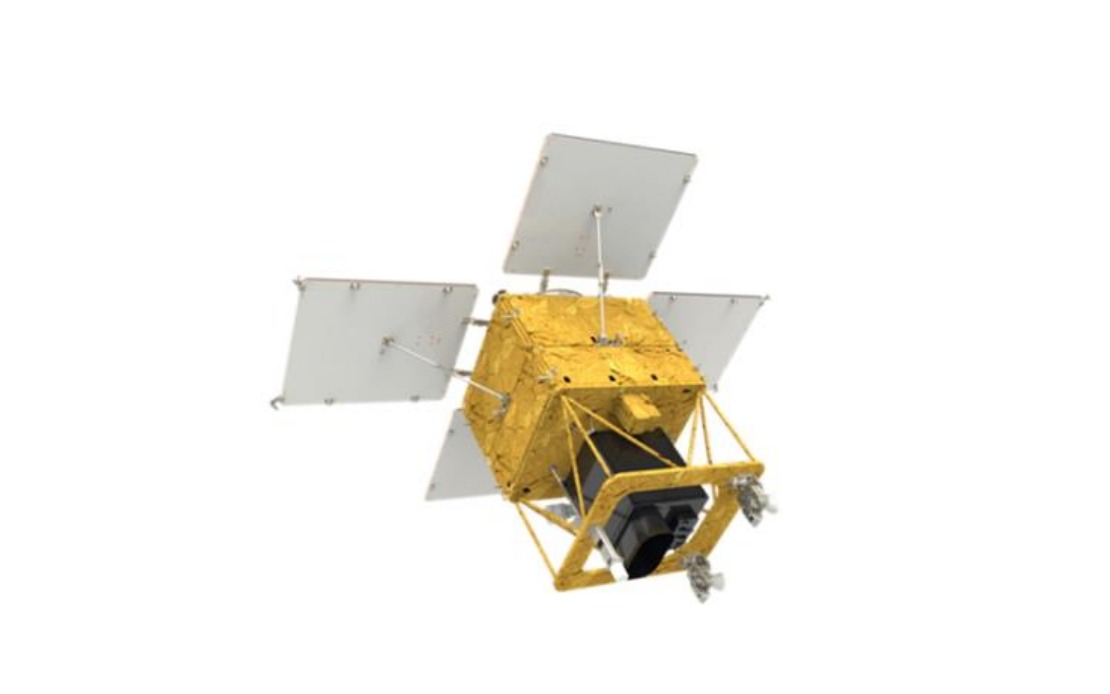
South Korea is preparing to launch its fourth medium-sized Earth observation satellite, marking another significant milestone in the country's expanding space capabilities. The Korea AeroSpace Administration (KASA) has scheduled the launch aboard a SpaceX Falcon 9 rocket from Vandenberg Space Force Base in California for Tuesday, with liftoff targeted at 4.10 pm Korea time. The 500-kilogramme satellite represents the latest addition to Seoul's growing constellation of indigenous Earth observation platforms, underscoring the nation's commitment to developing self-reliant space infrastructure.
The satellite has undergone rigorous preparation over the preceding month, with engineers completing comprehensive functional inspections and fuel injection procedures. All systems have been validated and the spacecraft now awaits its departure aboard the Falcon 9, which will carry the payload into orbit from the American West Coast facility. The use of commercial launch services demonstrates South Korea's pragmatic approach to space access, leveraging international partnerships while advancing domestic technological capabilities.
Once released from the launch vehicle approximately two hours and twenty-two minutes after liftoff, the satellite will establish its first communications link roughly thirty-one minutes later through the Svalbard ground station positioned in Norway. This relay point in the Arctic provides crucial connectivity for initial orbit verification and system checks during the critical early phases of deployment. The successful activation of ground communications will confirm that the satellite has achieved its intended trajectory and remains fully operational following the stress of launch.
Among the satellite's most notable features is a domestically developed observation camera system capable of imaging the entire Korean Peninsula with a three-day revisit cycle. This imaging capacity positions the satellite as a valuable tool for continuous monitoring of the peninsula's territory, enabling rapid response to emerging situations and maintaining sustained surveillance capabilities. The homegrown payload technology reflects Seoul's growing expertise in optical sensor development and represents a genuine advancement in Korean space industrial capabilities.
The Seoul government envisions expansive applications for this satellite across multiple sectors critical to national development and security. Agricultural monitoring will enable farmers and policymakers to track crop conditions, optimise resource allocation, and predict yields with greater precision than previously possible. Forest management and change detection represent another primary use case, allowing authorities to monitor deforestation, assess ecosystem health, and detect unauthorised logging activities across the peninsula. These environmental monitoring functions address longstanding concerns about sustainable resource management in the region.
Disaster response capabilities form a particularly important dimension of the satellite's operational profile. During emergencies such as floods, landslides, or typhoons, rapid access to high-resolution imagery can guide evacuation efforts, identify affected populations, and support rescue operations. The satellite's consistent three-day observation schedule ensures regular coverage that can reveal changes in disaster zones and help coordinate humanitarian response efforts. Climate change analysis represents an additional strategic priority, as the satellite will contribute to long-term environmental monitoring datasets essential for understanding regional climate patterns and supporting policy decisions related to carbon reduction and adaptation.
Once the satellite reaches its designated orbital altitude of approximately 888 kilometres, KASA will conduct an extended four-month commissioning phase. During this initial in-orbit operations period, engineers will thoroughly validate all systems, calibrate instruments, and optimise performance parameters. This methodical approach ensures that the satellite functions precisely as designed before transitioning to full operational status. Full-scale mission operations are anticipated to commence during the first half of next year, at which point the satellite will begin contributing actively to the systematic monitoring capabilities that Seoul has been building.
This launch represents part of a broader South Korean strategy to establish comprehensive Earth observation capabilities that are independent of foreign systems. By developing successive generations of medium-sized satellites, Seoul reduces reliance on international imagery providers and strengthens its strategic autonomy in space. The accumulating constellation of satellites also enables more frequent revisit rates and improved temporal resolution, providing decision-makers with more current and actionable information.
For Southeast Asian nations including Malaysia, the advancement of South Korean space technology carries regional implications. As Seoul deploys increasingly sophisticated Earth observation systems, the potential for regional cooperation and data-sharing arrangements expands. South Korea's demonstrated expertise in satellite development and launch operations positions it as a potential partner for countries seeking to enhance their own space capabilities. The success of this programme demonstrates that medium-sized Earth observation satellites represent an achievable and practical pathway for regional nations seeking to develop indigenous space infrastructure without pursuing full-scale programmes requiring substantially larger investments.

