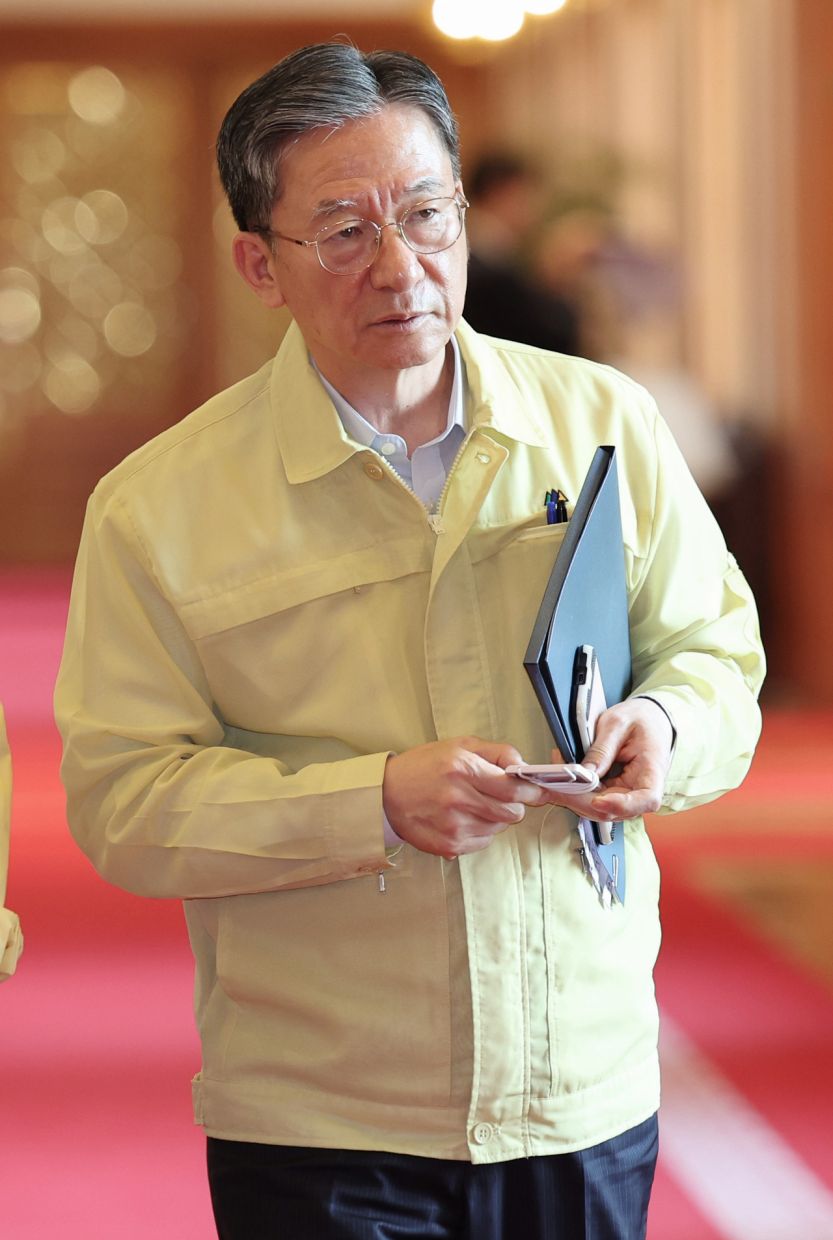
South Korea's Justice Minister Jung Sung-ho announced his resignation on Tuesday afternoon, marking the end of his tenure amid mounting tensions between the justice ministry and the ruling Democratic Party over the future scope of prosecutorial authority. The departure underscores deepening ideological differences within the administration regarding how Korea's criminal justice system should be restructured to prevent what lawmakers view as an unhealthy concentration of power within the prosecution.
Jung's decision to step down represents a significant moment in Seoul's ongoing debate about institutional checks and balances. The justice minister had consistently opposed the Democratic Party's legislative push to eliminate prosecutors' right to conduct supplementary investigations—a longstanding investigative tool that has become increasingly controversial. This fundamental disagreement on criminal justice reform placed Jung at odds with his own ruling coalition, making his continued tenure untenable.
The core dispute centres on prosecutorial independence and scope. Prosecutors in South Korea currently retain the authority to launch their own supplementary investigations when they believe police inquiries into a case lack sufficient depth or evidence. This power has allowed the prosecution to act as a backstop mechanism, ensuring thorough investigation before charging decisions. The Democratic Party, however, views this authority as problematic, arguing it creates dangerous overlap between investigative and prosecutorial functions that enables prosecutorial overreach and accumulation of unchecked power.
Under the revised Criminal Procedure Act scheduled to take effect on October 2, prosecutors will experience a significant curtailment of their investigative powers. Rather than conducting independent supplementary investigations, they will assume a more limited role focused on evaluating police investigation reports, determining whether sufficient grounds exist to press charges, and representing the state's case in court proceedings. This structural transformation reflects a broader regional and global trend toward limiting prosecutorial discretion and ensuring clearer separation of investigative and judicial authority.
The timing of Jung's departure proves symbolically significant. In his resignation statement, Jung cited personal health considerations as his primary reason for stepping down. However, he added a telling observation that proved his real concern: the establishment of Korea's reformed criminal justice system would benefit from "new leadership," signalling his belief that someone more aligned with the ruling party's vision should oversee the transition. This diplomatic phrasing masked fundamental disagreement about the wisdom of the reforms themselves.
Jung's resignation carries implications extending beyond Seoul's bureaucratic machinery. It reveals fault lines within President Yoon Suk-yeol's administration regarding prosecutorial reform, a sensitive subject given Korea's history of using the justice system as a political weapon. The prosecution has long been regarded as exceptionally powerful compared to counterparts in other democracies, and concerns about its institutional dominance have sparked legitimate reform debates. Yet opinions diverge sharply on whether the Democratic Party's approach adequately addresses these concerns or swings too far in restricting legitimate prosecutorial function.
The background to this dispute reflects Korea's particular historical context. The prosecution has been repeatedly accused of investigating and charging political opponents and perceived enemies with questionable vigour while showing restraint toward ruling party allies. Multiple former presidents have faced prosecution after leaving office, sometimes on allegations critics characterize as politically motivated. This pattern has created widespread public demand for prosecutorial accountability, giving Democratic Party reformers powerful political cover for their agenda.
Jung's resistance to these changes likely stemmed from practical concerns about implementation. Limiting supplementary investigations could create investigative gaps where police conduct inadequate initial inquiries and prosecutors lack recourse short of demanding a new police investigation—a time-consuming and politically fraught process. Justice officials worry that such structural constraints might compromise investigation quality or allow guilty parties to escape accountability due to procedural limitations rather than evidentiary insufficiency.
Vice Justice Minister Lee Jin-soo will assume acting justice minister duties pending formal acceptance of Jung's resignation. Lee's appointment suggests the administration will seek someone capable of managing the prosecutorial reform transition without the philosophical resistance Jung had displayed. The acting minister's approach to implementing the October 2 changes will signal whether the administration remains fully committed to the Democratic Party's vision or seeks compromise approaches.
The prosecutorial reform debate carries relevance for Southeast Asian observers monitoring Korea's institutional development. Many regional democracies grapple with similar questions about prosecutorial power and independence. Korea's experience demonstrates the genuine difficulty of balancing prosecutorial effectiveness against excessive discretionary authority, and the inherent tension between structural reform and operational effectiveness.
Jung's departure also highlights how specialist ministers sometimes find themselves caught between technical expertise and political imperatives. Career justice officials typically prioritize institutional functionality and investigative capability, while elected politicians prioritize institutional constraints preventing abuse. This fundamental tension proves especially acute in justice ministry portfolios, where professional judgment about what works often collides with political principles about what ought to be constrained.
Looking ahead, Korea's criminal justice system faces a genuine transition point. The October 2 implementation date looms as both opportunity and risk—opportunity to establish clearer prosecutorial boundaries, but risk of creating unintended operational consequences. Jung's resignation removes a potential obstacle to full implementation but also eliminates a voice advocating for prosecutorial functionality. How effectively the reformed system operates in practice will determine whether the Democratic Party's institutional vision succeeds or requires modification.

