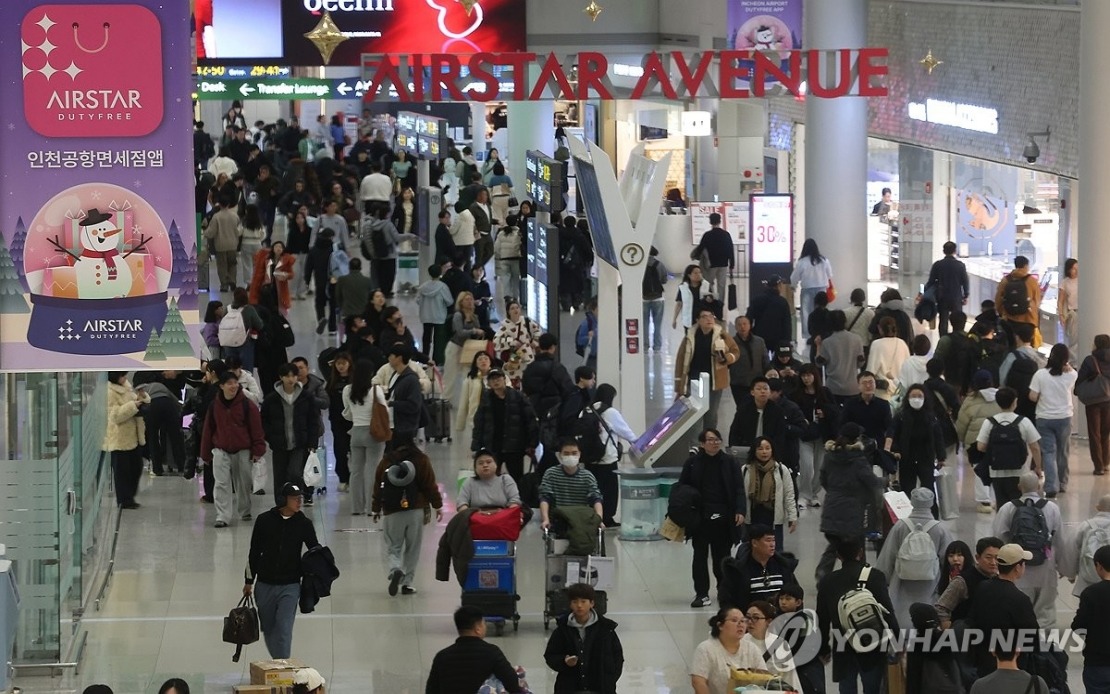
South Korea has crossed the significant 10-million-visitor threshold during the third weekend of June, positioning itself to set a new annual tourism record as the country benefits from accelerating international travel demand. The Korean Ministry of Culture, Sports and Tourism confirmed the milestone was reached roughly four weeks earlier than in the previous year, when the tally was not achieved until mid-July. This represents the first occasion in which the 10-million figure has been recorded before the year's midpoint.
The acceleration in visitor numbers underscores the broader recovery of South Korea's tourism sector following pandemic-related disruptions. In May alone, the nation welcomed 1.95 million international arrivals, a gain of 19.4 per cent compared to the corresponding month a year earlier. This momentum has been sustained and amplified as the high season approaches, indicating that tourism operators and hospitality businesses across the country are benefiting from the pent-up demand for Korean experiences and attractions.
China remains the dominant source market, with 560,000 Chinese tourists visiting in May, reflecting the geographic proximity and cultural affinities that drive substantial two-way travel between the two countries. Japan and the United States follow as the second and third largest source markets, contributing 360,000 and 210,000 visitors respectively during the same period. The diversity of origin markets is significant for Malaysia and the broader Southeast Asian region, as it demonstrates the competitive landscape in which countries must position themselves to capture outbound tourist spending and secure international visitor share.
A notable trend shaping South Korea's tourism revival is the geographic dispersal of visitor activity beyond Seoul and the metropolitan capital region. Regional airports have recorded a steady climb in passenger throughput, rising from 230,000 arrivals in January to 360,000 by May. This distribution reflects deliberate policy efforts to encourage tourists to explore secondary cities and provinces, reducing congestion at major hubs whilst stimulating local economies. Such regional development of tourism infrastructure represents a strategic approach that regional competitors, including Southeast Asian nations, are increasingly adopting to maximize economic benefits and manage overcrowding at traditional attractions.
Financial metrics provide additional insight into the quality and robustness of the tourism recovery. Foreign visitors' spending through credit and debit cards, inclusive of online transactions, totalled 2.12 trillion won (approximately US$1.38 billion) in May alone. This marks the first occasion since South Korea initiated systematic tracking of such expenditure in 2018 that monthly card spending has breached the 2 trillion won threshold. The figure suggests not only higher visitor volumes but also increased per-capita spending and enhanced willingness to engage in retail, dining, and service consumption.
The continued momentum in arrivals has been sustained despite external economic headwinds, particularly elevated fuel surcharges triggered by geopolitical tensions in the Middle East. That South Korea's inbound arrivals expanded 21 per cent year-on-year through May whilst managing these cost pressures indicates strong intrinsic demand and effective competitive positioning relative to alternative destinations. For Malaysian stakeholders in the tourism and hospitality sectors, this performance reinforces the importance of maintaining value propositions and distinguishing offerings in an environment where international travellers are willing to absorb higher travel costs.
The Korean government has articulated a strategy to consolidate and extend the tourism momentum through expanded collaboration with private-sector partners. Kang Jung-won, the head of the Ministry of Culture, Sports and Tourism's tourism policy office, emphasized intent to deepen cooperation with K-pop artists and export companies as part of a comprehensive approach to positioning South Korea as a premier travel destination. This integration of entertainment, cultural soft power, and commercial partnerships reflects a sophisticated understanding of modern tourism marketing, wherein entertainment franchises and celebrity endorsements serve as powerful drivers of destination selection and visit intent among younger demographics.
The timing of South Korea's tourism surge carries implications for regional competition and market share dynamics within Asia-Pacific. As South Korea capitalizes on its cultural exports—including music, television drama series, and consumer products—and leverages these assets to drive travel demand, neighbouring and competing destinations must assess their own cultural positioning and brand differentiation strategies. Malaysia's own tourism narrative, anchored on multicultural heritage, natural attractions, and culinary offerings, operates within a competitive environment where agile, digitally-savvy marketing and celebrity endorsements have become essential rather than optional.
Looking forward, the trajectory of South Korea's annual visitor arrivals will depend on sustained interest through the remainder of 2024. If current monthly rates persist, the nation appears positioned to comfortably exceed its previous annual record. This outcome would have cascading effects on regional tourism patterns, potentially influencing traveller itineraries and expenditure allocation within East and Southeast Asia. Malaysia and other regional competitors should monitor South Korea's performance closely as evidence of the scale and sustainability of regional tourism demand, whilst evaluating whether specific source markets—particularly Chinese and Japanese tourists—are being diverted to competing destinations or represent additional travel expansion by these populations.