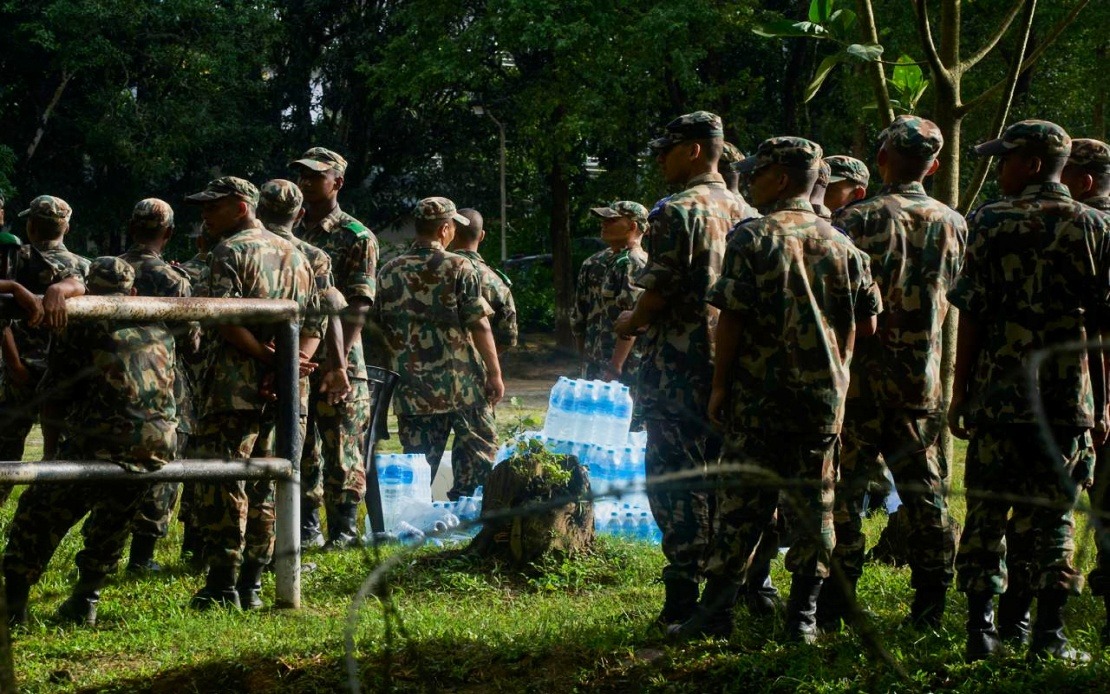
South Korea has mobilised diplomatic and emergency resources in response to a humanitarian crisis unfolding in Nepal's north-central Himalayan region, where nine of its citizens remain unaccounted for following devastating flash floods and mudslides. The Foreign Ministry confirmed on Thursday that an 11-member joint emergency response team comprising officials from multiple government agencies departed for Nepal, with an expected evening arrival in Kathmandu. The move represents a coordinated approach by Seoul to support active search and rescue operations whilst maintaining diplomatic engagement with Nepali authorities.
The nine missing South Koreans consist of six employees representing Doosan Enerbility Co., a major plant construction firm, and three staff members from Korea South-East Power Co., a state-owned power generation enterprise. All were working at the Upper Trishuli-1 hydropower plant construction site when catastrophic weather events struck the region on Wednesday. The 216-megawatt facility, situated approximately 70 kilometres northwest of Kathmandu along the Trishuli River, has become the focal point of international rescue efforts after the deluge triggered secondary geological hazards that overwhelmed the work area.
The scale of the regional disaster extends well beyond the Korean contingent. According to international media reports, the flooding and associated mudslides killed at least 160 people across Nepal's affected zones, whilst 403 individuals remain unaccounted for, of whom 341 are foreign nationals. This disproportionate representation of international workers underscores the concentration of expatriate labour in Nepal's infrastructure development sector, where foreign companies undertake major construction projects utilising imported skilled and semi-skilled personnel.
Encouragingly, separate reporting indicates that ten additional Doosan Enerbility employees who had become stranded at the site were subsequently confirmed to be safe, though they awaited evacuation assistance. These workers had managed to relocate from the immediate danger zone alongside approximately 200 other foreign personnel engaged across the broader construction project. The successful evacuation of this larger cohort provides some operational confidence in rescue coordination capabilities, though conditions remain challenging for locating those in more remote or buried positions.
Both Doosan Enerbility and Korea South-East Power have activated their own internal emergency protocols. Corporate officials confirmed that each organisation has established dedicated emergency response structures and planned to position field teams directly at the accident site to supplement governmental rescue efforts. This dual-track approach, combining official government rescue operations with corporate-led search initiatives, reflects contemporary crisis management practices where private sector resources complement state capacity in major disasters.
At the political level, South Korea's response has attracted high-level attention. Foreign Minister Cho Hyun signalled intentions to communicate directly with Nepal's counterpart, seeking formalised cooperation arrangements and pledging maximum assistance. President Lee Jae Myung has issued direct orders instructing all relevant government agencies to exhaust available resources in locating and rescuing the missing nationals, elevating the matter to top executive priority.
The Upper Trishuli-1 project itself represents a significant bilateral economic engagement. Construction commenced in January 2022 with initial scheduling for completion and commercial operation by the end of that year. The facility was intended to add meaningful capacity to Nepal's power generation infrastructure, addressing chronic energy deficits that constrain economic development throughout the country. Industry observers anticipate that flood damage sustained at the construction site will impose substantial delays upon the project timeline, creating downstream consequences for Nepal's energy security planning.
For Malaysia and broader Southeast Asia, this incident carries multiple resonances. The region hosts substantial populations of Nepali workers, whilst Malaysian and Southeast Asian firms increasingly undertake infrastructure projects in Nepal and comparable mountain environments across South Asia. The disaster underscores vulnerabilities inherent in hydropower development in seismically active, high-precipitation zones where climate variability intensifies extreme weather phenomena. Regional companies operating in comparable geological and meteorological contexts must reassess site-specific hazard mitigation protocols, early warning systems, and evacuation preparedness.
The international dimension of the response also reflects evolving norms regarding state responsibility for protecting citizen workers abroad. South Korea's rapid deployment of diplomatic and emergency personnel establishes expectations that other nations will similarly mobilise resources when their nationals face danger in foreign jurisdictions. Malaysian companies and employees operating in Nepal or equivalent environments should understand that similar governmental support structures exist, though effectiveness depends upon advance coordination between corporate entities and diplomatic missions.
Looking forward, the incident will likely prompt broader reviews of safety standards within Nepal's construction sector and international development partnerships. Foreign contractors operating across South Asia may face enhanced regulatory scrutiny and demands for strengthened environmental and meteorological monitoring systems. The intersection of climate risk, rapid infrastructure development, and international labour mobility will require more sophisticated risk governance frameworks that integrate seasonal weather patterns, geological hazard assessment, and emergency response coordination across multiple jurisdictions and organisational actors.

