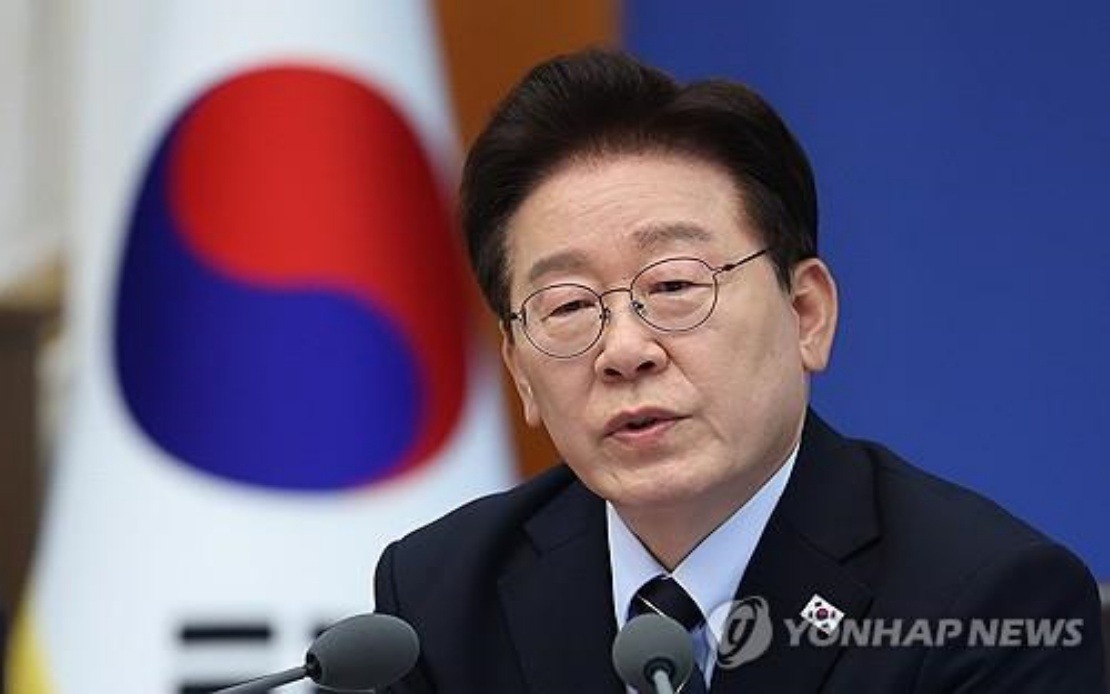
South Korean President Lee Jae Myung has instructed government officials to accelerate comprehensive defence reforms aimed at transforming the country's military into a technology-enabled, elite force through advanced equipment and selective conscription policies. The directive emerged from a meeting with senior aides at Cheong Wa Dae on Thursday, marking a significant policy shift in how Seoul approaches its defence posture amid profound demographic headwinds that threaten the sustainability of its current military structure.
The strategic pivot reflects a hard reality confronting South Korea: the nation's persistently declining birth rate renders it increasingly impractical to maintain the traditional conscription-heavy military model that has underpinned national security for decades. Rather than attempting to preserve the existing structure through sheer manpower, Lee's administration is betting that a smaller, more technologically sophisticated force can meet security objectives more effectively. This represents a fundamental recalibration of how Seoul balances force size against capability and efficiency.
Under current South Korean law, all able-bodied men must complete at least 18 months of military service, a system that has remained largely unchanged since the Korean War era. The proposed shift toward selective conscription would allow the military to be more discerning about recruitment, focusing resources on individuals best suited for specific roles within a modernised force structure. This approach aligns with broader global trends in military transformation, where technological superiority increasingly compensates for smaller personnel bases, as seen in armed forces across Europe and North America.
Crucially, Lee emphasised that military reform cannot succeed purely through structural and technological changes alone. The government must simultaneously address the lived experience of young men undergoing service, recognising that conscription shapes perceptions of opportunity and national responsibility. His administration is committing to policies ensuring that military service translates into tangible career advancement, educational opportunities, and wealth-building capacity for participants. This represents an acknowledgment that demographic decline is not merely a military planning problem but a societal challenge rooted in how citizens view their futures.
The President articulated a sobering assessment of public sentiment toward conscription, noting that many young Koreans view military service as dead time—a period where life progress halts rather than advances. By contrast, he argued that service should position individuals for superior employment prospects and stable financial foundations. This reframing seeks to restore military conscription as an investment in personal development rather than an obligation imposed despite personal cost, a psychological and practical shift essential for sustaining public support for mandatory service as the pool of eligible men shrinks.
For Malaysia and other Southeast Asian nations monitoring regional security developments, South Korea's military transformation carries significant implications. As the region grapples with its own demographic trends and faces evolving security challenges from great-power competition and non-traditional threats, Seoul's experience with technology-centric force modernisation offers instructive lessons. Countries across ASEAN are similarly confronting questions about how to maintain defence readiness while managing changing population structures and budget constraints.
The emphasis on smart, elite military capabilities also reflects South Korea's technological prowess and industrial capacity. The nation has developed sophisticated domestically-produced defence systems, from advanced fighter jets to naval platforms, creating a foundation upon which this new strategy can rest. The defence reforms seek to leverage these advantages, creating a military that relies less on mass mobilisation and more on cutting-edge equipment and professional expertise. This approach suits South Korea's position as a high-technology economy competing in a rapidly evolving security environment.
During the same meeting, Lee devoted substantial attention to housing policy, linking defence challenges to broader economic concerns affecting younger Koreans. The government announced plans to supply more than 230,000 additional homes in the Seoul metropolitan area through accelerated public land development, greenbelt modifications, and private-sector support. This housing initiative is not tangential to military reform but integral to it: young people facing insurmountable housing costs and limited economic prospects are unlikely to view military service positively, regardless of policy adjustments. Addressing the housing crisis thus becomes essential to sustaining a volunteer or selectively conscripted force.
The administration attributes the current housing shortage to permit restrictions and declining construction starts beginning in 2022, creating what Lee termed a "supply cliff." To remedy this, the government intends to streamline permit procedures and secure additional land, potentially through legislative reforms. The connection between housing affordability and military readiness reveals how South Korea's strategic planners understand national security as encompassing economic and social stability, not merely military hardware and personnel.
South Korea's military transformation strategy underscores a broader strategic principle: as technological capability becomes increasingly decisive in modern conflict, nations must align their defence posture with their demographic and economic realities rather than resist those realities through unsustainable conscription systems. The approach signals confidence that quality, technology, and professional expertise can substitute for quantity of personnel, a calculation that South Korean defence planners evidently believe their nation can execute successfully given its industrial base and technological leadership.
The selective conscription framework also suggests a merit-based approach to military service, where individuals meeting certain criteria contribute to defence according to their capabilities and the military's needs. This differs markedly from the universal conscription model currently in place, which treats all eligible men as interchangeable military assets. Such differentiation could create social complications, however, potentially generating perceptions of fairness or inequality depending on selection criteria, a challenge South Korean policymakers will need to navigate carefully.
For the broader region, South Korea's military reforms signal how developed Asian economies are adapting defence strategies to demographic constraints. The model emphasises technological sophistication, professional expertise, and integration of military service with economic opportunity—approaches that may prove instructive for other nations. As competition in Asia intensifies and defence spending rises across the region, Seoul's attempt to maintain security capabilities while working within demographic limits offers an important case study in strategic adaptation.

