South Africa has escalated its legal confrontation with Israel by submitting a detailed filing to the International Court of Justice, asserting that the Israeli government has systematically disregarded binding court orders intended to safeguard Palestinians from further atrocities. The submission, filed under Article 11 of the ICJ's procedural rules governing internal judicial practice, represents Pretoria's attempt to compel compliance with provisional measures that the court has issued multiple times since the case commenced nearly two years ago.
The case itself originated on December 29, 2023, when South Africa formally accused Israel of violating the 1948 United Nations Convention on the Prevention and Punishment of the Crime of Genocide. This legal action by the African nation thrust the Israeli-Palestinian conflict into the realm of international criminal jurisprudence, establishing a framework for examining whether specific state actions constitute genocide as defined under international law. The filing emerged amid South Africa's broader assertion that it would exhaust all available diplomatic and legal mechanisms to hold Israel accountable.
Between January and May 2024, the ICJ issued three separate orders of provisional measures, each directing Israel to implement all necessary steps to prevent actions prohibited under the Genocide Convention. These orders carry full legal weight under international law and are not merely advisory suggestions. South Africa's Department of International Relations and Cooperation has emphasized repeatedly that these directives are binding, creating a categorical obligation for compliance that cannot be dismissed or postponed without legal consequence. The department's public statement underscores the gravity of alleged non-compliance, positioning it as a fundamental breach of international judicial authority.
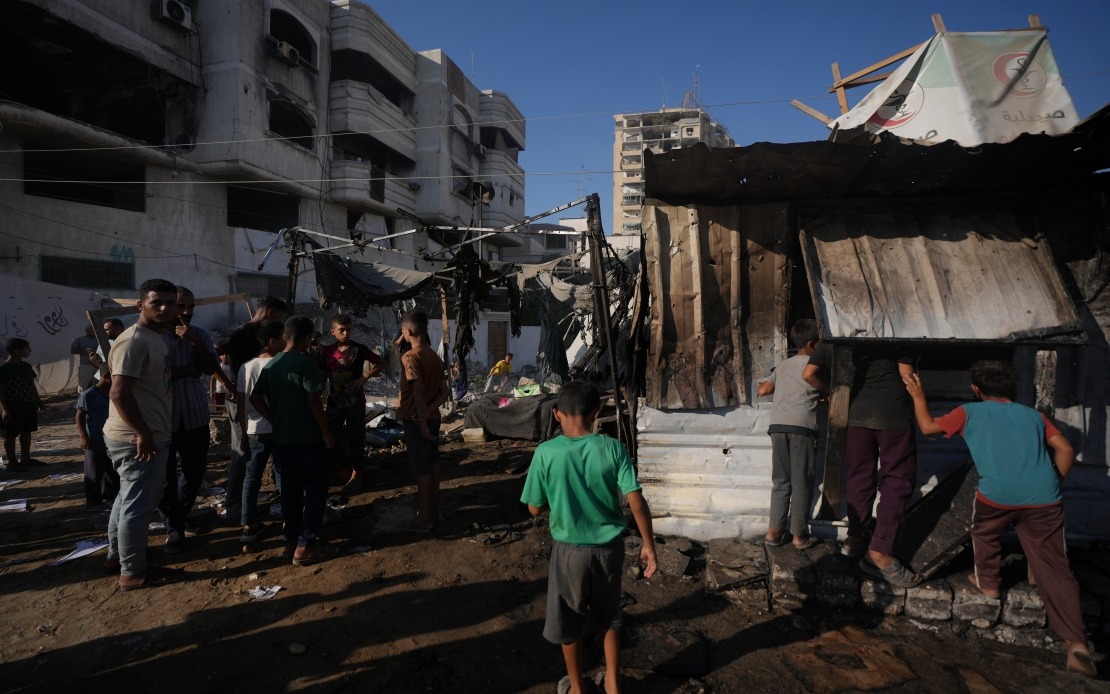
The humanitarian situation in Gaza forms the empirical backbone of South Africa's allegations. According to Palestinian Health Ministry figures cited in the filing, the conflict that intensified on October 7, 2023, has resulted in over 73,000 Palestinian deaths and approximately 174,000 injured. Beyond these aggregate casualty figures, the filing highlights the ongoing trauma experienced by survivors who remain trapped in progressively smaller territories under worsening humanitarian conditions. Malnutrition, disease, restricted access to medical care, and psychological distress have compounded the toll of direct violence, creating what international observers describe as a severe humanitarian emergency.
A ceasefire implemented on October 10, 2025, was intended to halt active hostilities, yet South Africa contends that Israeli violations of this arrangement have killed more than 1,300 Palestinians and wounded over 4,330 others since that date. Beyond the immediate death toll, recovery and rescue operations have extracted hundreds of bodies from collapsed buildings, suggesting ongoing combat operations despite the nominal ceasefire. These allegations, if substantiated in court proceedings, would provide evidence contradicting any narrative of Israeli compliance with international humanitarian law during this critical period.
For Malaysian and broader Southeast Asian observers, this case carries significant implications regarding the efficacy of international judicial mechanisms in constraining state behavior during armed conflict. The ICJ, as the principal judicial organ of the United Nations, possesses theoretical authority to bind all UN member states to its rulings, yet enforcement mechanisms remain limited. South Africa's recourse to additional filings suggests that voluntary compliance cannot be assumed, raising questions about the practical utility of international law when major powers prioritize strategic interests over legal obligations.
The Genocide Convention framework itself merits closer examination for regional audiences. Drafted following World War II's horrors, the convention established that genocide—the intent to destroy a national, ethnic, racial, or religious group in whole or in part—constitutes a crime against humanity. Proving genocidal intent presents formidable legal challenges, as courts must establish not merely that mass casualties occurred, but that perpetrators possessed specific intent to destroy a protected group. South Africa's case therefore hinges on demonstrating that Israeli military operations were designed with this specific objective, a claim Israel has categorically rejected.
The timing of South Africa's latest filing reflects mounting frustration with the pace and apparent ineffectiveness of the provisional measures regime. Although courts can issue binding orders, enforcement depends primarily on moral pressure, reputational damage, and the political will of other states to impose consequences. In the Middle Eastern context, where geopolitical alignments run deep and major powers maintain competing strategic interests, such pressure has proven insufficient to alter state behavior in previous cases. South Africa's continued pursuit through escalating legal mechanisms suggests Pretoria views international law as a tool for delegitimizing Israel's actions, even if immediate enforcement remains unlikely.
The filing also reflects South Africa's distinctive posture within the Non-Aligned Movement and African Union, where support for Palestinian causes carries significant political weight. As an emerging economy and regional power with aspirations to lead within African institutions, South Africa has positioned itself as a champion of Global South solidarity against what it characterizes as imperial violence. This legal campaign serves multiple audiences simultaneously: domestic constituencies that expect anti-colonial posturing, African peers for whom Palestine represents a litmus test of continental principle, and the international community where South Africa seeks to demonstrate moral leadership.
Israel's consistent rejection of these allegations complicates the narrative considerably. Israeli officials maintain that military operations conform to international humanitarian law, that civilian casualties result from Hamas's embedding of military infrastructure within civilian areas, and that provisional measures do not constrain legitimate self-defense. This fundamental disagreement about facts and legal characterization will require extensive evidentiary proceedings before the court reaches judgment. The divergent interpretations of the same events reveal how contested the ground of international law remains, particularly when applied to asymmetric conflicts involving occupation and resistance.
The broader implications for international justice systems warrant consideration. If major regional powers can persistently disregard ICJ orders without experiencing meaningful consequences, the credibility of international law itself deteriorates. Conversely, if the court cannot enforce its rulings, questions arise about whether expensive and time-consuming international litigation serves justice or merely creates diplomatic theater. Southeast Asian nations, many of which have territorial disputes and maritime disagreements, observe these proceedings with attention to how international law actually functions when political interests collide with legal obligations.
South Africa's determination to pursue every available avenue reflects a calculus that even partial judicial victories—favorable rulings, adverse findings against Israel, or international legitimacy for Palestinian claims—justify continued investment in this legal strategy. The case will likely continue through multiple phases before reaching final judgment, during which time conditions in Gaza may evolve substantially. Whether the ICJ ultimately orders compliance, imposes financial penalties, or simply establishes legal precedent regarding state responsibilities under the Genocide Convention remains an open question with profound consequences for international law's future relevance in constraining state violence.

