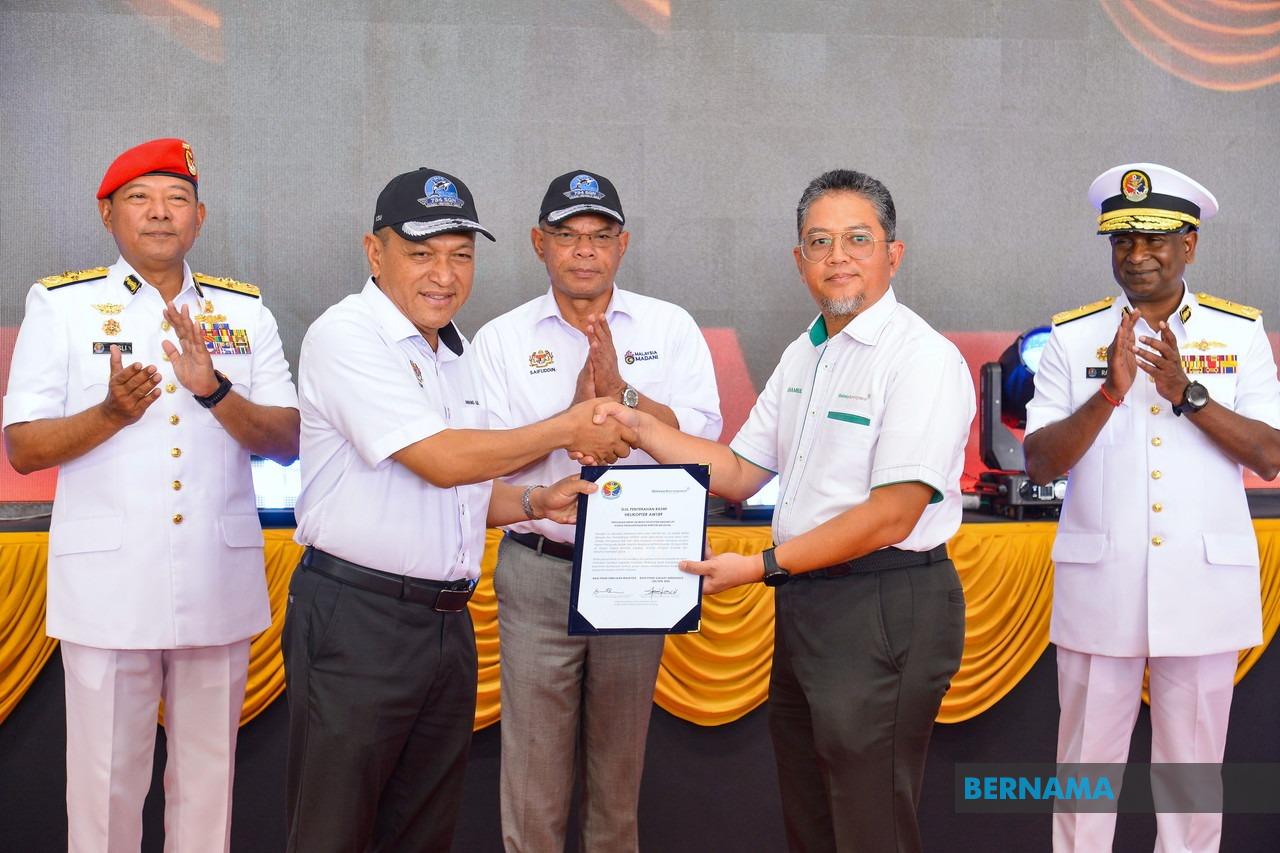
Home Minister Datuk Seri Saifuddin Nasution Ismail has signalled the government's intent to undertake a thorough reassessment of two contentious policy areas: the Security Offences (Special Measures) Act 2012 and the handling of refugee populations. Speaking after chairing discussions on both matters, Saifuddin emphasised that neither domain should be evaluated through a narrowly focused lens, but rather examined holistically in light of evolving circumstances and competing national interests.
The minister's remarks reflect mounting pressure from civil society organisations, legal experts, and international observers regarding Malaysia's approach to national security legislation and humanitarian obligations. Rather than dismissing these concerns, the Home Ministry appears willing to engage in a broader conversation about whether existing frameworks remain fit for purpose in a geopolitical environment markedly different from when key legislation was originally enacted.
SOSMA, enacted in 2012, was designed to provide law enforcement with enhanced investigative tools to combat terrorism and national security threats following the repeal of the controversial Internal Security Act 1960. The older ISA had operated for more than five decades, allowing indefinite detention without trial, and its removal was widely viewed as a progressive step toward limiting executive power. However, SOSMA itself has increasingly attracted criticism from human rights advocates who contend that certain provisions remain overly broad and susceptible to misuse, particularly the extended detention periods permitted before formal charges must be filed.
The timing of this review signals official acknowledgment that security legislation must balance protective measures against civil liberties considerations. Several prominent figures and organisations have previously called for SOSMA's repeal or substantial amendment, citing concerns about transparency in the legal process, adequacy of safeguards against abuse, and the broader chilling effect such powers may have on legitimate political discourse and activism. The minister's openness to scrutiny suggests these voices have not been ignored within government circles.
Parallel to security concerns, Malaysia faces mounting practical and ethical challenges regarding refugee populations, particularly those arriving from Myanmar following the 2021 military coup. The Southeast Asian nation hosts approximately 180,000 registered refugees according to UNHCR data, with significant numbers undocumented, creating complex pressures on urban infrastructure, employment, and social cohesion. The Myanmar crisis has accelerated displacement flows, straining Malaysia's capacity to manage arrivals whilst maintaining public order and protecting vulnerable populations from exploitation.
The refugee issue presents Malaysian policymakers with a genuine trilemma. National security imperatives demand robust screening to prevent the infiltration of armed elements or extremist networks among refugee cohorts. Humanitarian considerations obligate the state to provide refuge to those fleeing persecution and violence, reflecting both Islamic principles emphasised by Malaysia's Muslim-majority population and Malaysia's obligations under international conventions. Simultaneously, local communities in host areas express legitimate concerns about resource allocation, employment competition, and social strain, concerns which populist actors have occasionally exploited through inflammatory rhetoric.
Saifuddin's framing suggests the government intends to move beyond simplistic either-or formulations. By describing these issues as requiring assessment against "recent developments, challenges on the ground and possible approaches for the future," the minister implicitly acknowledges that solutions must be dynamic rather than static. This approach resonates particularly in Southeast Asia, where rapid changes in regional security dynamics and migration patterns demand continuous policy recalibration.
The establishment of formal discussion platforms on these topics indicates institutional recognition that durable policy requires stakeholder consensus. Engaging civil society organisations, legal experts, humanitarian groups, and affected communities in structured dialogue can generate solutions with greater legitimacy and effectiveness than top-down implementation. In Malaysia's context, where civil society has demonstrated considerable sophistication in policy analysis, such inclusive processes may ultimately strengthen national security frameworks by incorporating diverse perspectives.
For Malaysian readers and the broader Southeast Asian audience, these reviews carry significant implications. Malaysia's decisions regarding security legislation and refugee management will influence how other regional nations approach comparable questions. Indonesia, Thailand, and other states facing similar pressures will likely observe whether Malaysia's approach generates sustainable solutions or merely postpones difficult choices. A thorough, transparent review process could establish a regional model for balancing security and humanitarianism.
The minister's comments also suggest potential evolution in how Malaysia calibrates its response to transnational security threats. The region faces genuine challenges from organised crime networks, human trafficking operations, and extremist recruitment, yet responses grounded solely in expanded state powers without compensating transparency mechanisms risk undermining the institutional trust necessary for effective security cooperation. Conversely, security legislation divorced from legitimate law enforcement needs invites public backlash and international criticism.
Looking forward, the depth and trajectory of these reviews will reveal whether the Home Ministry's rhetoric translates into substantive policy change. Previous government commitments to legislative reform have occasionally stalled or produced merely cosmetic amendments, disappointing reform advocates. Whether this initiative leads to meaningful revision of SOSMA provisions, enhanced protections for detainees, clearer humanitarian pathways for vulnerable refugees, or sustainable burden-sharing mechanisms remains to be determined through the consultation process that Saifuddin has promised to undertake.

