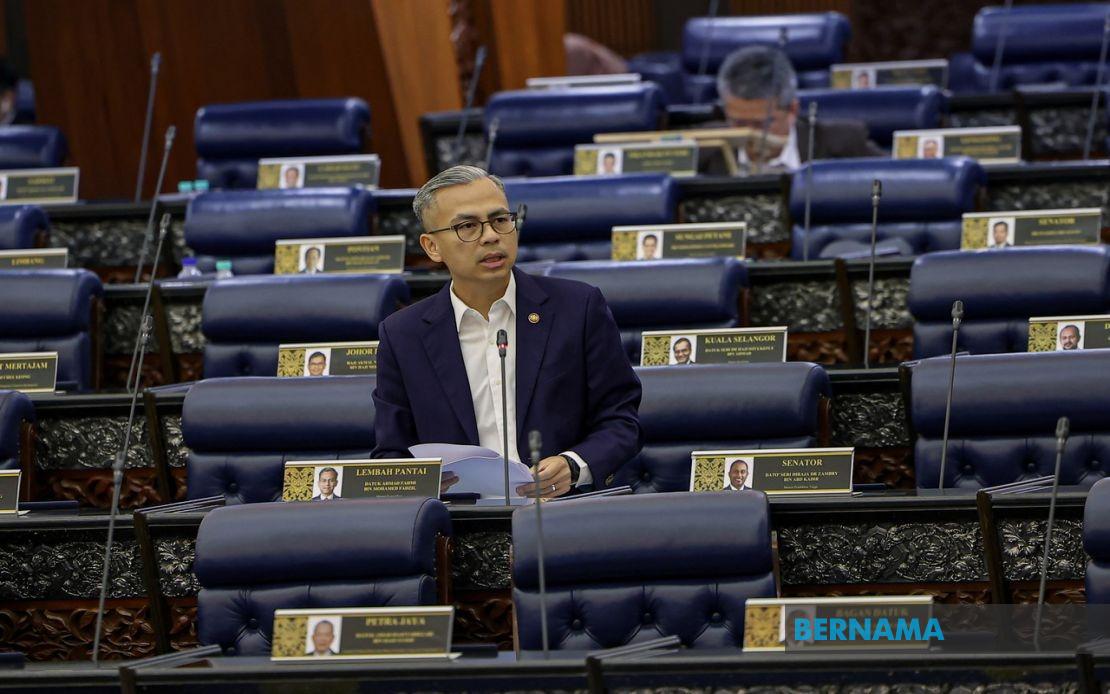
Communications Minister Datuk Fahmi Fadzil has outlined substantial financial consequences awaiting social media platforms that refuse to enforce age-verification safeguards mandated by Malaysia's Online Safety Act 2025. Speaking in Parliament, Fahmi disclosed that non-compliant service providers could face penalties reaching RM10 million, marking a significant escalation in the government's enforcement toolkit against digital platforms operating within Malaysian jurisdiction.
The regulatory architecture underpinning these penalties grants the Malaysian Communications and Multimedia Commission expansive authority to pursue enforcement action. Under Part III of Act 866, the MCMC can issue formal notices of non-compliance to any licensed application service provider deemed to be flouting age-verification obligations. Upon receiving such a notice, platforms must either accept the financial penalty or lodge formal representations requesting the commission to reconsider its determination. This dual-track approach attempts to balance regulatory rigour with procedural fairness, though it also raises questions about the evidentiary standards the MCMC will apply when assessing platform compliance.
Beyond the headline RM10 million figure lies a more granular penalty structure designed to incentivise rapid remediation. Section 30 of the Act empowers the MCMC to issue written directives compelling compliance with any legislative provision. Deliberate non-compliance with such directives constitutes a distinct offence, attracting fines up to RM1 million upon conviction, supplemented by daily penalties of RM100,000 for each successive day the violation persists. This cumulative penalty mechanism effectively transforms a single breach into an escalating financial burden, potentially creating circumstances where prolonged non-compliance becomes economically untenable even for large corporations.
The government's pivot toward age-verification requirements reflects a broader global consensus surrounding child safety in digital environments. Fahmi emphasised that more than 25 countries have already institutionalised such mechanisms, positioning Malaysia within an international mainstream rather than as a regulatory outlier. This international context proves significant for regional observers, as Malaysia's stance may influence how other Southeast Asian nations approach similar online safety legislation. The imposition of mandatory age verification fundamentally reshapes the competitive landscape for platforms operating across multiple jurisdictions, as global compliance becomes necessary to maintain regional market access.
Implementing these requirements has precipitated intense dialogue between government regulators and platform representatives since January 2025. The government established a regulatory sandbox initiative specifically designed to facilitate technical and operational discussions with social media companies. Across more than 30 engagement sessions—conducted both collectively and on an individual basis—officials and platform executives have debated the practical mechanisms through which age verification can be achieved without compromising user privacy or creating insurmountable technical obstacles. These ongoing conversations underscore the complexity surrounding age-verification implementation, as each platform confronts distinct architectural challenges and business model considerations that may render generic solutions ineffective.
The regulatory approach demonstrates recognition that one-size-fits-all mandates often prove counterproductive in the technology sector. Fahmi acknowledged that individual platforms encounter unique operational constraints and commercial pressures, a candid admission that contrasts with the uncompromising penalty regime outlined in the legislation. This tension between acknowledging practical complexity whilst maintaining strict enforcement thresholds may prove consequential. Platforms enjoying constructive relationships with regulators might receive greater regulatory forbearance during transition periods, whilst those perceived as obstructive could face swift enforcement action.
Malaysian technology observers note that age-verification requirements carry profound implications for platform business models predicated on user data collection and targeted advertising. Age verification mechanisms necessarily enhance platform knowledge regarding user demographics, potentially creating secondary benefits for advertising targeting capabilities. Conversely, implementation costs—encompassing technology development, integration with identity verification systems, and ongoing compliance monitoring—represent substantial operational expenses that platforms may seek to recoup through various mechanisms. The enforcement regime therefore indirectly shapes platform economics, incentivising business model adjustments that prioritise regulatory compliance over other operational considerations.
The question posed by Syahredzan Johan from the Bangi constituency prompted this comprehensive disclosure, reflecting legislative interest in ensuring robust child protection within the digital ecosystem. Parliamentary scrutiny of age-verification implementation mechanisms maintains political pressure on the government to enforce provisions rigorously, limiting regulatory capture by platforms wielding significant commercial influence. This parliamentary dimension ensures that enforcement decisions remain subject to democratic oversight, though the technical nature of compliance determinations may limit effective legislative review of specific enforcement actions.
For Malaysian users and consumer advocates, the regulatory framework presents both protective benefits and potential drawbacks. Enhanced age verification theoretically shields minors from age-inappropriate content, online predation, and excessive screen time via algorithmic restriction. Simultaneously, the mechanisms through which platforms verify age—potentially requiring documentation submission or biometric authentication—raise data security and privacy considerations. Users must entrust platforms with sensitive identity information, creating concentration risks should platforms experience data breaches. The regulatory framework largely addresses behavioural compliance without explicitly mandating data protection standards that would insulate users from privacy violations.
Southeast Asian jurisdictions observing Malaysia's implementation approach face strategic decisions regarding their own age-verification frameworks. Singapore, Indonesia, Thailand, and other regional economies contemplating similar legislation will likely examine Malaysia's enforcement experience, particularly regarding technical feasibility, cost implications, and effectiveness in protecting minors. Should Malaysia's approach prove functional whilst avoiding unintended consequences, regional convergence toward similar standards becomes plausible. Conversely, if implementation generates substantial platform friction or fails to demonstrably improve child safety outcomes, neighbouring jurisdictions may adopt more cautious regulatory strategies.
The RM10 million penalty ceiling must be contextualised within platform revenues and global fine trends. Recent enforcement actions by the European Union and United States against technology companies have generated penalties reaching billions of dollars, dwarfing Malaysia's maximum threshold. This disparity might suggest Malaysian penalties prove insufficient to incentivise compliance among global technology enterprises, though the cumulative exposure arising from daily penalties and criminal offences could theoretically exceed initial assessments. Platform compliance decisions will ultimately reflect calculations of enforcement probability, penalty magnitude, implementation costs, and reputational considerations rather than the statutory maximum alone.
Moving forward, the MCMC faces considerable institutional demands in operationalising this enforcement regime. The commission must develop technical expertise to assess platform compliance mechanisms, establish transparent procedures for evaluating platform representations, and coordinate with platform security and policy teams. Regulatory efficacy depends substantially on the MCMC's capacity to conduct thorough compliance investigations without possessing comprehensive visibility into platform algorithms and data infrastructure. Platforms retain informational advantages that could complicate regulatory verification, potentially necessitating expanded MCMC powers or industry disclosure obligations. The success of Malaysia's age-verification regime thus hinges not merely on statutory penalties, but on regulatory institutional capacity and political commitment to enforcement despite inevitable platform resistance.