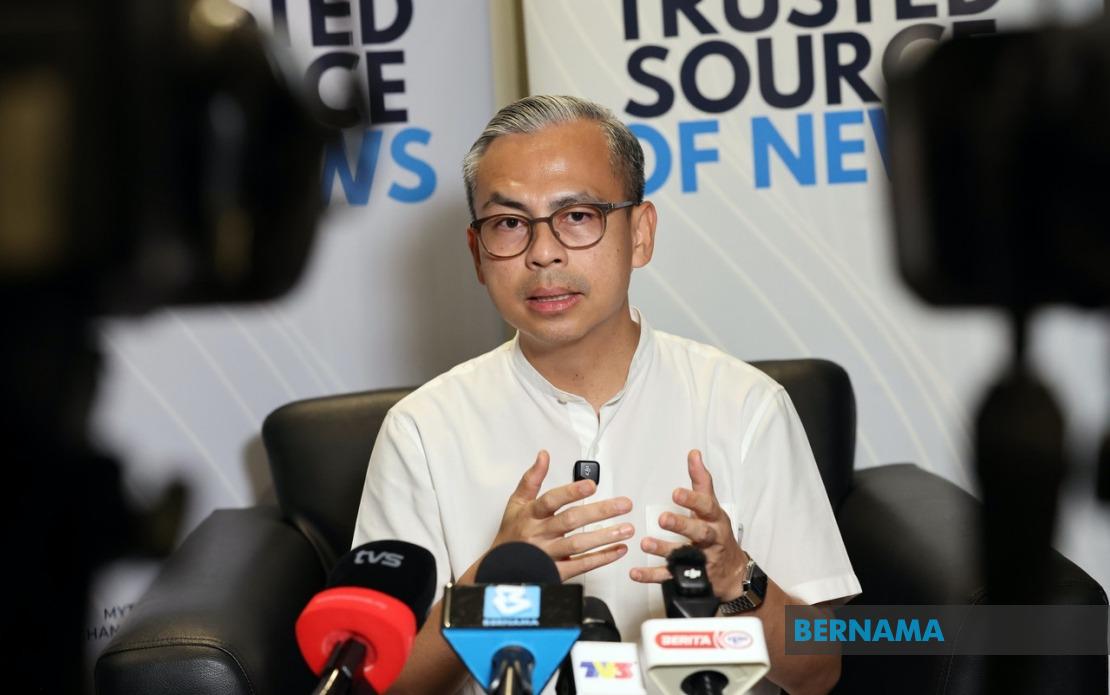
Social media platform operators must intensify their vigilance against the circulation of false election-related content during the 16th Johor state election, with particular urgency required on polling day this Saturday, according to Communications Minister Datuk Fahmi Fadzil. The warning reflects growing concerns within government circles that misinformation campaigns could undermine public confidence in the electoral process, especially during the critical hours when voting results begin emerging. Fahmi stressed that while these platforms maintain formal policies prohibiting disinformation, the gap between policy and practical enforcement remains a significant vulnerability that requires immediate attention.
The minister's remarks came following an inspection of the Malaysian National News Agency (Bernama) operations centre in Johor Bahru, where election coverage is being coordinated. Fahmi expressed particular anxiety about the potential for false claims regarding election outcomes or constituency winners to proliferate once voting concludes. Such confusion during result announcements could undermine public faith in the electoral commission's official tallying process and create lasting questions about legitimacy. The government's concern is not merely theoretical; rapid-fire social media sharing means misleading content can reach hundreds of thousands of people within minutes, often before fact-checkers can intervene.
Crucially, Fahmi emphasized that platform providers must work in partnership with the Malaysian Communications and Multimedia Commission (MCMC) to develop more robust safeguards. He acknowledged that previous cooperation between MCMC and the Malaysian Media Council had yielded some results, particularly in addressing the counterfeiting of media logos to create fraudulent graphics appearing to originate from legitimate news sources. However, the minister recognized that tackling synthetic media represents only half the challenge facing authorities. The more difficult and expansive problem involves user-generated content—images, text posts, and other materials created by ordinary social media users that contain election-related falsehoods without necessarily originating from coordinated disinformation campaigns.
This distinction matters significantly for Malaysian policymakers. While fake graphics and branded misinformation can be traced and removed relatively systematically, content organically generated by millions of individual users presents a vastly more complex enforcement scenario. Platform algorithms that amplify engagement inadvertently promote the most sensational election claims, whether accurate or fabricated. Fahmi's call for faster platform action reflects frustration that despite existing technological capabilities, social media companies often move slowly to remove problematic content, frequently only acting after external pressure or formal complaints. The minister appealed for these firms to adopt more proactive rather than reactive approaches, removing false election material before it achieves viral circulation rather than waiting for official reports.
To date, MCMC has not fielded complaints concerning social media-based campaign misconduct, suggesting either that violations remain subtle enough to escape detection or that victims have not yet formally reported incidents. This apparent calm may prove deceptive, as the intensity of misinformation campaigns typically escalates in the final days before elections. For Malaysian voters, particularly those in Johor, the implications are substantial. False claims about voting procedures, constituency boundary changes, or candidate credentials could affect turnout and decision-making, while erroneous result announcements might trigger premature celebrations or unwarranted disputes.
Beyond the misinformation challenge, Fahmi's visit underscored the coalition government's broader campaign priorities. The People's Hope (PH) administration remains optimistic about its electoral prospects in Johor, particularly given strong public response to its messaging and logistical support for voters returning from elsewhere to cast ballots. Several transport companies have partnered with the government to offer special packages for out-of-state voters, recognizing that voter convenience directly influences turnout. The Youth and Sports Skills Training Institute has also arranged leave for students to facilitate their participation, reflecting the coalition's strategy to mobilize younger voters who typically face obstacles to returning home during election periods.
Fahmi's emphasis on encouraging employers—particularly in retail and food and beverage sectors—to grant staff flexibility to vote reflects practical considerations often overlooked in electoral analysis. These sectors employ significant numbers of hourly workers and casual staff whose economic circumstances make missing work genuinely costly. By publicly appealing to business owners to facilitate voting, the government acknowledges that formal voting rights mean little if workers cannot exercise them without jeopardizing their livelihoods. This approach recognizes Malaysian employment realities where service sector staff often lack guaranteed paid leave for civic duties.
The minister expressed optimism that voter turnout could exceed 60 per cent, viewing strong participation as validating the election's legitimacy and public interest. His appeal to parents to encourage children working outside Johor to return home connects electoral participation to broader themes of state identity and family responsibility. This messaging strategy frames voting not merely as a civic obligation but as a meaningful expression of commitment to Johor's future governance over the coming four to five years. For diaspora voters—those working in Kuala Lumpur, Penang, or elsewhere—the framing matters psychologically, potentially swaying decisions about whether the inconvenience of returning home justifies the exercise.
For Malaysian observers and Southeast Asian analysts monitoring electoral administration trends, this episode reveals both strengths and vulnerabilities in regional approaches to combating election misinformation. Malaysia possesses formal institutional frameworks—MCMC, media councils, established news agencies—that facilitate rapid information verification. However, the gap between institutional capacity and actual platform compliance exposes the limitations of governance structures operating in digital environments where private multinational corporations wield disproportionate influence over information flows. The challenge Fahmi articulates—convincing social media companies to prioritize electoral integrity over engagement metrics—remains largely unresolved across the region.

