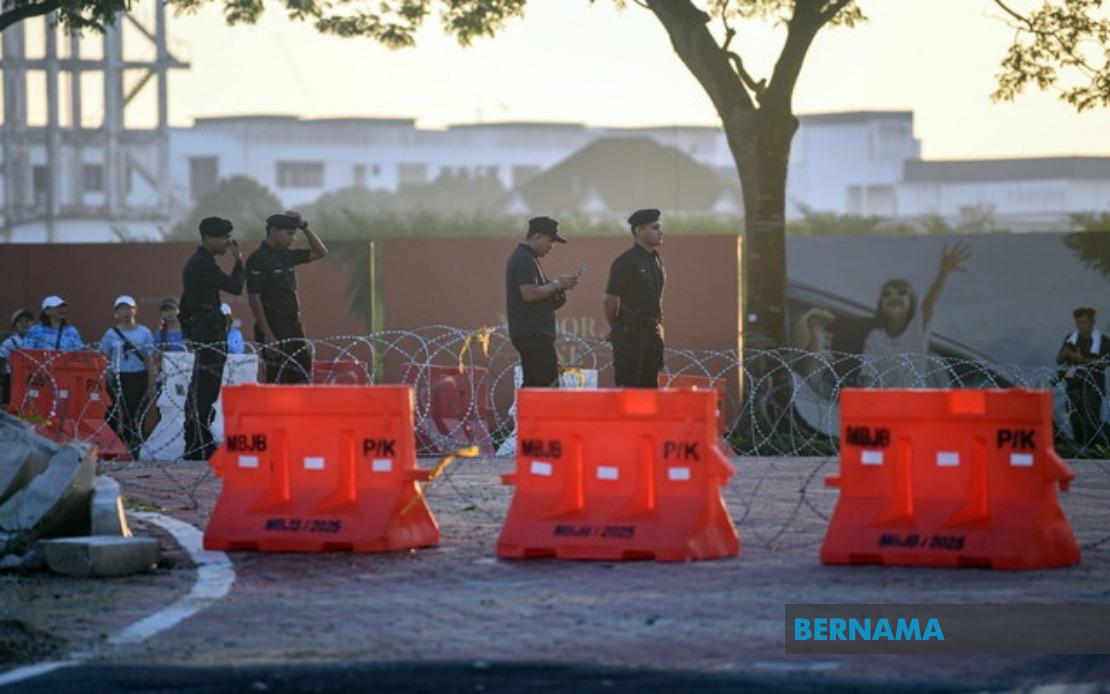
The nomination day for Johor's 16th state election proceeded without disruption on June 27, as clear skies and fair weather prevailed across the state, providing ideal conditions for voters and party machinery to manage the logistical undertaking. Election Commission officials completed final preparations and began accepting nomination papers from 9am to 10am at 56 polling and candidate centres scattered throughout Johor, establishing the formal launch of campaigning for the 56 available legislative assembly seats.
The overall atmosphere at nomination centres remained orderly and disciplined, reflecting the election authority's preparations and the cooperation of all participating parties. Security personnel had been positioned at all 56 locations to maintain decorum and prevent disruptions, while election officials worked systematically to process incoming documentation. The Malaysian Meteorological Department had forecasted that most Johor districts would experience dry conditions during morning hours, with afternoon thunderstorms anticipated in certain regions—a prediction that did not significantly impact the morning nomination proceedings.
Party enthusiasm was evident from the earliest hours, with supporters of various candidates gathering at multiple centres by 7.30am to demonstrate backing for their chosen contenders. This early mobilisation highlighted the competitive nature of the contest and the importance Johor parties are placing on the outcome, with grassroots supporters treated as crucial participants in the election campaign rather than passive observers.
The Johor State Legislative Assembly comprises 56 seats, each one now contested following the state legislature's dissolution on June 1. The Election Commission subsequently announced that early voting would take place on July 7, allowing specific categories of voters to cast ballots before the main polling day scheduled for July 11. This two-week window between nomination and general voting provides adequate time for campaigning, candidate introductions, and public debate across the state.
Electoral participation will involve a substantial voter base of 2,727,926 registered individuals across Johor. This total encompasses 2,703,175 ordinary voters who represent the backbone of the electorate, supplemented by 12,041 military personnel and their spouses who are entitled to vote, and 12,710 police personnel and their spouses. The inclusion of uniformed personnel voting blocs reflects constitutional provisions ensuring these service members retain democratic participation rights despite their operational duties.
For Malaysian observers and analysts tracking Johor's political direction, the state election carries particular significance within the broader regional political landscape. Johor has historically served as a bellwether for national political trends, with its outcome potentially influencing calculations at the federal level. The composition of the 56-seat assembly will determine the state's executive leadership and legislative agenda for the coming term, making the nomination day ceremonies more than ceremonial formalities but rather the foundational moment of what promises to be a closely watched campaign.
The smooth execution of nomination procedures across all 56 centres suggests the Election Commission's administrative capacity to manage large-scale electoral events, a reassurance for Malaysian voters concerned about the integrity and efficiency of democratic processes. The absence of reported irregularities or disruptions during nomination indicates that party discipline and electoral organisation remain robust factors in Malaysia's political framework. Such orderly transitions between election phases contribute to public confidence in electoral outcomes and the legitimacy of subsequent governance mandates.
With polling now set for July 11, the fortnight from nomination to voting represents the critical period when campaigns will gain momentum, policy platforms will be articulated, and voters will make their final electoral calculations. The weather forecast of generally favourable conditions throughout much of Johor should permit campaign activities to proceed unimpeded, allowing candidates and party workers to conduct door-to-door outreach and hold public rallies essential to modern electoral competition. This extended campaign window provides opportunities for substantive political debate beyond the symbolic nomination ceremonies that launched the formal election period.

