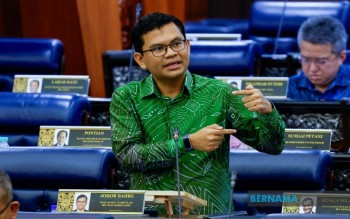
Malaysia's small and medium enterprises still have access to more than RM4 billion in financing support under Bank Negara Malaysia's Stabilisation Relief Facility, according to Economy Minister Akmal Nasrullah Mohd Nasir. Speaking in Parliament on June 25, Akmal highlighted that the programme, which carries a total allocation of RM5 billion, remains significantly underutilised despite its potential to provide critical relief to micro, small and medium enterprises grappling with operational challenges and liquidity constraints.
The SME SRF represents a key government intervention designed to shore up business resilience during periods of economic stress. As of mid-June 2026, the facility had approved financing exceeding RM700 million across more than 1,000 enterprises, demonstrating uptake but also substantial room for further participation. This gap between available funds and approved amounts suggests either insufficient awareness among eligible businesses, application barriers that need addressing, or deliberate caution from SMEs uncertain about taking on additional debt obligations. The remaining RM4 billion pool underscores the government's commitment to sustaining business operations without forcing enterprises into severe cost-cutting measures that typically result in employment reductions.
Akmal's parliamentary statement came in response to concerns raised by opposition MP Mohd Syahir Che Sulaiman regarding escalating job losses and business contractions linked to supply chain disruptions and global economic headwinds. The government's response extended beyond the SME SRF, revealing a multi-pronged approach to economic stabilisation that targets different segments of the affected workforce and business community. This layered strategy reflects recognition that a single instrument cannot address the complex interplay of employment vulnerability, business sustainability, and supply-side constraints that characterise the current operating environment for Malaysian enterprises.
Complementing the SME SRF, the government has mobilised an additional RM5 billion in financing guarantees through Syarikat Jaminan Pembiayaan Perniagaan Bhd, a move designed to reduce barriers for SMEs seeking bank funding. Financing guarantees serve a crucial function in emerging markets and developing economies where small businesses face persistent difficulty accessing credit, either due to lack of collateral or perceived credit risk by financial institutions. By guaranteeing a portion of loan defaults, the government effectively shifts risk from lenders to the state, creating conditions where banks can lend to otherwise marginal borrowers. This structure has proven effective in economies across the Southeast Asian region, though success depends partly on timely claim processing and competitive interest rates offered by participating financial institutions.
The availability of these facilities means SMEs experiencing cash flow problems have a pathway forward without resorting to drastic measures. Akmal specifically advised businesses to approach their respective financial institutions directly, emphasising that lenders have committed to processing applications within seven working days. This compression of the approval timeline is significant for enterprises facing immediate operational pressures, as delays in accessing finance can trigger cascade failures across supply chains. However, the seven-day promise presupposes that applications meet all submission requirements and that banks maintain adequate lending capacity—assumptions that may not hold during periods of heightened risk aversion in the financial sector.
Beyond credit access, the government launched the Progressive Acceleration for Capability and Employability (PACE) Economic Resilience Package, a broader initiative worth over RM710 million addressing employment protection and workforce development. PACE operates along four thematic pillars: social protection mechanisms for displaced workers, training and placement programmes, support for gig economy participants, and investment in young talent and small business ecosystems. This architecture acknowledges that economic stabilisation requires attention to both supply-side business concerns and demand-side worker welfare. When enterprises shed labour, affected workers often cycle through unemployment or underemployment, dampening consumer spending and prolonging recessionary pressures throughout the economy.
The employment insurance component of PACE, funded with over RM580 million through the Employees Provident Fund Organisation's mechanism, provides income replacement for retrenched workers. Simultaneously, the Human Resources Development Corporation received RM100 million to facilitate retraining and job placement, with digital coordination through the MYFutureJobs platform. This combination of income support and skills upgrading recognises that large numbers of displaced workers in declining sectors require not just immediate financial relief but also practical pathways into expanding labour markets. The platform approach suggests integration of labour market information systems with training providers, potentially reducing the lag between identification of skills shortages and training programme design.
The gig economy dimension reflects Malaysia's evolving labour market, where informal and platform-based work now represents a substantial share of employment. The Skills Education Fund Corporation received RM20 million specifically for reskilling gig workers, acknowledging that traditional employment support mechanisms often exclude this workforce. Similarly, RM10 million channelled through TalentCorp targets industrial training collaboration between large enterprises, SMEs and start-ups, potentially fostering knowledge transfer and employment ladders for young workers. These allocations, while modest within the overall package, address segments of the labour market that frequently lack access to formal training and development opportunities.
Monitoring of essential goods and raw material supplies represents an important supplementary dimension to the government's approach. Supply chain disruptions have created bottlenecks and price volatility in critical sectors including manufacturing, food production, agriculture and services. Government oversight of these supply networks and pricing mechanisms aims to prevent artificial scarcity and cost escalation that would further squeeze business margins. However, such monitoring presents implementation challenges, particularly in distinguishing between legitimate market pressures and speculative behaviour, and in balancing price stabilisation objectives against producers' need for adequate margins to sustain operations.
Akmal committed to tabling a detailed ministerial statement on the global supply crisis within Parliament's next sitting, contingent on parliamentary approval for debate. This forthcoming statement suggests the government recognises that current public understanding of the crisis dimensions and government response remains incomplete. A comprehensive parliamentary explanation would provide opportunity for detailed questioning and legislative scrutiny, potentially revealing additional policy initiatives under development or constraints limiting the government's options in addressing external economic pressures beyond direct control.
For Malaysian SMEs, the practical implication of these announcements is straightforward: multiple support mechanisms exist, and significant funds remain available. Engagement requires proactive outreach to financial institutions and awareness of programme eligibility criteria. The critical challenge lies in bridging the information gap between policy announcement and small business understanding, particularly among micro-enterprises and rural operations less connected to financial sector networks. Success in deploying the remaining RM4 billion and associated resources will depend substantially on the government's effectiveness in publicising these opportunities and simplifying application processes, particularly for the smallest enterprises facing the greatest operational constraints.

