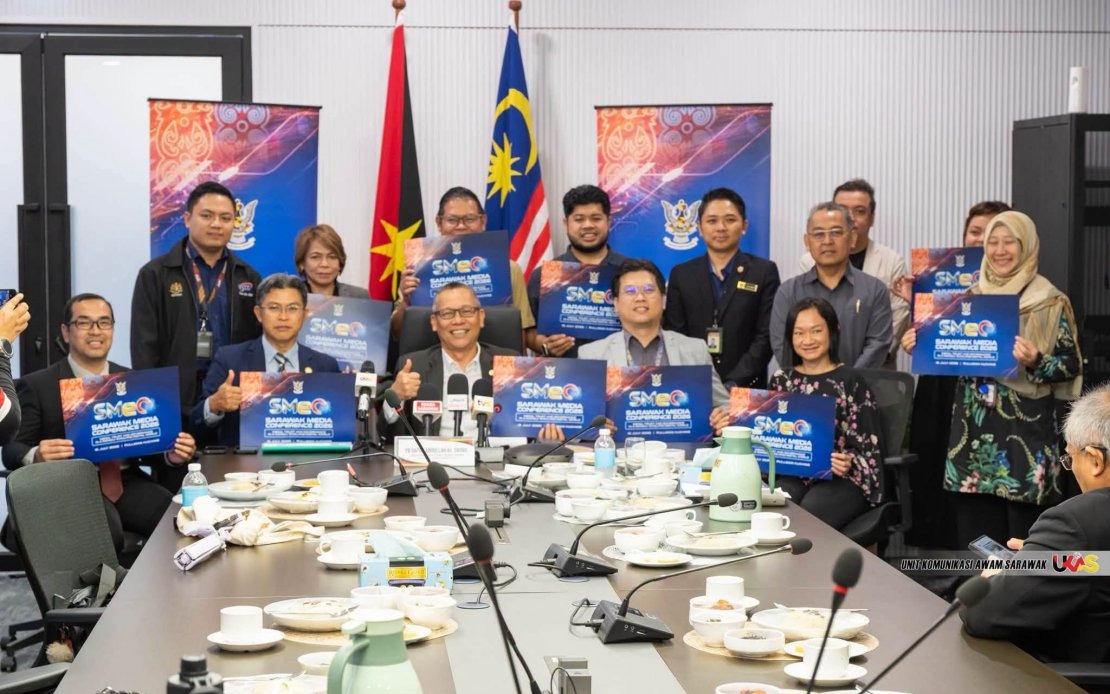
The Sarawak Government is preparing to host a major conference bringing together 800 communications professionals, academic experts, government policymakers, private sector leaders and university students to examine the future of journalism and digital media in the state. The Sarawak Media Conference 2026, scheduled for Thursday and organised by the Sarawak Public Communications Unit (UKAS), will receive the opening address from Sarawak Premier Tan Sri Abang Johari Tun Openg, signalling the event's importance within the state's information policy framework.
Despite Malaysia's relative media maturity, the digital transformation reshaping journalism across Southeast Asia has created distinct pressures and opportunities that regional newsrooms struggle to navigate. The conference's chosen theme, "Media, Trust and Governance in a Rapidly Evolving Digital World," reflects growing anxieties about information integrity and audience confidence across the region. For Sarawak specifically, gathering this breadth of media stakeholders suggests official recognition that the state's media landscape requires proactive dialogue about professional standards and technological adaptation rather than reactive policy responses.
According to Datuk Abdullah Saidol, Deputy Minister in the Sarawak Premier's Department, discussions will centre on rebuilding public confidence in media institutions while simultaneously addressing how artificial intelligence, social media algorithms and digital publishing platforms are restructuring newswork. The deliberate framing of this dual challenge—defending institutional trust while embracing technological change—indicates awareness that many Malaysian media outlets face declining readership and audience fragmentation without having developed comprehensive strategies for sustainable digital operation.
The conference will feature prominent voices including SOL Digital founder Lunnie Gan and Malaysian Media Council deputy chairman Premesh Chandran, both figures with extensive experience navigating Malaysia's media transitions. Their participation suggests the discussion will extend beyond theoretical frameworks to include practical case studies from outlets attempting to maintain journalistic credibility amid digital disruption. For Malaysian newsrooms contending with subscription models, paywalls, advertiser migration to social platforms and the pressure to compete with unverified online content, such peer-to-peer knowledge sharing carries immediate professional value.
The ethical dimension features prominently in the conference agenda, with organisers emphasising that digital transformation cannot proceed at the expense of journalism standards. This positioning matters within Malaysia's media environment, where concerns about accuracy, source verification and editorial independence have intensified as newsrooms downsize and editorial teams take on multiple platform responsibilities simultaneously. By foregrounding ethical journalism within discussions of AI adoption and digital tools, SMeC 2026 signals that technological capability should not override professional judgment—a message worth reinforcing across Southeast Asian media.
The evening programme reveals official commitment to recognising working journalists and media practitioners. Deputy Prime Minister Datuk Seri Fadillah Yusof's attendance at a dinner coinciding with the National Journalists' Day celebration underscores the federal government's interest in media industry matters at the state level. The dinner will also present the Sarawak Premier's Special Appreciation Awards across five categories—editor, journalist and stringer roles; photographers; videographers; radio presenters and broadcasters; and social media influencers—indicating institutional acknowledgment that journalism now encompasses diverse storytelling formats and platforms beyond traditional newsroom hierarchies.
The inclusion of social media influencers within the awards framework reflects the evolving definition of media work across Malaysia and Southeast Asia more broadly. These individuals often operate independently of legacy institutions, commanding substantial audience reach and audience trust, yet they typically lack formal journalism training or editorial oversight. Incorporating them into an official awards system could encourage adoption of journalistic principles among content creators who might otherwise view verification and sourcing as institutional constraints rather than professional best practices.
For Malaysian policymakers and media leaders, the conference offers a venue to examine how Singapore, Indonesia and other neighbours are managing digital media transitions, governance challenges and trust deficits. Sarawak's decision to host this regional conversation positions the state as engaged with national media development rather than peripheral to it. The breadth of invited participants—spanning academics studying media ecosystems, industry figures implementing technological solutions, government officials shaping information policy, and students entering the profession—creates potential for productive cross-sector dialogue that rarely occurs in formal settings.
The timing of SMeC 2026 reflects broader Malaysian recognition that media challenges cannot be addressed through regulatory intervention alone. Questions about trust require sustained professional commitment to transparency, accuracy and audience engagement. Questions about governance require collaboration between journalists, platforms, advertisers and civil society. Questions about digital opportunity require newsrooms to experiment with new business models, storytelling formats and audience relationships without abandoning editorial principles. By convening 800 stakeholders to examine these interconnected challenges, Sarawak's media conference creates space for the kind of industry-wide conversation that strengthens journalism across the region.

