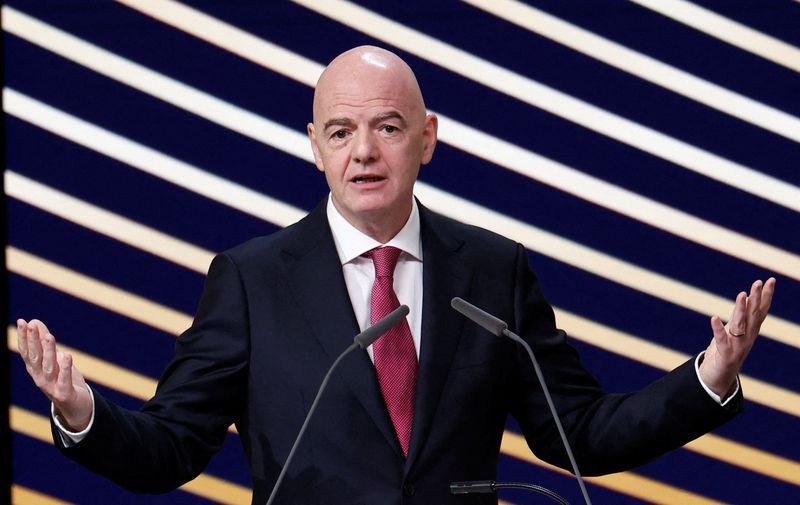
Gianni Infantino's bid to secure a fourth term as FIFA president may ultimately be decided not by the football establishment of Europe or the Americas, but by emerging and developing nations whose football programmes depend almost entirely on the world body's financial support. The Swiss official faces his gravest challenge yet following the collapse of his private equity plan for the World Cup, which triggered formal withdrawals of support from regional confederations UEFA and CONCACAF and prompted Wales to become the first national association to publicly withdraw backing. Yet despite this high-profile rejection from football's established powers, the numerical mathematics of FIFA politics may actually favour Infantino among the 211 member associations, where each nation casts an equal vote regardless of footballing stature or economic resources.
The crisis surrounding Infantino's leadership has escalated rapidly since the private equity proposal triggered unprecedented resistance. UEFA, representing 55 European nations, has explicitly warned of legal action against the FIFA chief and signalled that its members would boycott all FIFA tournaments if the stake sale proceeded. Technically, UEFA alone possesses sufficient votes to trigger an Extraordinary Congress for his removal, as the body needs only 20 per cent of FIFA's membership to formally request such a vote in writing. An Extraordinary Congress would be convened within three months of such a request, creating a compressed timeline for rival candidates to emerge and campaign. Yet translating this institutional opposition into the actual votes needed to remove Infantino represents an entirely different political challenge, one that plays into the dynamics of FIFA's deeply fragmented global membership.
The fundamental arithmetic that protects Infantino lies in FIFA's unique democratic structure, where voting power is distributed entirely equally among members. Bhutan, a nation with no World Cup history and minimal professional football infrastructure, holds identical voting strength to France, Spain or England. This principle, which might appear egalitarian in isolation, has become the foundation of a patronage system through which FIFA leadership maintains political support among the poorest football nations. Under Infantino's tenure, FIFA has dramatically expanded direct financial transfers to national associations, offering up to three million dollars per nation during the 2023-26 World Cup cycle—an increase of one million dollars from the previous allocation period. For wealthy European and South American federations with established professional leagues and substantial domestic revenue streams, such funding represents marginal additional income. For developing nations, these grants often constitute the financial bedrock upon which their entire football programme depends.
The development pathway that Infantino has championed extends far beyond direct cash transfers. Vanuatu, the Pacific island nation with a population of approximately 340,000 people, exemplifies how emerging nations have benefited from this model. The country's football association received a FIFA development grant of 4.15 million dollars to construct a 6,500-seat stadium in Port Vila, completed in 2022—a project that would have been virtually impossible for the nation to finance independently. Beyond infrastructure, Infantino ensured that Vanuatu's football federation head gained a seat on FIFA's Executive Council as one of eight vice-presidents, transforming a small island nation into a stakeholder within football's highest decision-making body. This approach has been replicated across Africa, Asia, the Caribbean and the Pacific, where FIFA-funded training facilities, gymnasiums and youth development programmes have become essential components of national football systems.
Brian Kaltak, Vanuatu's sole professional footballer currently playing abroad with Perth Glory in Australia, articulated the tangible difference this patronage has created for developing nations. Speaking to Reuters on Monday, Kaltak emphasised how Infantino's willingness to integrate smaller nations into FIFA's leadership structure and direct development resources toward third-world countries had opened pathways that would otherwise remain closed. The defender highlighted that such investment extends beyond mere infrastructure, instead creating genuine opportunities for players from emerging nations to develop professional careers and for entire football communities to participate meaningfully in international competition. For nations ranked outside the top 160 in FIFA's world rankings, such opportunities represent transformative changes to the landscape of possibility within their sporting systems.
The political implications of this financial interdependence extend throughout football's poorest federations. Across the breadth of FIFA's developing-nation membership, opposition to an incumbent president who has substantially increased their direct financial access runs contrary to immediate institutional interests. While wealthier European and South American nations might have philosophical objections to Infantino's governance style or strategic decisions regarding tournament expansion and privatisation, smaller nations face a more tangible calculation: resistance to the current president might jeopardise the funding streams and structural inclusion that have expanded dramatically during his tenure. This dynamic creates a natural coalition favouring continuity, one that exists independently of any assessment regarding Infantino's overall fitness for office.
Critics of Infantino's approach argue that this patronage model has constructed precisely the sort of governance challenge that makes removing an incumbent president extraordinarily difficult. By tying financial distributions to FIFA membership and ensuring that smaller nations receive both substantial grant monies and elevated representation in FIFA's decision-making structures, the system creates powerful incentive structures against supporting removal campaigns. The mechanism resembles a political economy in which FIFA effectively trades financial power for political influence, establishing a self-reinforcing cycle that insulates leadership from accountability. From this perspective, the proposed private equity scheme represented less an aberration than a logical extension of Infantino's broader approach to governance: expanding the circle of beneficiaries while deepening their dependence on continued support from FIFA's executive branch.
The practical timeline for any removal challenge underscores the structural advantages Infantino currently enjoys. An Extraordinary Congress triggered by the required 20 per cent of member associations would need to conclude within three months, providing limited opportunity for sustained campaigning among developing nations to shift voting patterns. Building a coalition across more than 100 developing-nation members scattered across multiple continents, coordinating messaging and strategy, and countering the institutional advantages of an incumbent with control over FIFA's administrative machinery and development fund distributions represents a logistical challenge of extraordinary complexity. Regional confederations and established football powers would need to invest substantial resources in such an effort, yet their relative loss of influence within FIFA's democratic structure means that even their combined votes may prove insufficient without defections from the developing-nation membership.
For Malaysian and Southeast Asian observers, the Infantino crisis offers instructive lessons about FIFA's evolving power dynamics and the extent to which developing football nations have become central players in global football governance. Nations throughout the region—from Thailand to Vietnam to Indonesia—similarly benefit from FIFA development programmes and hold voting power equal to any established football giant. Yet this structural equality masks profound disparities in actual footballing capacity and resources. The crisis surrounding Infantino suggests that smaller Southeast Asian associations may find themselves courted and pressured by competing factions within global football, with their political support treated as a valuable commodity by contending leaders and interests. Understanding FIFA's patronage mechanisms and voting mathematics becomes increasingly important for regional football authorities seeking to maximise benefits from membership while maintaining genuine independence in governance decisions.
The political reality emerging from this crisis is that unseating Infantino would require not merely opposition from traditional power centres but active coalition-building among the very nations that have benefited most substantially from his patronage. Wales's formal withdrawal of support, while symbolically significant, carries minimal mathematical weight in FIFA's democratic structure. Similarly, UEFA's legal threats and boycott warnings operate in a different political register than the actual voting arithmetic. The fundamental question confronting Infantino's opponents is whether they can construct a coalition spanning sufficient developing nations to achieve the majority needed for removal—a task that appears increasingly daunting given the financial stakes involved and the compressed timeline available for campaigning. This dynamic suggests that football's traditional establishment may require either unprecedented unity and resource commitment to effect leadership change, or a fundamental shift in how developing nations calculate their interests relative to an incumbent president who has systematically expanded their influence and financial support.

