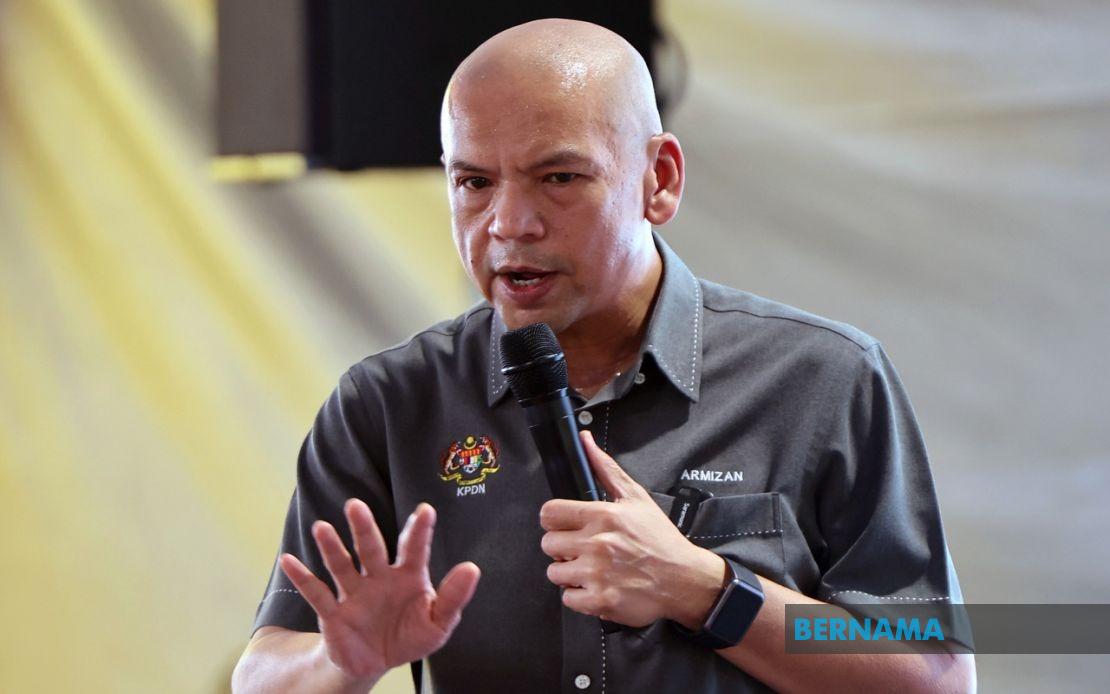
Small companies and local contractors operating throughout Malaysia will now access a monthly diesel quota of 300 litres distributed through fleet cards, marking a significant expansion of the government's targeted subsidy programme since its rollout on July 1 in Sabah, Sarawak, and Labuan. The measure is designed to cushion the financial pressures these businesses face as fuel costs directly impact their operational viability, particularly for those unable to qualify under existing sectoral categories.
Domestic Trade and Cost of Living Minister Datuk Armizan Mohd Ali announced the scheme while addressing concerns that micro-entrepreneurs and small business owners faced substantial barriers when attempting to secure assistance under individual applications. The flexibility introduced by this policy explicitly extends coverage to diesel vehicles registered in the names of partnership companies and sole proprietorships engaged in commercial activities, recognizing a gap in the original framework that excluded many legitimate small operators from support mechanisms.
The intervention reflects a Cabinet-approved initiative that prioritizes inclusion of business segments previously overlooked by the Subsidised Diesel Control System. The SKDS programme, which came into effect in the three affected states, originally concentrated support on two primary sectors: public transport operators and companies engaged in goods or consumer necessities distribution. These two categories capture the bulk of commercial diesel consumption, yet numerous smaller enterprises using diesel vehicles for their primary business operations fell outside this protective umbrella.
Armizan clarified that these newly eligible small businesses operate vehicles serving their commercial needs but do not fit neatly into either designated sector. Many sole proprietors and partnership-based companies in construction, logistics, agricultural services, and specialized trades depend on diesel vehicles but lacked pathways to access the subsidized rates that larger, sector-aligned competitors enjoyed. The government's decision to establish a separate allocation mechanism demonstrates responsiveness to feedback from business communities during the initial implementation phase.
The minister emphasized that the Federal Government maintains flexibility regarding the subsidy programme's operational mechanics and remains receptive to adjustments in Sabah, Sarawak, and Labuan. However, any modifications must balance three critical considerations: minimizing the cost impact on household and business finances, implementing robust leakage controls to prevent subsidy abuse or diversion to ineligible users, and ensuring that fiscal commitments remain sustainable within available government resources. These interconnected factors shape decision-making on programme scope and beneficiary targeting.
To strengthen delivery of diesel subsidies in remote and interior regions of Sabah and Sarawak, state-level administrative agencies will assume expanded roles in managing beneficiary registration and verification processes. This decentralized approach aims to ensure comprehensive coverage of eligible target groups, particularly in areas where geographical isolation and limited infrastructure previously created access difficulties. By leveraging local government capacity, the ministry intends to reduce gaps in implementation and ensure equitable distribution across both densely populated and remote settlements.
Beyond the diesel subsidy announcement, Armizan highlighted the MADANI Foster Village initiative being deployed in rural communities. The programme in Kampung Sekalong, Menumbok, received RM500,000 in allocation to fund five distinct development projects designed to yield immediate tangible improvements for residents. The intervention package addresses multiple infrastructure deficiencies simultaneously rather than pursuing piecemeal upgrades, reflecting a holistic approach to rural development gaps.
The five projects within the Kampung Sekalong allocation encompass construction of an open multi-purpose community hall, comprehensive upgrading of village roads, construction and repair of culverts for drainage management, installation of solar lighting systems, and creation of a distinctive landmark structure for the village. Implementation commenced immediately following the formal launch, with completion targets set within the 2024 calendar year. The ministry anticipates most projects will be finalized within two to three months, allowing the village to benefit from improvements relatively quickly.
The Papar Member of Parliament noted that the Kampung Sekalong project represents the third activation of the MADANI Foster Village Programme under his ministry's auspices. Earlier initiatives included a village project in Mukim Kaiduan, Papar, completed in 2024, and another in Mukim Tikam Batu, Kedah, from the previous year. This sequential deployment suggests the government intends to expand the programme across multiple states and constituencies, gradually addressing infrastructure disparities between urban and rural communities.
The MADANI Foster Village Programme operates as a government-wide initiative designed to narrow development gaps separating urban and rural populations. Beyond the specific projects in individual villages, the broader framework commits to expanding access to essential services including reliable water supply, electricity connections, road networks, public lighting, digital internet connectivity, and community facilities in underserved settlements. The programme acknowledges that persistent infrastructure deficits in rural areas contribute to migration pressures and reduced economic opportunities for residents.
For Malaysian readers and regional observers, these interconnected initiatives—the diesel subsidy expansion and rural infrastructure development—illustrate the government's dual focus on immediate cost-of-living relief for specific business segments and longer-term capacity-building in underserved communities. The diesel quota provision directly reduces operating expenses for small contractors, whose lower profit margins make fuel costs particularly consequential. Simultaneously, rural infrastructure improvements enhance economic capacity by reducing transportation costs, improving service accessibility, and establishing the foundation for local economic diversification.
The targeting approach employed in the diesel subsidy programme offers lessons relevant across Southeast Asia, where informal and small-scale commercial sectors often operate outside formal subsidy or support mechanisms. By creating specific pathways for partnership and sole proprietorship vehicles, Malaysia's model recognizes that business formalization exists on a spectrum and that regulatory design can either include or exclude significant portions of the working population. The 300-litre monthly allocation, while modest compared to commercial fleet requirements, represents a meaningful intervention for businesses with limited vehicle inventories.
Implementation effectiveness will ultimately depend on administrative capacity in state agencies and the accuracy of verification processes in identifying genuinely eligible businesses. The interior regions of Sabah and Sarawak present particular challenges due to dispersed populations and limited documentation infrastructure. Success requires coordinated efforts between federal ministries and state governments, supported by adequate resources and training for local officials executing verification and distribution functions.

