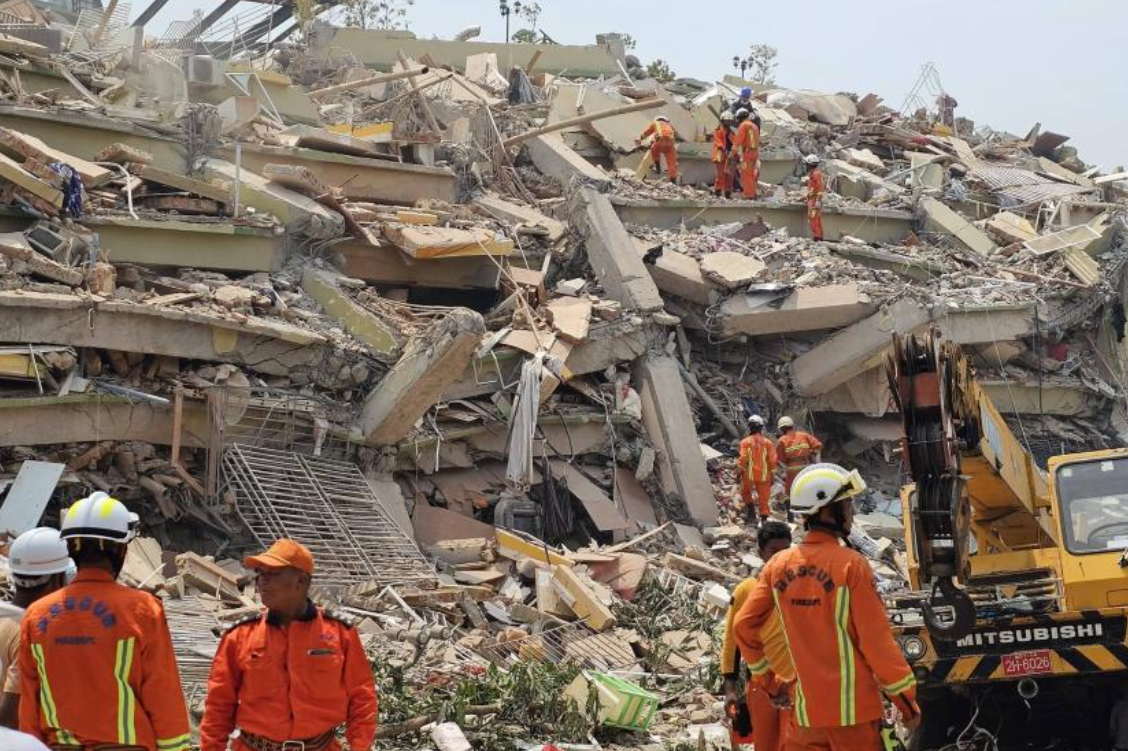
The owner of Sky Villa Condominium, a high-rise residential complex in Mandalay that became one of the deadliest casualties of Myanmar's recent seismic disaster, has been convicted and sentenced to five years in prison with hard labour. The Aungmyaythazan Township Court handed down the conviction against U Naing Htun Lin on June 23, marking a significant legal reckoning following the tragedy that claimed more than 200 lives at the eleven-storey building located on 60th Street between 21st and 22nd Streets in Aungmyaythazan Township.
The criminal proceedings against U Naing Htun Lin commenced in February when he faced charges under Section 304-A of the Penal Code—which addresses death caused by act endangering life or personal safety. The investigation was initiated at No. (1) Area Police Station in Aungmyaythazan Township before proceeding to the township court. Throughout the initial phases of the trial, the defendant had been released on bail, though this arrangement proved temporary as the judicial process unfolded.
In a significant procedural development, the court revoked U Naing Htun Lin's bail on March 17, leading to his remand in custody to await the continuation of proceedings. This reversal underscored the seriousness with which the court was treating the case and signalled a shift in judicial assessment of the circumstances surrounding the collapse. According to an information officer from the Aungmyaythazan Township Court, the case file has subsequently been referred to the Aungmyaythazan District Court for review under Criminal Revision Case No. 39Ka/2026, indicating that multiple judicial levels are now engaged with the matter.
The prosecution was pursued by U Zaw Moe Aung, a staff officer from the Special Investigation Department, functioning as the official plaintiff in the proceedings. The conviction itself represents an important moment in Myanmar's building safety accountability landscape, particularly given the scale of casualties resulting from the structural failure. The sentencing demonstrates judicial determination to assign criminal responsibility for construction failures that contributed to the catastrophic loss of life during a natural disaster.
Beyond the courtroom, efforts at reconciliation and compensation have occurred. Following the Sky Villa collapse, a group associated with the condominium's management, including Daw Thet Thet Khine, wife of U Naing Htun Lin and managing director of NTL Construction Company—the firm that constructed the doomed building—organised three separate memorial ceremonies at a monastery pavilion on 19th Street. These events provided a platform for expressions of remorse directed toward bereaved families, coupled with concrete financial recompense.
The compensation package offered to victims' families consisted of 10 million kyats per deceased person, representing an attempt to provide material relief to those affected by the tragedy. This acknowledgment of responsibility through both formal apology and substantial payments reveals a dual-track approach to addressing the disaster's human toll—combining legal accountability through criminal conviction with financial and symbolic gestures of contrition outside the courtroom.
The Sky Villa's collapse has become emblematic of broader concerns regarding building safety standards and construction oversight in Myanmar. As the nation continues to experience rapid urban development and construction expansion, particularly in major cities like Mandalay, the disaster has raised critical questions about adherence to building codes, structural integrity assessments, and regulatory enforcement mechanisms. The conviction signals that courts are prepared to hold developers and building owners personally accountable when construction failures result in mass casualties.
The verdict has not concluded legal proceedings, however. Sources familiar with the case indicate that both prosecution and defence are pursuing appeals and revision proceedings related to the judgment, suggesting that the case remains contested and may yet proceed through higher judicial instances. This ongoing appellate process reflects the complexity of assigning criminal liability in disaster situations where multiple factors—including natural calamity, construction practices, regulatory compliance, and maintenance standards—intersect to produce catastrophic outcomes.
For Southeast Asia more broadly, the Mandalay earthquake and subsequent legal action represent instructive examples of how courts grapple with accountability in the aftermath of building collapses exacerbated by seismic events. The case demonstrates both the challenges of prosecuting complex infrastructure failures and the determination of judicial systems to establish personal responsibility when deaths result from inadequate construction practices or negligent oversight. As Myanmar continues its post-disaster recovery and reconstruction efforts, the Sky Villa case will likely influence future building safety regulations and enforcement practices across the region.

