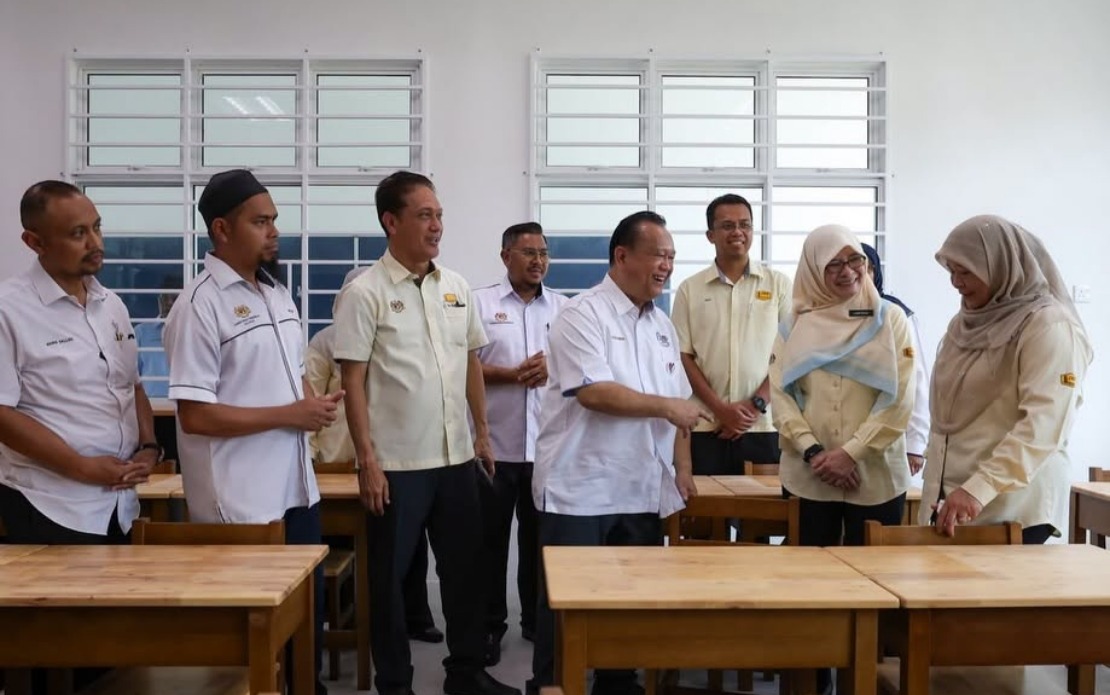
A major school reconstruction project in Pahang has delivered a rare success story in Malaysia's infrastructure development landscape, with the Works Ministry celebrating the completion of work at SK FELDA Kota Gelanggi 1 in Jerantut more than 300 days ahead of its original deadline. Works Minister Datuk Seri Alexander Nanta Linggi attributed the early finish to strong project management and contractor performance, using the milestone to reinforce the government's commitment to improving educational infrastructure across the country.
The RM7.998 million undertaking began in January last year and reached completion on June 26, substantially outpacing the May 2, 2027 target date established at the project's inception. This acceleration represents a significant departure from the typical pattern of construction delays that have plagued numerous public works initiatives in Malaysia, where cost overruns and time extensions have become commonplace. The absence of any extension of time claims further underscores the efficiency with which the contractor managed resources and timelines throughout the implementation phase.
At its core, the project addressed longstanding infrastructure deficits that had constrained the school's capacity to provide modern learning environments. The new academic block encompasses three standard classrooms alongside specialized facilities including a dedicated science room and health clinic, resources that enhance the educational experience for the school's general student population. However, the most significant component addresses an often-overlooked segment of Malaysia's student body: those requiring special educational support.
Parallel to the academic block, the project delivered a fully equipped Special Education Integration Programme (PPKI) block designed specifically to accommodate students with diverse learning needs. According to Nanta, approximately 17 pupils with special educational needs currently stand to benefit from these newly constructed facilities. The inclusion of tailored infrastructure for this cohort reflects evolving national approaches to inclusive education, moving beyond mere classroom integration toward providing purpose-built spaces that enable meaningful participation in the learning process.
The completion ahead of schedule carries broader implications for Malaysia's infrastructure delivery landscape, where projects frequently suffer from administrative delays, contractor underperformance, and unforeseen complications. By demonstrating that accelerated timelines are achievable without compromising quality, the SK FELDA Kota Gelanggi 1 project establishes a benchmark for public sector accountability. Nanta explicitly framed the achievement as evidence of effective government project implementation, suggesting that similar performance metrics could be applied to assess contractor competence and project oversight mechanisms elsewhere.
Beyond the immediate benefits to students and teachers at this particular institution, the project reflects ongoing efforts to systematically upgrade dilapidated educational infrastructure throughout Pahang. The Works Minister indicated that multiple allied construction and refurbishment initiatives targeting deteriorating school buildings remain in progress across the state. His expressed hope that these parallel projects could similarly achieve early completion suggests institutional ambition to reverse entrenched patterns of delay and to establish performance cultures within the development sector.
The handover ceremony underscored the importance of sustained quality assurance in public infrastructure. Nanta directed contractors to address defect liability period complaints with urgency and professionalism, emphasizing that the completion of construction represents merely the midpoint in a facility's lifecycle. His instruction that the Public Works Department maintain post-handover monitoring protocols addresses a critical gap frequently observed in Malaysian public projects, where inadequate maintenance regimes have allowed newly completed facilities to deteriorate rapidly. Ensuring that buildings remain safe, functionally sound, and aligned with prescribed standards requires institutional discipline throughout the defect liability period and beyond.
For the broader Southeast Asian context, Malaysia's experience with school infrastructure represents a microcosm of regional development challenges. Educational facilities across the region frequently suffer from deferred maintenance and insufficient resources, constraining educational outcomes particularly in rural areas. The SK FELDA Kota Gelanggi 1 project demonstrates that even within resource-constrained environments, disciplined project management and accountability frameworks can deliver results that positively impact student welfare and educational quality.
The inclusion of specialized facilities for students with special needs carries particular regional significance. Many Southeast Asian countries have historically marginalized students with disabilities from mainstream educational settings, either through explicit exclusion or through practical barriers embedded in physical infrastructure. By proactively constructing dedicated PPKI spaces as an integral component of school development, Malaysia signals commitment to inclusive education principles that align with international standards and emerging regional consensus around educational equity.
The project's success also speaks to the effectiveness of dedicated funding allocations for infrastructure renewal. The RM7.998 million investment, while substantial, represents targeted deployment of resources toward addressing genuine deficiencies rather than dispersed funding approaches that often fail to achieve meaningful outcomes. This concentrated investment model may offer lessons for other state governments and federal departments seeking to rationalize infrastructure spending in an era of fiscal constraints.
Looking forward, the challenge lies in replicating this performance across Malaysia's extensive portfolio of aging educational infrastructure. Thousands of schools throughout the country operate from facilities that have fallen below acceptable standards, yet comprehensive renewal programmes remain underfunded and episodically implemented. The SK FELDA Kota Gelanggi 1 precedent suggests that accelerated timelines and quality outcomes are achievable, provided that project governance, contractor selection, and oversight mechanisms function effectively.
The ceremony at SK FELDA Kota Gelanggi 1 ultimately represents a moment of justified institutional pride, but also an implicit acknowledgment that such achievements should represent the norm rather than the exception. As Malaysia continues navigating post-pandemic fiscal constraints while confronting infrastructure deficits accumulated over decades, replicating this project's efficiency across diverse contexts and scales will determine whether the nation can genuinely transform the physical environments in which its students learn and develop.

