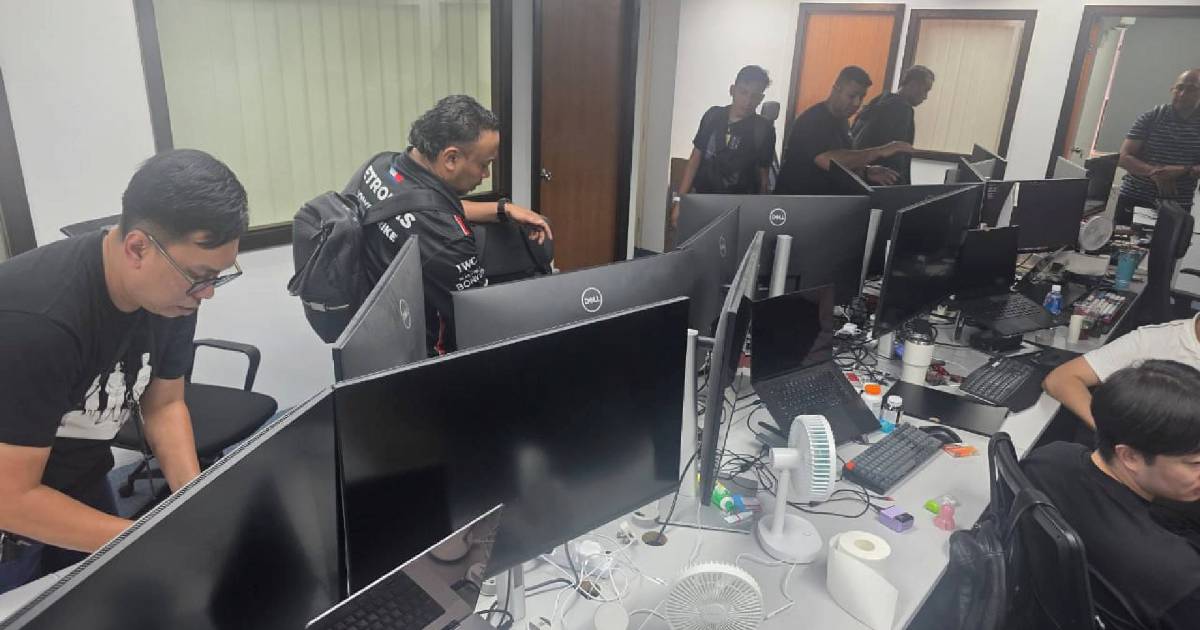
Police in Kuala Lumpur have dismantled a significant illegal gambling network following a raid on an underground betting operation housed within an office building in Taman Desa, Brickfields. The enforcement action resulted in the apprehension of 11 individuals, among them six nationals from South Korea who appear to have held operational roles within the syndicate. The bust represents part of ongoing efforts by Malaysian authorities to combat underground sports betting, which remains a persistent challenge across the region.
The operation functioned as a call centre, suggesting it relied on telephone-based communication to process wagers on World Cup matches. This business model allows syndicates to maintain a degree of anonymity while reaching customers across multiple jurisdictions, making such operations particularly difficult for law enforcement to detect and monitor. The presence of multiple South Korean operatives indicates that international criminal networks have established footholds in Malaysia's underground gambling ecosystem, leveraging the country's strategic location and telecommunications infrastructure.
The involvement of foreign nationals in running such enterprises points to a growing trend of transnational organized crime targeting sports betting markets. South Korean individuals have become increasingly implicated in similar operations across Southeast Asia, suggesting either an established supply chain of expertise or organized coordination between crime syndicates operating across borders. These networks exploit regulatory gaps and enforcement challenges to extract significant revenues from Malaysian punters and customers throughout the region.
World Cup betting syndicates hold particular appeal for organized crime groups because major international tournaments generate enormous wagering volumes in short periods. The global reach and high-profile nature of World Cup matches attract both casual and serious gamblers willing to risk substantial sums, creating lucrative revenue streams for illegal operators who face fewer regulatory constraints than licensed gaming establishments. Such operations typically employ sophisticated payment mechanisms to obscure the flow of funds, making financial investigation a critical component of enforcement efforts.
The geographic location of this particular operation in Taman Desa, a mixed commercial and residential area in central Kuala Lumpur, suggests operators deliberately chose accessible urban settings rather than remote hideouts. This approach allows easier staff rotation, customer access, and rapid relocation if authorities identify the location. The use of conventional office space rather than dedicated underground facilities represents an evolution in operational security tactics, as it reduces suspicion from building managers and neighboring tenants.
Malaysia's legal framework treats unauthorized gambling as a serious offense, with participants and operators facing substantial penalties including imprisonment and financial sanctions. However, the persistence of such operations indicates that enforcement alone has proven insufficient to deter criminal networks from targeting the Malaysian market. The demand for unregulated betting remains strong, particularly during major sporting events when mainstream licensed operators in neighboring jurisdictions experience surge in activity.
The cross-border dimensions of this case underscore challenges facing Malaysian law enforcement when pursuing international criminal networks. Extradition agreements, differing legal standards, and coordination difficulties between agencies across Southeast Asia complicate efforts to fully dismantle these syndicates. South Korean authorities may pursue parallel investigations into whether the arrested operatives received directions from command structures based in their home country, potentially unveiling broader organizational networks.
For Malaysian betting enforcement agencies, the raid's success depends not merely on arrests but on seizing financial records, communication logs, and equipment that might reveal customer networks and financial flows. Understanding the full operational scope of this syndicate could illuminate how revenues were distributed, which makes the investigation's financial component potentially as significant as the arrests themselves. Such intelligence often proves valuable in disrupting international money laundering operations that support transnational crime.
The timing of this raid coinciding with World Cup betting activity highlights how sporting calendars create predictable demand spikes that law enforcement can leverage for strategic interventions. However, the underlying challenge persists year-round, as underground operators continuously adapt to escape detection. Regional cooperation on intelligence sharing and coordinated enforcement actions remains essential for addressing the organized crime dimensions of illegal gambling, yet such cooperation has historically proven sporadic across Southeast Asia.
Looking forward, this bust may prompt authorities to examine office buildings and commercial spaces more systematically for similar operations. It also raises questions about how mainstream banks and payment service providers inadvertently facilitate fund flows to illegal betting networks, suggesting that addressing the problem comprehensively requires engagement with financial institutions beyond traditional law enforcement approaches. The arrest of six foreign nationals may catalyze enhanced border monitoring and cooperative agreements with South Korean authorities regarding transnational gambling crime.

