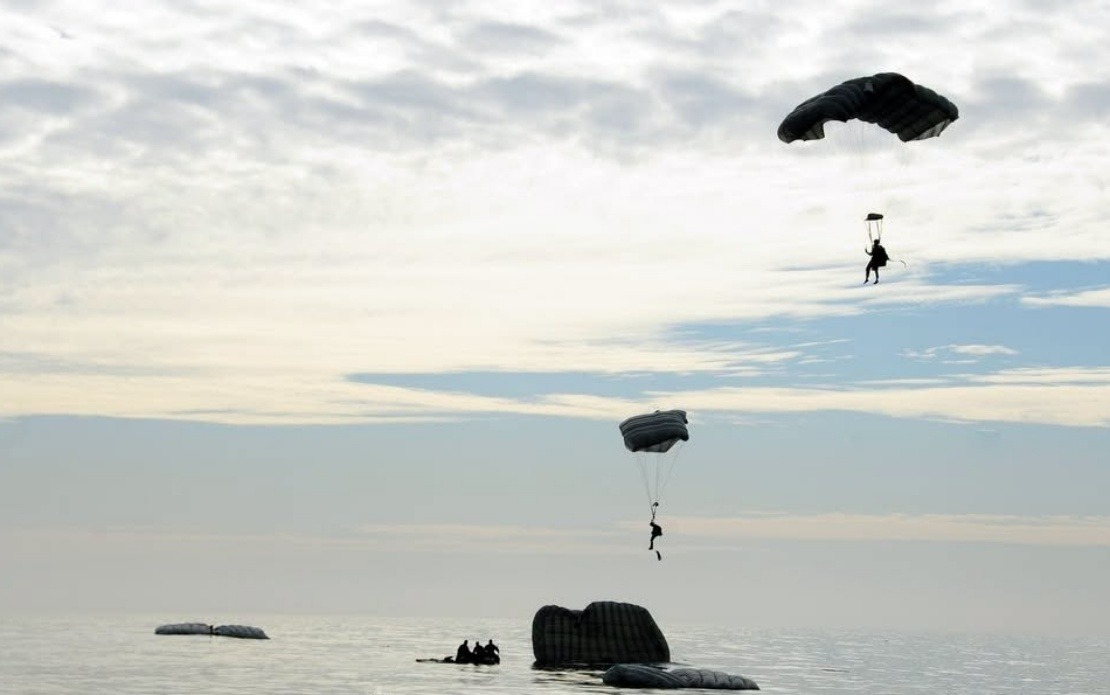
A training exercise in the South China Sea became an unplanned test of survival skills when six personnel from Malaysia's elite Naval Special Warfare Forces, known as PASKAL, drifted from their intended landing zone during a free-fall parachuting operation. The Royal Malaysian Navy confirmed that all six commandos were located and safely extracted from the water by an RMN vessel, with the incident occurring during what should have been a routine training deployment.
The unexpected diversion stemmed from rapidly deteriorating weather conditions that swept across the operational area, severely compromising visibility for the airborne personnel executing their descent. Parachute operations in maritime environments are inherently complex, requiring precise coordination between weather monitoring, navigation systems, and individual jumper performance. The sudden meteorological shift prevented the six from maintaining visual reference to their intended landing site, a critical factor in accurately executing free-fall insertions near the coast.
This incident highlights the unpredictable nature of operations conducted in the South China Sea, where maritime weather patterns can change with little warning. The region experiences monsoon seasons and localized squalls that military planners must account for during any sustained training programme. For Malaysia's maritime defence forces, operating in these waters demands constantly refined contingency protocols and rigorous personnel preparation for scenarios beyond the standard playbook.
The Royal Malaysian Navy characterized the incident as validation of PASKAL's training methodology rather than a failure of preparedness. According to an RMN statement released following the recovery, the unit's emphasis on realistic, continuous training has cultivated the high-level resilience and discipline necessary for personnel to maintain composure and execute survival procedures when confronted with genuine emergency situations. The successful recovery reflected both the training protocols and the broader safety architecture surrounding such exercises.
PASKAL, which operates under the motto "Sentiasa yang Terbaik" (Always the Best), represents Malaysia's premier maritime special operations capability. These personnel undergo some of the most demanding physical and mental conditioning within the Malaysian armed forces, preparing them for deployment in challenging environments ranging from counter-terrorism operations to humanitarian assistance missions. The skills tested during this parachute exercise—rapid decision-making, water survival, signalling procedures, and maintaining psychological stability during unexpected circumstances—are foundational to their operational effectiveness.
The RMN's handling of the recovery operation demonstrates the layered safety approach governing Malaysian military training activities. Despite personnel missing their intended landing zone, surface assets were positioned to respond immediately, suggesting that contingency monitoring was actively maintained throughout the operation. This pre-positioned response capability indicates that military planners had anticipated potential complications and established protocols to manage them, a standard practice for high-risk training exercises involving insertion operations over open water.
Weather management presents one of the persistent challenges for maritime military training in Southeast Asia. Meteorological forecasting provides probabilistic predictions rather than certainties, particularly in tropical regions where atmospheric dynamics can produce rapid local changes. Military training planners must therefore balance the desire to expose personnel to realistic, challenging conditions with the imperative to maintain safety margins. In this instance, weather deterioration exceeded acceptable thresholds, triggering the need for personnel to adapt their operational plan during execution.
The incident carries implications for how Malaysia's defence forces calibrate training intensity and environmental risk exposure. While the RMN framed this event positively—emphasizing the value of realistic training stress—it also underscores the importance of continuous evaluation of safety protocols and decision-making frameworks. Other regional navies and special forces units operating in the South China Sea will likely monitor how the Malaysian military refines its procedures following this incident, as training accidents can ripple across allied military communities.
For the broader Malaysian defence establishment, maintaining public confidence in military training safety remains essential, particularly as the nation invests in expanding its special operations capabilities. The transparent communication from the RMN regarding this incident, including immediate recovery of all personnel and an explanation of the causative factors, reflects an organizational approach that prioritizes accountability alongside operational effectiveness. This openness helps sustain public and political support for the resource-intensive training programmes that sophisticated military units require.
Looking forward, this incident will likely inform adjustments to PASKAL's training calendar and operational procedures. Weather-dependent training exercises may face revised scheduling protocols or enhanced predictive meteorology integration. Such iterative improvements represent how professional military organizations evolve their practices in response to operational experience, whether planned or unplanned. The six personnel involved will presumably return to full duty with expanded personal experience managing unexpected maritime emergencies, adding to the collective institutional knowledge within the unit.

