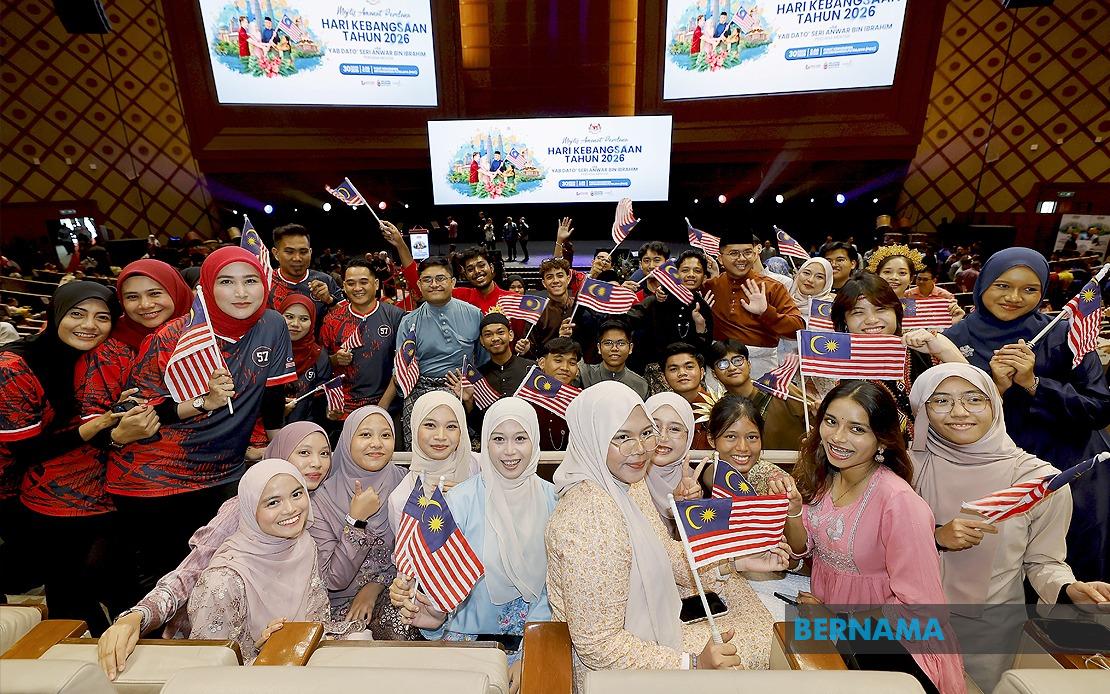
Prime Minister Datuk Seri Anwar Ibrahim outlined six strategic policy measures during his National Day address in Putrajaya on August 30, each designed to address specific needs across Malaysia's economic and social landscape. The announcements represent a targeted approach to supporting working Malaysians, young professionals and small business operators who face mounting cost pressures. The initiatives span fuel subsidy enhancement, technology access for youth, infrastructure investment and financial support for micro-entrepreneurs, signalling the government's intention to distribute benefits broadly across income levels and age demographics.
Among the most immediately tangible measures is the restoration of the Budi MADANI RON95 fuel subsidy programme, which will expand monthly allocations from 200 litres back to 300 litres. This adjustment directly affects millions of Malaysians dependent on personal vehicles for commuting, particularly those in suburban and rural areas where public transport remains limited. The decision addresses widespread frustration among middle-income earners caught between full-price fuel costs and inadequate subsidy levels. For a private-sector company secretary like Mohd Aliff Rino, 26, the additional 100 litres monthly represents meaningful relief for daily operational costs, reducing the financial stress of maintaining regular vehicle usage for work and personal obligations.
The government simultaneously increased the Budi Diesel quota from 300 litres to 400 litres per month, extending comparable support to commercial operators and those using diesel vehicles for business purposes. These parallel adjustments demonstrate recognition that fuel expenses affect both passenger and commercial vehicle users differently, requiring differentiated policy responses. The expanded allocations acknowledge the regressive nature of fuel costs, where price increases disproportionately burden lower and middle-income households that spend larger portions of household income on transportation.
A second major initiative targets youth engagement with artificial intelligence through the AI for the People programme, offering 100,000 young Malaysians aged 18 to 30 complimentary three-month subscriptions to three AI applications upon completing required modules. This intervention reflects growing awareness that digital literacy and AI competency increasingly determine economic opportunity and career advancement in competitive labour markets. For young professionals like Nur Liyana, 24, an accounts assistant, the initiative represents practical recognition that AI tools already shape workplace productivity and that structured access through government support can democratise technology that might otherwise remain unavailable to those without corporate training budgets.
The government's commitment to AI accessibility extends beyond simple tool provision, embedding skill-building through mandatory modules that establish foundational understanding alongside hands-on application. This pedagogical approach differs from providing technology access alone, instead positioning AI literacy as a workforce development priority. For a generation facing uncertain employment prospects and rapid technological disruption, such initiatives signal government acknowledgment that traditional education alone insufficient preparation for contemporary labour markets.
Education infrastructure receives substantial investment through a 50 per cent increase in school maintenance funding for 2027, raising allocations to RM1.5 billion. This enhancement addresses widespread concerns about deteriorating facilities in Malaysian schools, from ageing classroom infrastructure to inadequate sanitation and security systems. Improved maintenance directly benefits students and educators by creating safer, more functional learning environments. The investment also represents indirect economic stimulus, as maintenance contracts support construction workers and service providers.
Small business support receives attention through two distinct mechanisms. The RM200 million Geran Sejahtera MADANI programme specifically targets hawkers, night market traders and home-based entrepreneurs, particularly women running small operations from residential locations. This demographic, often excluded from conventional banking relationships and formal credit systems, faces persistent capital constraints limiting expansion and modernisation. Direct grants rather than loans reduce debt burdens that frequently trap micro-entrepreneurs in subsistence-level operations.
Microfinancing receives parallel support through RM1 billion in additional facilities, expanding total 2026 microfinance funding to RM6 billion. For traders like Iqbal Hakimi Kaharudin, 24, who works in procurement and understands supply chain financing, accessible microfinance enables inventory expansion and operational scaling impossible under traditional lending criteria. This dual approach—combining grants for the most vulnerable with expanded credit for slightly larger operations—creates a continuum of support across the small business spectrum.
Administrative compliance burdens facing small businesses receive reduction through raising the e-Invoice exemption threshold from RM1 million to RM3 million in annual turnover. This adjustment particularly benefits businesses in transition from informal to formal sector participation, where compliance costs often exceed administrative capacity. By extending the exemption threshold, the government recognises that premature regulatory burden can discourage formalisation and business registration, counterproductive to broader economic development goals.
The six measures collectively illustrate an approach recognising that economic support requires differentiated strategies. Fuel subsidies target transport-dependent workers; AI training addresses youth employment prospects; school maintenance improves public service quality; microfinance and grants support entrepreneurial ambitions; and regulatory adjustment eases business formalisation. This diversification means benefits flow across the M40 middle-income category, young people seeking skill development and entrepreneurs navigating early business stages.
For Malaysian policymakers and regional observers, the announcement reflects ongoing debate about optimal state intervention in markets. Rather than broad stimulus or universal basic income, these targeted measures seek to address specific sectoral constraints while preserving fiscal discipline. This approach aims to support those facing genuine market failures or accessibility barriers without subsidising consumption across all income levels. Whether these initiatives effectively reach intended beneficiaries and generate measurable improvements in living standards and economic participation will significantly influence public perception of government economic stewardship heading toward subsequent policy cycles.
The announcements underscore government determination to distribute development benefits across diverse population segments rather than concentrating support among particular constituencies. By addressing fuel costs, technology access, education quality, business financing and regulatory efficiency simultaneously, the administration signals that inclusive economic growth requires attending to multiple constraints simultaneously rather than relying on single-policy solutions.

