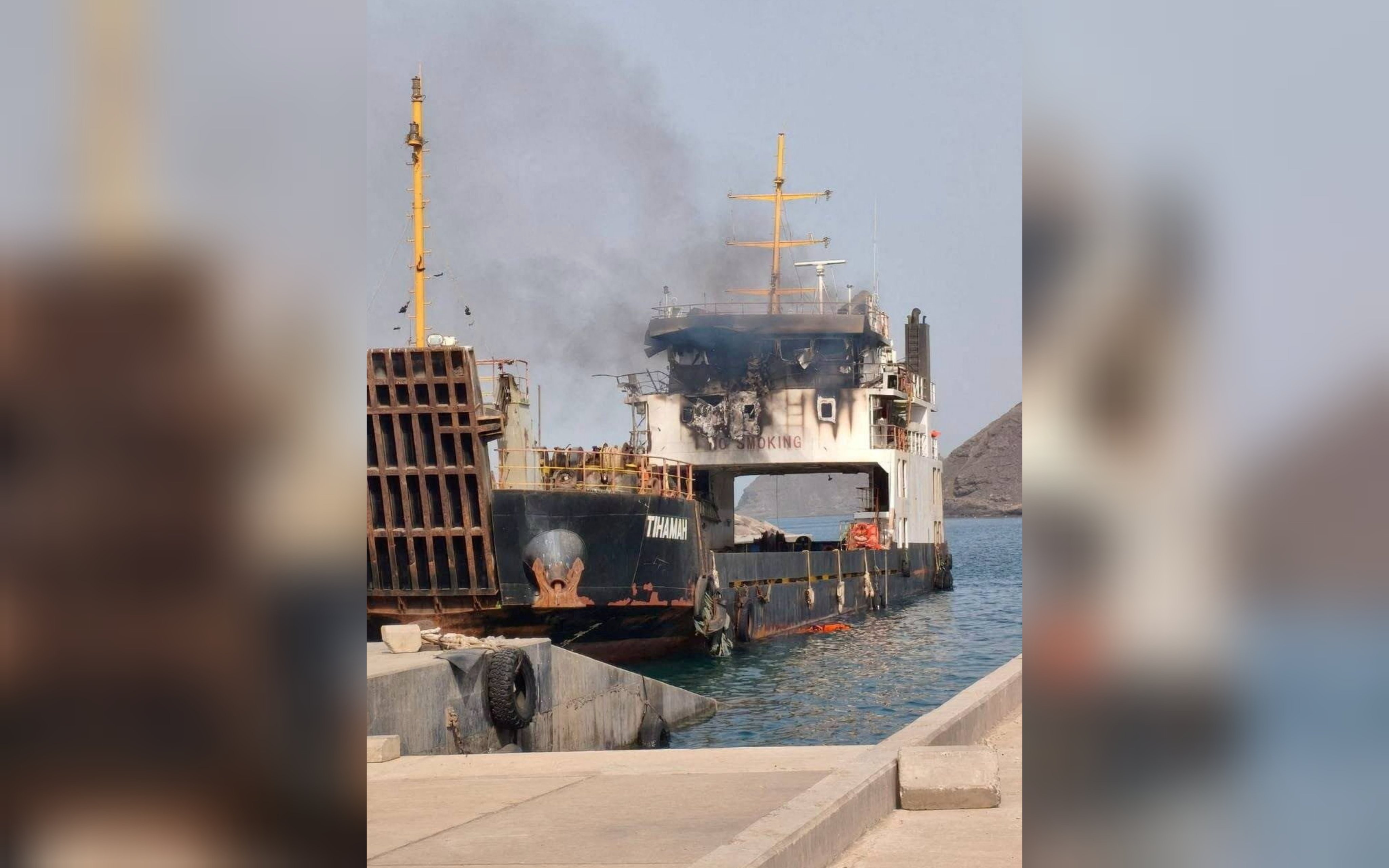
A Houthi assault on a commercial ship transiting the Bab al-Mandeb Strait on Tuesday resulted in six fatalities and ten injuries, according to Yemen's Coast Guard. The attack underscores the mounting perils facing maritime traffic through one of the world's most strategically important waterways, a chokepoint separating the Arabian Peninsula from the African coast and serving as the gateway connecting the Indian Ocean to the Red Sea and beyond to the Mediterranean.
The vessel targeted, the Yemeni-flagged Tihamah, was carrying food supplies when it came under attack. Casualties included four crew members—three Pakistani nationals and one Indonesian—alongside two personnel from Yemen's armed forces' 2nd Naval Brigade. The assault left seven additional crew members, two coast guard officials, and one brigade member wounded. Beyond those killed and injured, Yemeni authorities reported the successful rescue of eleven sailors, comprising both Pakistani and Indonesian nationals, from the stricken vessel.
Yemen's Transportation Ministry detailed a particularly aggressive and methodical attack, describing how the Tihamah absorbed three direct hits from ballistic missiles while navigating the strait. The strikes ignited fires aboard the vessel and caused extensive structural damage. In a notably disturbing escalation of tactics, ministry officials stated that Houthi forces launched a fourth missile specifically timed to strike as rescue teams were approaching the injured crew, apparently designed to maximize casualties and obstruct humanitarian assistance efforts.
The ministry's condemnation of the incident as a "terrorist crime" reflects the deepening concern among Yemeni government authorities regarding what they characterize as a deliberate campaign to destabilise maritime commerce and civilian infrastructure. Officials drew connections between this attack and a broader pattern of Houthi targeting of ports, civilian facilities located in government-controlled territories, and commercial shipping serving those regions. This systematic approach suggests a strategy extending far beyond isolated incidents.
The implications for civilian populations dependent on maritime supply routes carry particular weight. Yemen's government warned that such attacks directly jeopardize food security and the delivery of consumer goods to millions of Yemenis across the country, affecting both government-held areas and Houthi-controlled territory. The targeting of a vessel explicitly carrying food supplies amplifies concerns about weaponised disruption of humanitarian supply chains during an ongoing humanitarian crisis.
The Bab al-Mandeb Strait occupies critical importance for regional and global commerce. As the counterpart gateway to the Red Sea opposite the Strait of Hormuz on the Persian Gulf side, this waterway channels substantial portions of international maritime trade. Disruptions to shipping security in this corridor reverberate across Asia-Pacific supply chains and directly affect import-dependent economies across Southeast Asia, including Malaysia, which relies heavily on stable Red Sea passage for energy imports and general commerce.
The Houthi group, whose control extends across populated regions of northern Yemen, has not yet issued statements regarding the incident or provided their perspective on the attack. The absence of immediate commentary prevents assessment of whether the group views the action as part of broader strategic objectives or would characterise it differently from international condemnation. Historical patterns, however, indicate the group's willingness to employ maritime violence in pursuit of political and military objectives.
This incident arrives amid broader regional tensions affecting maritime security throughout the Red Sea and Gulf of Aden. The recurring attacks on commercial vessels—regardless of flag, cargo, or nationality—create sustained uncertainty for shipping companies, insurance providers, and trading nations. The economic costs extend beyond immediate casualties and damage, encompassing elevated insurance premiums, rerouting of vessels around the African continent, and general disruption to efficient global trade flows.
For Malaysian stakeholders, the attack reinforces existing vulnerabilities within regional supply chains already strained by competing geopolitical pressures. Malaysia's significant dependence on Red Sea passage for petroleum imports and its role as a transhipment hub for regional trade make maritime security in this corridor a matter of direct national economic interest. The demonstrated willingness to launch multiple coordinated strikes and attempt to obstruct rescue operations suggests a qualitative escalation in attack sophistication.
The broader ramifications extend to international maritime law and norms. Attacks on clearly commercial vessels carrying food supplies test the boundaries of acceptable conduct even in conflict situations. The apparent targeting of rescue operations represents a particularly flagrant departure from established humanitarian principles governing armed conflict. These developments may prompt renewed international discussions regarding maritime security, freedom of navigation, and mechanisms for protecting civilian commerce in disputed waters.
As investigations continue into the precise circumstances surrounding the Tihamah's destruction, the incident exemplifies the precarious position of international maritime commerce traversing geopolitically contested waters. Whether this attack catalyses broader international intervention or diplomatic initiatives remains uncertain, but the human cost and economic implications ensure the incident will factor prominently into regional security calculations and maritime insurance assessments for months ahead.

