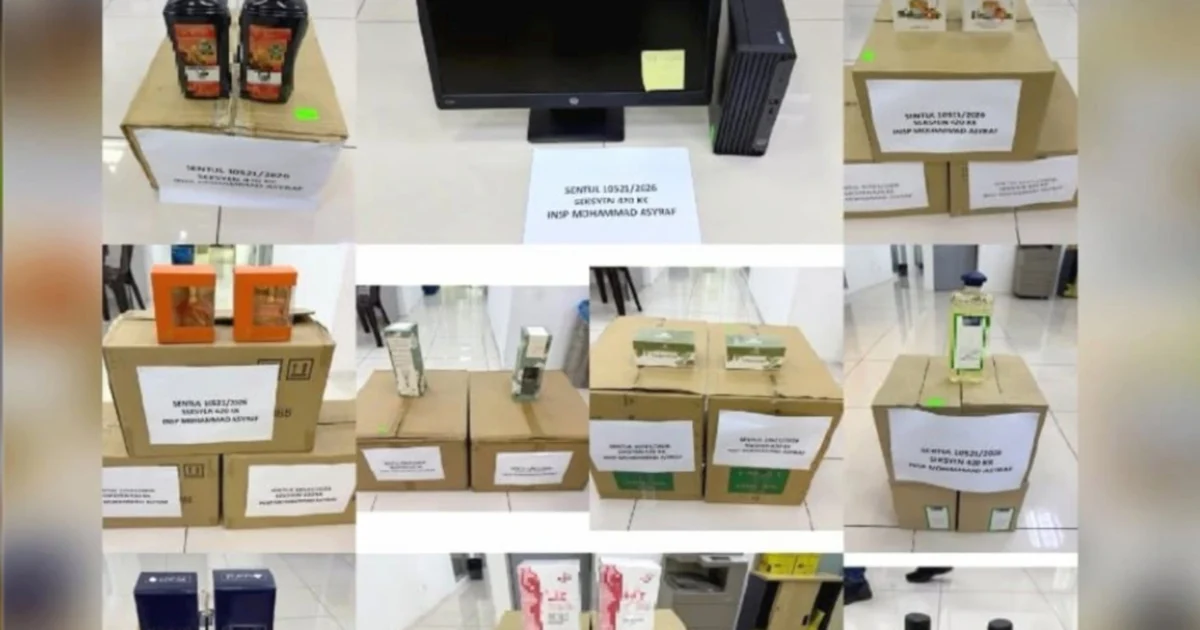
Law enforcement officials in the Kuala Lumpur metropolitan region have moved decisively against an alleged investment fraud operation centred on high-value perfume offerings, culminating in a coordinated raid at a commercial premises in KL Eco City that resulted in six arrests on Wednesday.
The operation represents the latest in a series of crackdowns against investment scams that have proliferated across Malaysia's financial services ecosystem. The perfume sector has emerged as a particularly vulnerable niche, with fraudsters leveraging the opacity of pricing mechanisms and difficulty in verifying authenticity to extract substantial sums from credulous investors seeking returns through alternative asset classes.
The syndicate members were apprehended at their operational hub within the KL Eco City development, a major commercial and residential complex in the heart of Kuala Lumpur's financial district. The timing of the raid suggests coordinated intelligence gathering and careful planning by the authorities to neutralise the group before evidence could be destroyed or network members dispersed.
Investment scams exploiting the perfume market have gained traction regionally as cybercriminals and organized fraud networks seek new vectors for deception. The accessibility of online marketing platforms, combined with aspirational branding and psychological manipulation tactics, has made perfume investment schemes particularly effective at attracting middle-class investors searching for non-traditional wealth accumulation strategies.
The modus operandi of such syndicates typically involves presenting perfume as a legitimate collectible asset with guaranteed appreciation potential, often supported by fabricated certificates of authenticity and inflated market comparisons. Victims are frequently recruited through social media platforms, investment forums, and word-of-mouth networks, with initial returns sometimes honoured to establish credibility before significant capital is invested.
The arrest of six individuals suggests this particular operation maintained a structured hierarchy, likely encompassing roles such as customer acquisition specialists, transaction processors, and senior coordinators. The premises in KL Eco City, located in a reputable commercial address, would have conferred legitimacy upon the syndicate's fraudulent marketing claims and potentially attracted a clientele with greater disposable income.
This case underscores the evolving landscape of financial crime in Malaysia, where traditional investment scams have been supplemented by schemes targeting niche commodity markets. Regulatory authorities and law enforcement agencies have increasingly recognized that fraud syndicates deliberately target emerging asset classes where consumer education remains limited and official oversight fragmented.
The perfume investment sector lacks the transparency frameworks applicable to securities markets or regulated commodity exchanges, creating opportunities for unscrupulous operators to misrepresent product quality, overstate market demand, and fabricate resale mechanisms. Investors have discovered that promised exit strategies prove non-existent, and the perfumes themselves possess minimal resale value when scrutinized by independent valuators.
Investor protection remains a critical challenge across Southeast Asia, where financial literacy gaps and the appeal of quick returns continue driving vulnerable populations toward fraudulent schemes. The perfume market's recent emergence as a scam vehicle reflects fraudsters' adaptability in identifying and exploiting blind spots within regulatory frameworks and consumer awareness.
Authorities have indicated that investigations into the syndicate's operations are progressing, with focus areas likely including the identification of victim networks, financial transaction tracing, and coordination with other jurisdictions where related schemes may be operating. The scale and scope of the alleged fraud operation will become clearer as forensic analysis of seized records proceeds.
For Malaysian investors, this case reinforces the necessity of conducting thorough due diligence before committing capital to alternative asset investments, verifying claims through independent sources, and maintaining skepticism toward investment offerings that promise unusually high or guaranteed returns. The involvement of registered financial advisors in any perfume investment transaction remains extremely rare, and consumers should exercise particular caution when approached by unregulated marketers.
The successful dismantling of this syndicate demonstrates law enforcement's commitment to pursuing complex fraud networks, yet the underlying vulnerabilities that enable such operations to flourish continue requiring systemic remediation through enhanced regulatory oversight, improved reporting mechanisms, and coordinated intelligence sharing among agencies tracking organized financial crime across the region.

