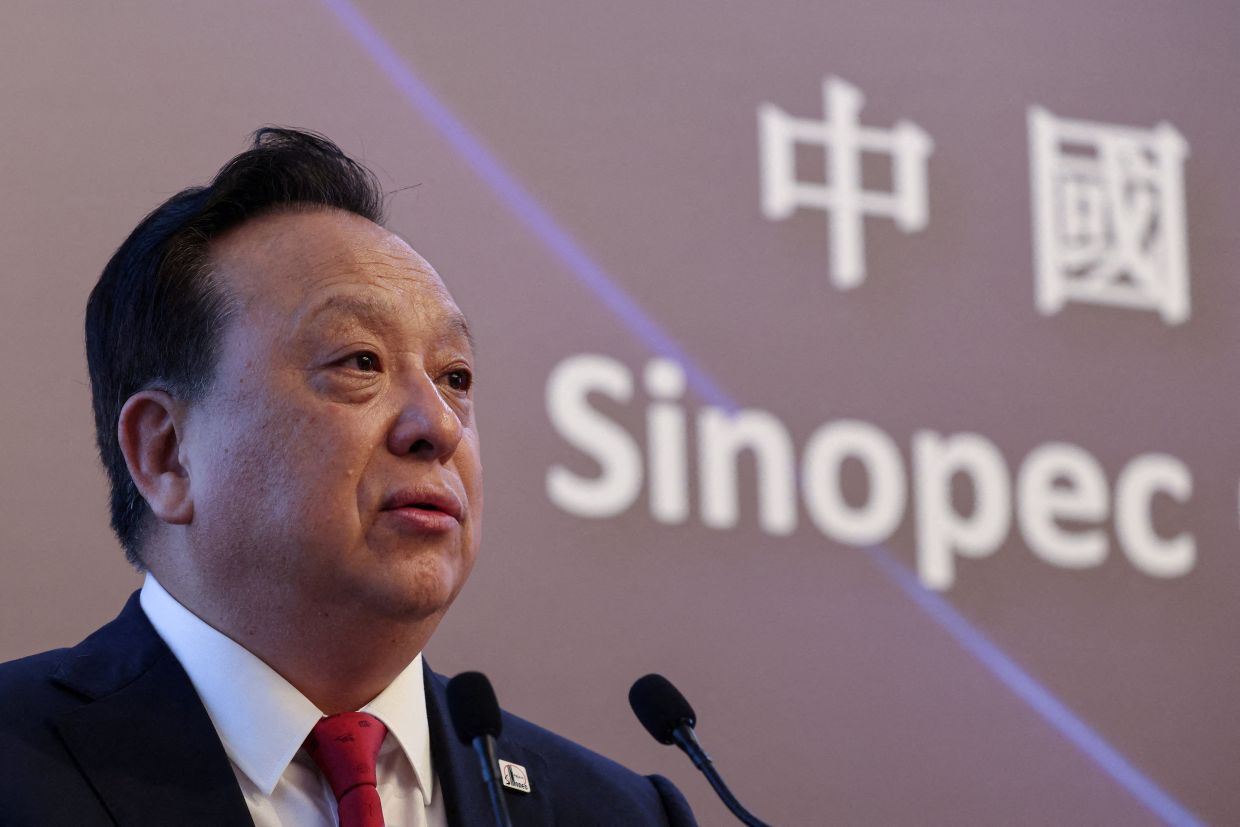
Hou Qijun has assumed leadership of Sinopec at a pivotal moment for the world's largest oil refiner, rejecting the comfortable trajectory that typically awaits Chinese state enterprise executives approaching retirement age. Rather than coast toward the traditional 63-year-old retirement threshold that defines most state-owned enterprise careers, the 60-year-old has embarked on a comprehensive transformation programme designed to position Sinopec for survival in an era of shrinking fuel consumption and mounting energy transition pressures. His appointment to the chairmanship just over a year ago marked the beginning of a systematic effort to dismantle what he characterises as organisational inertia and restore the company's capacity to respond nimbly to market upheaval.
The structural reorganisation Hou implemented reshapes Sinopec around four distinct profit centres that consolidate previously fragmented operations into cohesive business units capable of independent decision-making. These centres span oil, gas and new energy development; refining and chemicals production; finance and strategic ventures; and a combined global trading and marketing operation that leverages Sinopec's extensive distribution networks across fuel, natural gas and chemical products. This architectural redesign represents more than administrative shuffling; it reflects a deliberate attempt to inject market discipline into a sprawling bureaucracy, allowing business units to compete internally while responding faster to external shifts. The restructuring philosophy draws on Hou's previous track record orchestrating the 2019 consolidation of pipeline assets across China's three major oil companies into PipeChina, where he demonstrated capacity to navigate complex institutional reorganisations within China's state-controlled energy sector.
Hou's diagnosis of Sinopec's predicament, articulated with unusual directness in a July publication by China's State-owned Assets Supervision and Administration Commission, identifies institutional rigidity rather than technological or resource constraints as the fundamental challenge. He emphasises that as organisations expand in scale, their agility in adapting to market transformation invariably diminishes, a phenomenon he terms the "big company syndrome." This candid acknowledgement of organisational pathology, rare among state enterprise leaders addressing public audiences, signals both the severity of Sinopec's strategic crisis and Hou's willingness to challenge conventional narratives about why state firms struggle. The observation carries particular resonance for Malaysia and regional businesses observing how established energy giants navigate disruption, offering insight into how even commanding market positions become liabilities when institutional structures prevent rapid strategic pivoting.
The operational reality underlying Hou's restructuring urgency appears starkly evident in recent performance data. Sinopec's fuel sales have retreated to 2017 levels even as the company pumped approximately 3.6 million barrels daily of gasoline and diesel into predominantly domestic markets last year. This volume, once representing market dominance, increasingly constitutes a structural vulnerability as vehicle electrification accelerates across China and globally. A Chinese institutional investor with shareholdings in Sinopec characterised the company as fighting for survival in an increasingly constrained position, though the first-half 2026 earnings report delivered an encouraging 19 per cent rise in net profit despite exposure to oil supply disruptions stemming from the Iran war and government price controls preventing cost pass-through to consumers.
Hou's public statements crystallise the existential challenge confronting traditional refining models. At an earnings briefing in Hong Kong, he posed the fundamental question animating his transformation agenda: with roughly half of new automobiles entering the market no longer requiring fossil fuels, how does producing additional quantities of gasoline and diesel sustainably generate revenue? This rhetorical formulation encapsulates the strategic impossibility facing conventional refiners—growth in traditional products faces structural headwinds regardless of operational efficiency. The solution, in Hou's conception, requires fundamental reorientation toward higher-value chemical derivatives, where margins remain defensible and demand trajectories show greater resilience than transportation fuels.
Sinopec's capital allocation strategy for 2026 through 2030 reflects this philosophical reorientation, with approximately one-fifth of capital expenditure—over 30 billion yuan, or roughly 4.46 billion US dollars, annually—directed toward new energy and advanced materials development. This commitment goes beyond incremental diversification; it represents systematic redirection of the company's investment apparatus toward businesses addressing longer-term energy transition requirements. The allocation targets completion of more than thirty projects by 2030, spanning reserve expansion, shale oil development, sustainable aviation fuel production and refining cost reduction. These initiatives crystallise Hou's emphasis on "converting technology into productivity," a formulation that underscores his focus on ensuring investments translate into tangible competitive advantages rather than accumulating on balance sheets.
The petrochemical expansion programme faces considerable competitive intensity that will test Sinopec's capacity to execute its transformation. Both government-backed Wanhua Chemical and privately-held Satellite Chemical present formidable competition in the push toward higher-value chemical production, while industry-wide overcapacity in ethylene—a fundamental building block for plastics and synthetic fibres—constrains margin expansion across the sector. This competitive landscape contrasts sharply with Sinopec's traditional refining dominance, requiring fundamentally different operational approaches and supply chain orchestration. The company's competitive advantages in scale and capital access, while meaningful, provide less durable moats in petrochemical markets than they did in conventional refining, where Chinese government protection and domestic market control created sheltered positions.
Shale oil development emerges as another pillar in Hou's long-term positioning strategy, with commercial development commencing at the Jiyang trough within Sinopec's Shengli oilfield as conventional reserves face rapid depletion. Hou's personal assumption of project commander-in-chief responsibility signals its strategic importance within the transformation agenda. This shale focus reflects the geologist's career trajectory, which began at China's flagship Daqing oilfield and advanced through progressively senior positions including general manager responsibilities at China National Petroleum Corp before joining Sinopec in June 2025. The combination of geological expertise and operational experience across China's major energy infrastructure assets positions Hou to navigate the substantial technical and logistical complexities inherent in shale development at commercial scale.
Hou's background and demonstrated track record across multiple state energy enterprises provides contextual grounding for understanding his appointment and reform programme. Beyond his geological training and operational experience, he has demonstrated capacity to manage politically sensitive reorganisations within China's state-controlled energy sector, most notably his role consolidating pipeline assets across three competing majors into PipeChina. This experience navigating institutional politics while executing structural change suggests his appointment to Sinopec reflects conscious selection for demonstrated reform credentials rather than rotation through executive positions. Colleagues describe him as "decisive" and "quick-in-action," capable of extended informal exposition on strategic topics with conviction and logical coherence—attributes that distinguish him from more traditionally cautious state enterprise leaders.
The hydrogen and carbon capture investment opportunities that Sinopec increasingly pursues benefit from government backing for commercially challenging ventures that might struggle to justify returns on purely commercial metrics. This government support, combined with Hou's comprehensive understanding of China's energy value chain derived from his CNPC and PipeChina experience, theoretically positions Sinopec to develop capabilities across emerging energy technology domains. However, this structural advantage faces an emerging challenge that extends beyond Sinopec's control. As new energy industries increasingly attract private capital and entrepreneurial execution models, the question of how state-controlled enterprises can compete effectively with non-state actors in these nascent markets remains unresolved. Sinopec's scale, technical expertise and government backing represent meaningful assets, yet they do not automatically translate into competitive advantage in markets where speed, innovation intensity and organisational flexibility determine outcomes more decisively than capital and scale considerations.
For Malaysia and Southeast Asian observers, Sinopec's transformation trajectory carries several implications warranting attention. The company's strategic repositioning from traditional refining toward petrochemicals and new energy reflects broader regional energy sector dynamics that will reshape investment patterns, technology development priorities and competitive positioning across Asia-Pacific energy industries. Malaysian energy companies and policymakers tracking Sinopec's progress gain insight into how dominant regional players adapt to energy transition pressures and how Chinese state enterprise reforms cascade into regional competitive dynamics. Additionally, the success or failure of Hou's restructuring programme will likely influence energy investment patterns across the region, as Sinopec's capital allocation decisions shape feedstock demand, technology development directions and competitive intensity across petrochemical, hydrogen and renewable energy sectors where Malaysian enterprises maintain meaningful participation.

