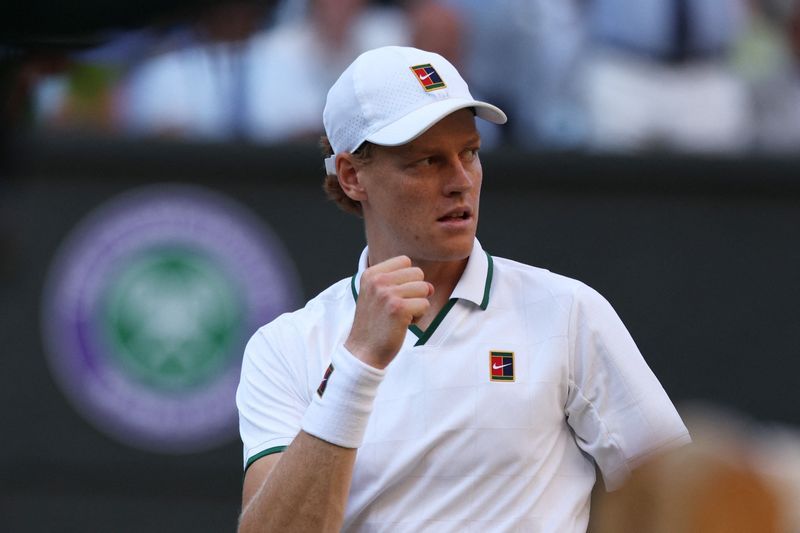
Italy's Jannik Sinner successfully defended his Wimbledon singles title on Sunday, overcoming a fierce challenge from second seed Alexander Zverev in a compelling Centre Court final that tested both players to their absolute limits. The 24-year-old triumphed 6-7(7) 7-6(2) 6-3 6-4 in a match lasting nearly four hours, claiming his fifth Grand Slam trophy and joining an exclusive club of just ten men to have successfully retained the Wimbledon crown during the professional era. The contest proved far more competitive than Sinner's seeding suggested it might be, with the German mounting genuine pressure throughout a battle characterised by powerful serving, aggressive baseline play, and fluctuating momentum.
Zverev arrived at the All England Club riding the euphoria of his maiden Grand Slam victory at Roland Garros, making his maiden appearance in a Wimbledon final under circumstances that added considerable narrative weight to the encounter. The 29-year-old German represented a genuine threat to Sinner's aspirations, arriving with genuine confidence and striking form across the grass courts of southwest London. Had Zverev prevailed, he would have become the first German man to claim the Wimbledon singles title since Michael Stich achieved the feat in 1991, a drought spanning more than three decades that underscores the rarity of German success in this particular championship. Throughout the opening exchanges, Zverev demonstrated why his recent form had captured the attention of the tennis world, mixing controlled aggression with the kind of serving precision that has long eluded him during crucial moments in major tournaments.
The opening set illustrated the intensity and technical excellence both players could muster on grass, a surface where marginal differences in execution and tactical awareness frequently determine outcomes. Contested across 65 minutes under hot and breezy conditions on Centre Court, the set contained precious few break-point opportunities, underscoring the effectiveness of both players' service games and the defensive solidity they maintained throughout. Sinner squandered a chance to break serve at 4-3 when an uncharacteristic error saw him frame a forehand wide, a moment that proved psychologically significant as the set progressed toward its tiebreak conclusion. Zverev's forehand, traditionally vulnerable at critical junctures in his career, appeared reinvigorated and delivered with impressive consistency and placement. The German also proved stingy on his own serve, dropping only eight points in the opening set despite facing a world number one opponent clearly seeking to establish dominance.
The tiebreak itself unfolded as a miniature masterclass in high-pressure tennis, with opportunities and momentum swinging back and forth in ways that kept spectators on Centre Court in a state of heightened engagement. Zverev reached set point first after a succession of powerful shots, only to be passed at the net by Sinner, who executed a rare drop shot that forced his opponent into a vulnerable position. The German saved the consequent set point with an ace down the T, a serve placed with clinical precision when the match hung in delicate balance. When Zverev's breakthrough moment arrived, he seized it decisively, striking a forehand winner that gave him the first set and simultaneously ended Sinner's extraordinary run of winning 14 consecutive sets against the same opponent, a statistical streak that had begun to feel almost inevitable during their recent encounters.
Momentum appeared to favour Zverev as the second set commenced, with the Italian showing visible frustration at his inability to create genuine pressure against the German's increasingly confident serving. Sinner appeared almost helpless against Zverev's armour-like protection of his service games, a situation that tested the defending champion's mental resilience and tactical flexibility. However, Sinner's pedigree as a major champion and the experience garnered from his first Wimbledon triumph last year proved decisive in this phase of the match. The Italian engineer a dramatic turnaround in the second-set tiebreak, elevating his aggression and converting that intensity into winners from both the baseline and at the net. By levelling the match at one set apiece, Sinner had weathered Zverev's best efforts and demonstrated the kind of adaptability that distinguishes champions operating at tennis's highest echelon.
The third set represented a watershed moment in the match, containing within it the moment that ultimately transformed the trajectory of the entire contest. For two hours and 42 minutes, the quality of tennis remained exceptionally high, with both players generating thunderous pace and committing fully to their respective tactical approaches. At 3-3, Zverev fashioned his first genuine break-point opportunity of the entire match, finally breaching Sinner's defensive capabilities after extended periods of sustained pressure. As Sinner demonstrated his craft with a delicate drop shot, Zverev rushed forward to retrieve the ball but slipped awkwardly behind the baseline, tumbling to the grass in a manner that appeared to cause him genuine physical distress. The fall visibly shook the German, who despite assuring Sinner he was unharmed, clearly felt the effects of the tumble on his movement and confidence.
Sinner capitalised immediately on this turning point with ruthless efficiency, holding serve before breaking Zverev's delivery for the first time in the match as the German moved with visible caution and hesitation. Frustration bubbled over for Zverev, who flung his racket across the turf in undisguised exasperation at the deteriorating situation. The psychological advantage shifted decisively toward Sinner, who sensed vulnerability and pressed his advantage relentlessly throughout the remainder of the set. Though Zverev displayed admirable resilience and regained some composure, Sinner maintained his ascendancy, breaking serve once more at 4-3 to position himself within touching distance of victory. The momentum had swung so decisively that Zverev's early promise appeared almost a distant memory as the German struggled to manufacture the kind of aggressive tennis that had characterised his performance throughout the opening stages.
The fourth set reflected Sinner's complete dominance in the latter phases of the match, with the Italian playing with the kind of controlled power and precision that had earned him the world number one ranking. Zverev attempted to recover his poise and compete with renewed intensity, but Sinner proved virtually unbreakable, maintaining his service record intact while continuing to threaten the German's delivery. When Sinner served for the championship at 5-4, the conclusion appeared certain, yet both competitors delivered two remarkable rallies of astonishing technical quality and dramatic intensity before the Italian finally sealed victory after three hours and 46 minutes of absorbing competition.
Sinner's post-match reflections on Wimbledon's significance underscored why successful defence of this particular title carries such weight within tennis culture and tradition. The Italian acknowledged the emotional experience of contending on the grass courts of the All England Club, noting that he approaches each tournament without taking future opportunities for granted. His measured response to victory reflected a maturity and perspective unusual in a player still in his mid-twenties, suggesting that the psychological demands of competing at the sport's pinnacle have been thoroughly integrated into his approach to major championships. Sinner specifically highlighted the quality of play delivered by both contestants, indicating genuine respect for the challenge Zverev had presented and recognition that the victory had come at considerable cost.
Zverev's perspective on his maiden Wimbledon final appearance carried both disappointment and genuine encouragement for future campaigns on the grass courts of southwest London. The German's fourth Grand Slam final defeat obviously stung, yet he could reflect on a transformative period in his career that had culminated in claiming his first major title at Roland Garros and demonstrating genuine competitiveness on Wimbledon's challenging surface. At 29 years old, Zverev acknowledged that his competitive belief regarding Wimbledon had reached new heights following his French Open success, suggesting that future appearances at the All England Club might produce outcomes more favourable to his aspirations. His comments indicated a player emerging from a long period of major championship frustration into a phase where genuine championship credentials now appeared within his grasp.
For Malaysian tennis enthusiasts and regional observers of the sport, Sinner's continued dominance at the sport's most prestigious venues reinforces the Italian's status as one of the contemporary era's most complete and formidable players. The Southeast Asian region has experienced growing enthusiasm for tennis, and displays of technically sophisticated, aggressive tennis such as Sinner demonstrated in this final capture the imagination of emerging players and established fans alike. Zverev's competitive showing, meanwhile, represents the kind of challenging progression that characterises professional tennis at its highest level, where maintaining consistency and executing under pressure separates champions from capable contenders. The match served as a compelling reminder of why Wimbledon occupies a unique position within global sporting consciousness, combining theatrical drama with technical excellence and tradition.

