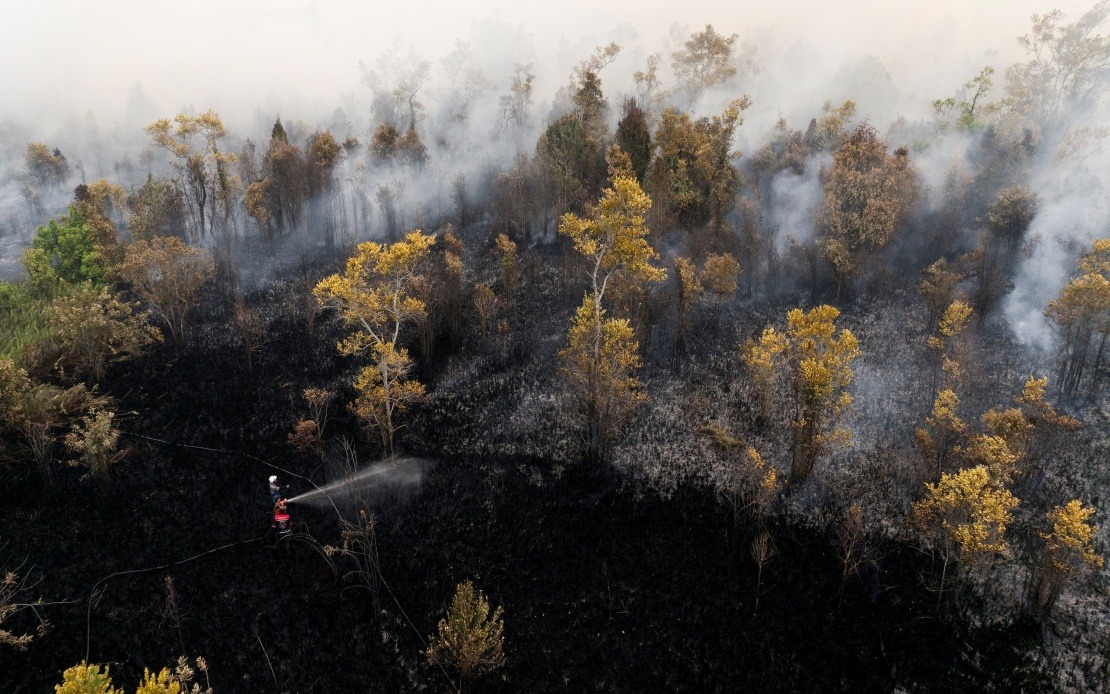
Singkawang Airport in Indonesia's West Kalimantan province grounded its entire flight schedule on Saturday as thick haze from extensive forest and land fires rendered operations unsafe. The decision underscores the severity of fire conditions engulfing Kalimantan, where authorities are racing to suppress dozens of active hotspots across multiple provinces. Located about 145 kilometres north of Pontianak, the provincial capital, Singkawang serves as a critical transportation hub for domestic passengers in the region. Airport management announced the closure via official social media channels, urging travellers to check directly with their airlines regarding rebooking options and guidance for affected itineraries.
Indonesia's Transport Ministry escalated its monitoring and coordination efforts on Friday as smoke from burning forests and agricultural land threatened to disrupt aviation operations at numerous airports throughout Kalimantan. The ministry's Director-General of Civil Aviation, Lukman F. Laisa, emphasised that maintaining adequate visibility remains non-negotiable for safe flight operations, with airlines legally obligated to implement delays, diversions, or outright cancellations when atmospheric conditions fall short of strict regulatory standards. This approach reflects international aviation safety protocols that prioritise passenger and crew protection over scheduling convenience. Laisa's statement signalled that operators would face no penalties for safety-driven operational suspensions, effectively encouraging conservative decision-making when visibility becomes marginal.
Satellite imagery analysis conducted through NASA's Terra and Aqua monitoring systems revealed an alarming distribution of active fire hotspots across Kalimantan as of Friday evening. Central Kalimantan reported 56 high-confidence heat signatures, while West Kalimantan detected 51 distinct hotspots, and South Kalimantan showed 19 confirmed fire locations. These figures provide quantified evidence of the scale confronting firefighting personnel and air quality officials. The Meteorology, Climatology and Geophysics Agency (BMKG) classified air quality in substantial portions of West and Central Kalimantan as very unhealthy, warning residents and travellers of serious health risks from prolonged exposure to fine particulate matter and toxic compounds released by burning vegetation and peat soils.
Firefighting operations combining ground-based and aerial approaches have mobilised across affected zones, with water-bombing aircraft deployed from multiple bases. Indonesian authorities have simultaneously prepared weather modification operations designed to artificially induce rainfall and suppress smoke accumulation, awaiting optimal atmospheric conditions for cloud-seeding activities. These interventions represent the full extent of Indonesia's emergency response capabilities, yet their effectiveness remains constrained by weather patterns and the sheer geographic scale of the fires. The coordination between civilian aviation authorities, environmental agencies, and military firefighting assets reflects the national significance attached to containing the situation.
Investigative work conducted by Central Kalimantan's police force has identified approximately 12 suspects linked to forest and land fire incidents through mid-August, signalling a concerted effort to establish criminal accountability. Inspector-General Iwan Kurniawan, the province's police chief, stated that comprehensive investigations into each reported fire are underway to determine ignition origins and pinpoint responsible parties. This enforcement dimension adds complexity to the crisis, as authorities must simultaneously suppress active fires while pursuing legal accountability for deliberate or negligent actions that initiated blazes. The distinction between accidental fires, agricultural practices gone wrong, and intentional land clearing carries significant implications for both environmental policy and criminal prosecution strategies moving forward.
The Singkawang airport closure carries ripple effects throughout West Kalimantan's economy and tourism sectors. Domestic travellers face uncertainty and potential substantial delays as airlines scramble to accommodate displaced passengers on alternative routes, many involving longer journeys to nearby airports in areas with clearer atmospheric conditions. Business operations relying on rapid personnel and cargo movement face disruption at precisely the moment when economic activity should be accelerating. The timing proves particularly problematic during what would normally represent peak travel and commercial seasons across Indonesian Borneo.
For Malaysian observers, these events underscore the transboundary nature of environmental crises in Southeast Asia. Historical precedent demonstrates that haze originating in Kalimantan frequently drifts northwestward, affecting air quality in Sarawak and Peninsular Malaysia within days. The current severity of fires, judged by hotspot density and satellite observations, suggests potential for significant air quality degradation across Malaysia's eastern regions if atmospheric conditions shift to carry smoke northward. Malaysian environmental agencies typically activate their own monitoring systems and issue air quality advisories when Indonesian fires threaten regional air masses, making the Kalimantan situation directly relevant to Malaysian public health considerations.
The recurring cycle of seasonal fires in Kalimantan reflects persistent underlying challenges in land management, agricultural practices, and enforcement of environmental regulations. Despite numerous policy initiatives and international cooperation agreements, the province continues experiencing catastrophic fires nearly annually during dry seasons. This pattern suggests that incremental adjustments to existing frameworks prove insufficient without fundamental restructuring of economic incentives and development models. The relationship between forest conversion, peat degradation, and fire susceptibility requires comprehensive regional strategies that address root causes rather than merely responding to acute crisis phases.
Transport Ministry officials have indicated their commitment to continuous situation monitoring and real-time coordination among aviation operators, environmental agencies, and emergency services. This institutional responsiveness demonstrates recognition that aviation safety cannot be compromised even amid broader environmental emergencies. However, the underlying instability in atmospheric conditions points toward a lengthier disruption period than airport authorities initially anticipated. Passengers should monitor official announcements and maintain flexible travel plans until satellite data and air quality measurements indicate sustained improvement in regional conditions.

