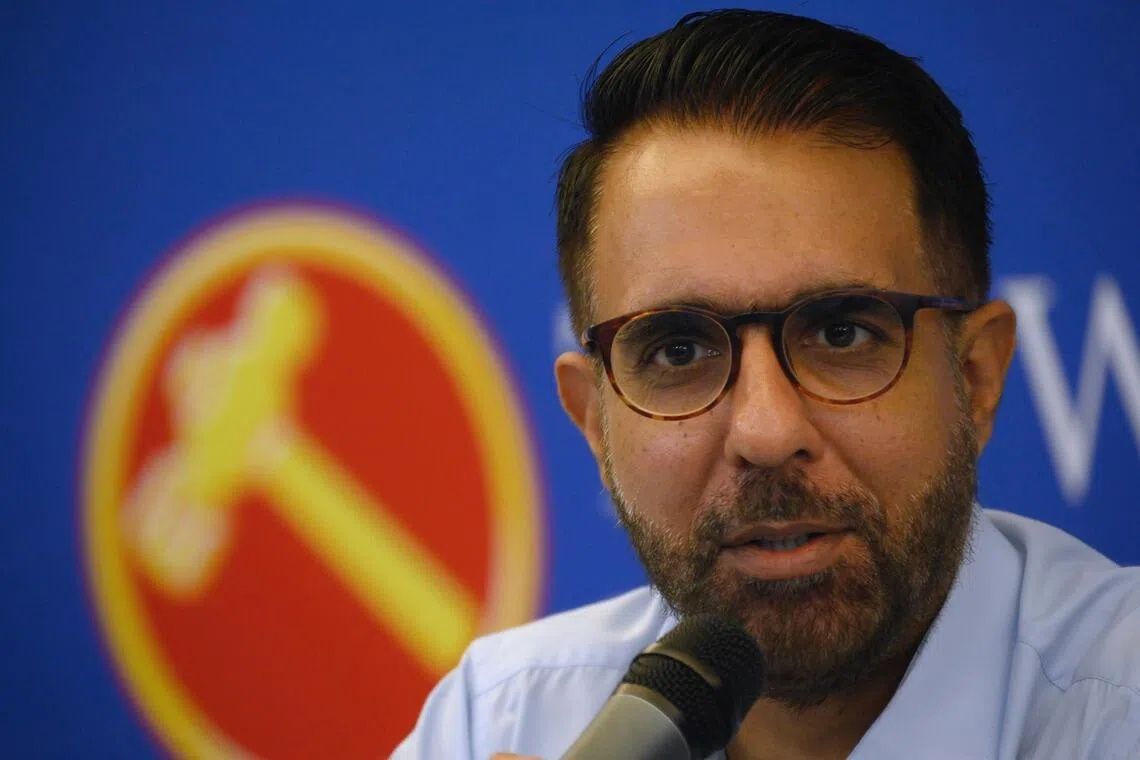
Singapore's Workers' Party confronts a pivotal moment in its internal politics as restless party cadres prepare for a leadership contest expected to intensify on June 28, when slightly over 100 party members will gather to decide the fate of secretary-general Pritam Singh. The challenge reflects deepening fractures within the opposition party's leadership structure following a December 2025 High Court decision that upheld Singh's conviction for lying to a parliamentary committee, a verdict that has emboldened those questioning his continued stewardship of the party.
The push to remove Singh has gathered momentum in recent months, with party insiders confirming that dissidents have been quietly approaching several senior Workers' Party MPs to gauge interest in mounting a challenge against the incumbent leader. Those interviewed for this story declined to be identified, citing concerns about potential disciplinary repercussions for members who publicly criticise party leadership. Names circulating among cadres include Aljunied GRC MP Gerald Giam, Hougang MP Dennis Tan, and Sengkang GRC MPs He Ting Ru and Jamus Lim—the latter three having served on a disciplinary panel that found Singh had violated the party's constitution through his conviction.
The contest will unfold across two successive meetings beginning with a special conference requested by 25 cadres in December 2025. This gathering will require Singh to publicly account for his actions leading up to his conviction, with those cadres explicitly demanding his resignation or, alternatively, a secret ballot to determine his leadership status. The subsequent biennial ordinary cadres' conference will then proceed to elect party leadership positions, including the secretariat-general post. Singh faces no formal prohibitions against seeking re-election and has enjoyed uncontested tenure for eight years, requiring only a simple majority to retain his position should an opponent emerge.
The underlying grievances stem primarily from Singh's handling of former Sengkang GRC MP Raeesah Khan's parliamentary misstatement. Khan fabricated an anecdote during an August 2021 parliamentary speech but delayed clarifying the falsehood until November that same year. Parliament's Committee of Privileges subsequently determined that Singh had effectively coached Khan in maintaining the deception, a finding upheld by the courts. The conviction has proven particularly damaging to a party that has built considerable political capital around assertions of integrity and moral distinction from the ruling establishment. As one cadre expressed to media outlets, the party's fundamental electoral appeal rests upon voter confidence in its principled governance—a foundation now threatened by Singh's judicial conviction.
Criticism extends beyond the immediate conviction, encompassing broader questions about Singh's strategic leadership. Many cadres expressed disappointment that the Workers' Party failed to gain additional parliamentary representation at the 2025 general election, despite fielding what several described as a exceptionally strong candidate slate. Additionally, Singh's decision to withdraw party nomination from Marine Parade-Braddell Heights GRC on Nomination Day has drawn scrutiny from members who question his tactical judgment. The party's subsequent loss of its Leader of the Opposition designation—reallocated by Prime Minister Lawrence Wong in January 2026 following Singh's conviction—added to perceptions of diminished parliamentary standing.
Particularly intriguing are developing signals from party veteran Low Thia Khiang, who led the Workers' Party from 2001 to 2018 and engineered its breakthrough 2011 victory in Aljunied GRC. Though Low currently serves on the party's central executive committee and maintains substantial influence among cadres, observers note that he reportedly voted against Singh during internal disciplinary proceedings. Speculation now swirls within party circles regarding whether Low might endorse an alternative candidate, a development that could substantially shift the arithmetic of any leadership challenge. One former cadre estimated that if Low publicly backed another contender, combined support from approximately 30 dissident cadres and Low's personal following might suffice to unseat Singh at the ballot.
Low himself faced a comparable leadership challenge during 2016 party elections when former Aljunied GRC MP Chen Show Mao mounted an unsuccessful campaign against him, supported by many of the same party veterans now calling for Singh's removal. That historical parallel underscores the cyclical nature of Workers' Party succession politics and demonstrates the capacity of entrenched factional groups to mobilise when discontent reaches critical mass. Party insiders emphasise that the situation remains fluid, with the possibility that developments could shift even approaching voting day, reflecting genuine uncertainty about whether challengers will formally step forward.
The party's official position, conveyed when issuing Singh a formal letter of reprimand, maintained that no constitutional restrictions prevent him from contesting the leadership election. Under party rules, any cadre in good standing may run directly or nominate another candidate. Should Singh lose the initial special conference vote or voluntarily resign, he retains eligibility to contest the subsequently scheduled biennial ordinary conference, complicating predictions about potential succession scenarios. One cadre suggested that whether a challenger materialises at the second meeting may depend substantially on outcomes of the first—specifically, whether Singh is ousted, narrowly survives, or wins decisively.
The broader political ramifications extend beyond internal Workers' Party dynamics. Singh's removal would represent a significant shift in opposition politics at a moment when the ruling People's Action Party faces minimal parliamentary resistance. The Workers' Party occupies a crucial role in Singapore's opposition ecosystem, and questions about leadership stability could influence public perceptions of the party's viability as a genuine governing alternative. Conversely, Singh's survival would signal that loyalty within the party structure remains sufficiently consolidated to withstand judicial conviction, though he would likely govern under constraints and potentially face diminished authority if forced through a closely contested election.
The conviction itself raises fundamental questions about whether personal judicial liability should automatically disqualify political leaders in Westminster-derived systems. Singh maintains that his conviction reflects overreach in prosecuting parliamentary conduct, yet the cadres opposing him argue that the reputational damage transcends legal technicalities—affecting the party's ability to occupy moral high ground against a ruling establishment regularly criticised for institutional concentration and democratic deficits. This philosophical tension will likely shape cadre deliberations throughout the June election process.
Regional observers note that Singapore's opposition landscape remains circumscribed compared to other Southeast Asian democracies, with the Workers' Party representing the most credible parliamentary challenger. Any leadership instability could reverberate across regional opposition networks and discussions about democratic resilience in the city-state. The June 28 elections will thus carry significance extending well beyond internal party administration, potentially influencing Singapore's broader political trajectory and opposition dynamics in the coming years.

