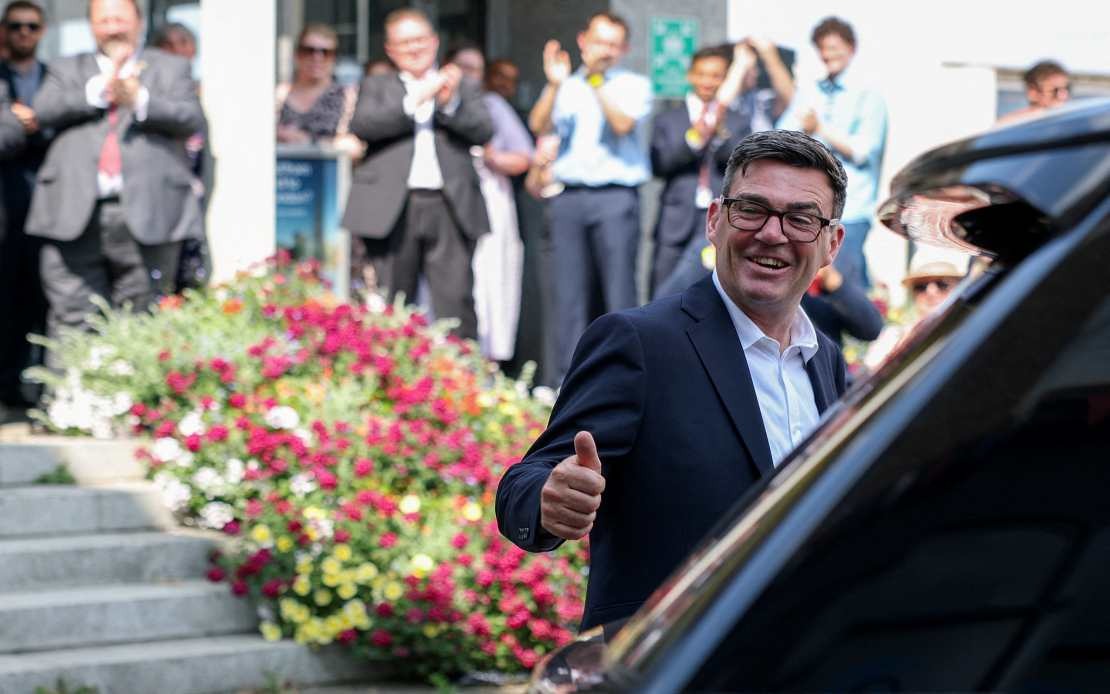
Singapore's Prime Minister Lawrence Wong has formally congratulated Andy Burnham following his ascension to the British premiership, underscoring the enduring ties between the city-state and the United Kingdom. The greeting came through an official letter dispatched on Monday, shortly after Buckingham Palace confirmed that Burnham had met with King Charles III and received the invitation to form a new government. This ceremonial exchange of goodwill sets the tone for what Singapore views as a critical period of bilateral engagement during a time of substantial global uncertainty.
In his message, Wong conveyed Singapore's optimism that Burnham would lead the UK through significant geopolitical and economic turbulence while fostering prosperity for the British population. The Prime Minister characterised the relationship between Singapore and the United Kingdom as one grounded in historic foundations, anchored by a formal Strategic Partnership framework that has accumulated considerable diplomatic and institutional capital over decades. This partnership represents far more than symbolic alignment; it encompasses substantive cooperation spanning multiple dimensions of statecraft and commerce, built upon mutual respect and proven reliability in addressing shared challenges.
Wong articulated Singapore's determination to expand collaborative efforts with London across several strategic domains that align with both nations' long-term development priorities. Innovation and scientific advancement feature prominently in this agenda, reflecting the two countries' shared commitment to positioning themselves at the forefront of technological change and knowledge economy development. Technology cooperation has become increasingly central to bilateral relationships across Southeast Asia and Europe, as both regions compete for influence and competitive advantage in emerging fields like artificial intelligence, biotechnology, and green energy solutions. Defence cooperation additionally constitutes a pillar of the relationship, given Singapore's strategic positioning within one of the world's most vital shipping lanes and its role as a lynchpin of regional security architecture.
The Singapore Premier emphasised that the two nations have repeatedly demonstrated their capacity to accomplish substantive objectives through collaborative frameworks, even when confronted by periods of turbulent international conditions. This rhetorical choice reflects a broader strategic message: that amid polarisation and uncertainty, dependable partnerships remain both possible and necessary. For Southeast Asia, where geopolitical competition between major powers has intensified considerably, Singapore's messaging serves to reinforce the value of institutional relationships that transcend temporary fluctuations in global sentiment.
Wong also highlighted Singapore's particular interest in Britain's sustained regional presence and engagement mechanisms. The UK's status as an ASEAN Dialogue Partner carries significance beyond ceremonial recognition, as it provides a formal channel through which London can participate in regional consultations and remain attuned to Southeast Asian perspectives on international developments. Additionally, Britain's participation in the Five Power Defence Arrangements—a longstanding security framework involving Singapore, Australia, New Zealand, and Malaysia—anchors British security commitments within regional institutional structures that have proven durable across multiple decades.
Looking ahead to forthcoming opportunities for deeper coordination, Wong drew particular attention to the convergence of two significant international leadership positions. Singapore is preparing to assume the ASEAN Chairmanship, a rotating responsibility that places the nation at the centre of regional diplomatic architecture for twelve months and requires coordinating the agendas of ten Southeast Asian nations with diverse interests and capabilities. Simultaneously, the United Kingdom will hold the G20 Presidency in 2027, positioning Britain to shape the agenda for discussions among the world's largest and most influential economies. This temporal alignment creates what Singapore perceives as an exceptionally valuable window for the two countries to amplify their collaborative impact on global governance questions and multilateral institutions.
The convergence of these leadership roles provides both practical and symbolic leverage for deepening UK-ASEAN engagement. During Singapore's ASEAN Chairmanship, working alongside a G20-leading Britain could amplify Southeast Asian voices in discussions concerning economic cooperation, climate action, and the reshaping of international institutions to reflect contemporary geopolitical realities. For London, closer coordination with ASEAN's rotating chair offers opportunities to better understand regional perspectives and incorporate them into G20 deliberations, potentially strengthening the legitimacy and effectiveness of global economic governance.
Singapore's formal welcome to Burnham arrives as Britain embarks on a new political chapter following Labour's electoral victory. The timing of Wong's message signals that Singapore, as a highly pragmatic actor in international relations, stands ready to engage constructively with whoever holds power in London. This approach reflects Singapore's broader diplomatic strategy of maintaining balanced, productive relationships with major powers regardless of domestic political transitions. For Malaysia and other Southeast Asian nations, Singapore's adept navigation of great power relationships while pursuing regional interests offers both a template and a competitive challenge in managing their own international portfolios during a period of substantial strategic realignment.

