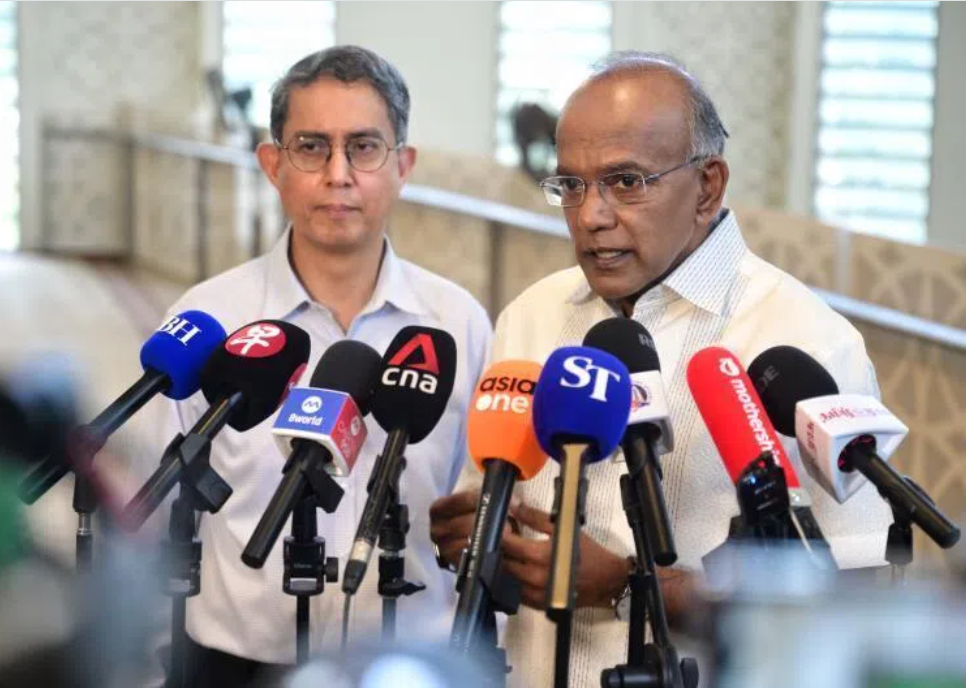
Singapore's Home Affairs Minister K Shanmugam has publicly outlined the circumstances surrounding the resignation of former Minister-in-charge of Muslim Affairs Faishal Ibrahim, whose departure from government came after a series of online exchanges with a member of the public triggered an official review. In a statement released on Wednesday, Shanmugam characterised the messages at the centre of the controversy as "objectively, inappropriate and questionable" while simultaneously confirming that Ibrahim had been accorded proper procedural fairness throughout the examination of the matter. The minister emphasised that Ibrahim himself had concluded his continued tenure as both a Member of Parliament and government minister had become untenable, leading to his voluntary resignation on July 20.
The underlying incident involved a prolonged series of digital interactions between Ibrahim and an unnamed woman, during which the former minister apparently sought to maintain ongoing contact despite mounting discomfort on both sides. According to Shanmugam's detailed account, Ibrahim's initial reluctance to abruptly terminate the exchanges stemmed from concern that an abrupt cessation of communication might provoke a negative reaction from the woman involved. Nevertheless, Shanmugam underscored that regardless of Ibrahim's underlying motivations, the objective nature of his responses conveyed a tone and tenor that appeared to encourage continued engagement. The woman herself interpreted Ibrahim's messages in precisely this manner, viewing them as an invitation to persist rather than a signal to withdraw.
The trajectory of the relationship between Ibrahim and the woman shifted notably when he subsequently attempted to bring the online interactions to a close. Her response to this attempted disengagement was marked by anger and escalation, culminating in her decision to contact Prime Minister Lawrence Wong directly. This critical juncture transformed what had remained a largely private matter into something with demonstrable public dimensions. The woman attached selected messages and photographs from her exchanges with Ibrahim when she wrote to Prime Minister Wong, simultaneously lodging a formal complaint of harassment against the former minister.
While Ibrahim reciprocated allegations of harassment, characterising the woman's behaviour as equally problematic, the matter was referred to police authorities for independent investigation. For Malaysian observers accustomed to similar controversies in regional politics, this episode underscores the heightened scrutiny applied to public officials' conduct in Singapore's comparatively stringent governance environment. The decision to involve law enforcement reflected the seriousness with which such allegations involving sitting ministers are treated within the Singapore system, even when questions of intent remain contested between the parties.
Shanmugam's framing of the sequence of events illuminates Singapore's established approach to evaluating ministerial conduct. He outlined the relevant principle by referencing historical guidance from Singapore's founding Prime Minister Lee Kuan Yew and more recent articulations by Senior Minister Lee Hsien Loong when he held the premiership. Under this established framework, purely private matters involving inappropriate conduct may remain confidential if the problematic behaviour terminates following informal counselling or intervention. However, once such matters enter the public domain through formal complaints or media exposure, they must be subjected to rigorous examination, with appropriate consequences following if impropriety is established.
In Ibrahim's case, the transition from private to semi-public status occurred the moment the woman emailed Prime Minister Wong with documentary evidence of the exchanges. This development necessitated that the Prime Minister's Office independently assess whether Ibrahim's conduct met the standards expected of government ministers, irrespective of his personal intentions or the absence of a physical relationship. Shanmugam stressed that Ibrahim himself had ultimately acknowledged that he should not have permitted the exchanges to continue and that clearer interpersonal boundaries should have been established from the outset. This self-recognition apparently proved decisive in his decision to step down.
Ibrahim's political trajectory prior to this episode demonstrated steady advancement through Singapore's civil service and political ranks. Entering Parliament in 2006 as part of the People's Action Party team contesting Marine Parade GRC, he secured re-election across four successive terms and demonstrated sufficient capability to warrant ministerial appointment. His background as a National University of Singapore real estate professor provided academic credibility, and his progression through various parliamentary secretary and minister of state roles reflected confidence from successive administrations. Most recently, following the 2025 General Election and Prime Minister Wong's Cabinet reshuffle in May, Ibrahim had been elevated to Senior Minister of State and appointed as an Acting Minister, representing what appeared to be the trajectory of a promising political career.
Shanmugam's concluding remarks offered a notably generous assessment of Ibrahim's contributions and personal character, suggesting that while the government viewed the resignation as necessary and appropriate, it harboured no broader doubts about Ibrahim's commitment to public service or his effectiveness in his official duties. The Home Affairs Minister described Ibrahim as someone genuinely motivated by desire to serve constituents and make substantive policy contributions, noting his particularly extensive work on behalf of residents in Nee Soon GRC. This dimension of the statement appeared designed to acknowledge Ibrahim's broader record while maintaining that certain personal conduct standards apply universally to public office holders, regardless of their demonstrated capability or commitment to their formal responsibilities.
For Southeast Asian politics observers, this episode illustrates the distinct approach Singapore applies to ministerial accountability compared to practices in neighbouring Malaysia and other regional jurisdictions. Rather than remaining entirely confidential or triggering protracted investigations, the matter was resolved relatively expeditiously once Ibrahim acknowledged the legitimacy of concerns regarding his conduct. The emphasis on procedural fairness, clear articulation of applicable standards, and recognition of Ibrahim's voluntary acceptance of accountability reflects a bureaucratic approach that prioritises institutional integrity while attempting to minimise broader reputational damage to the government or individual concerned.
The resolution also raises questions about the broader implications for Singapore's political culture and expectations of public officials. By establishing that conduct deemed inappropriate regardless of intent can trigger ministerial resignation, the precedent potentially establishes a higher bar for what constitutes permissible personal behaviour among government leaders. This may reflect evolving standards regarding appropriate professional boundaries in digital-age communication, where informal online messaging creates particular ambiguity regarding intent and perception. For Malaysian policymakers and observers monitoring developments in Singapore's governance standards, this episode provides instructive context regarding how neighbouring jurisdictions calibrate accountability mechanisms for public officials.

