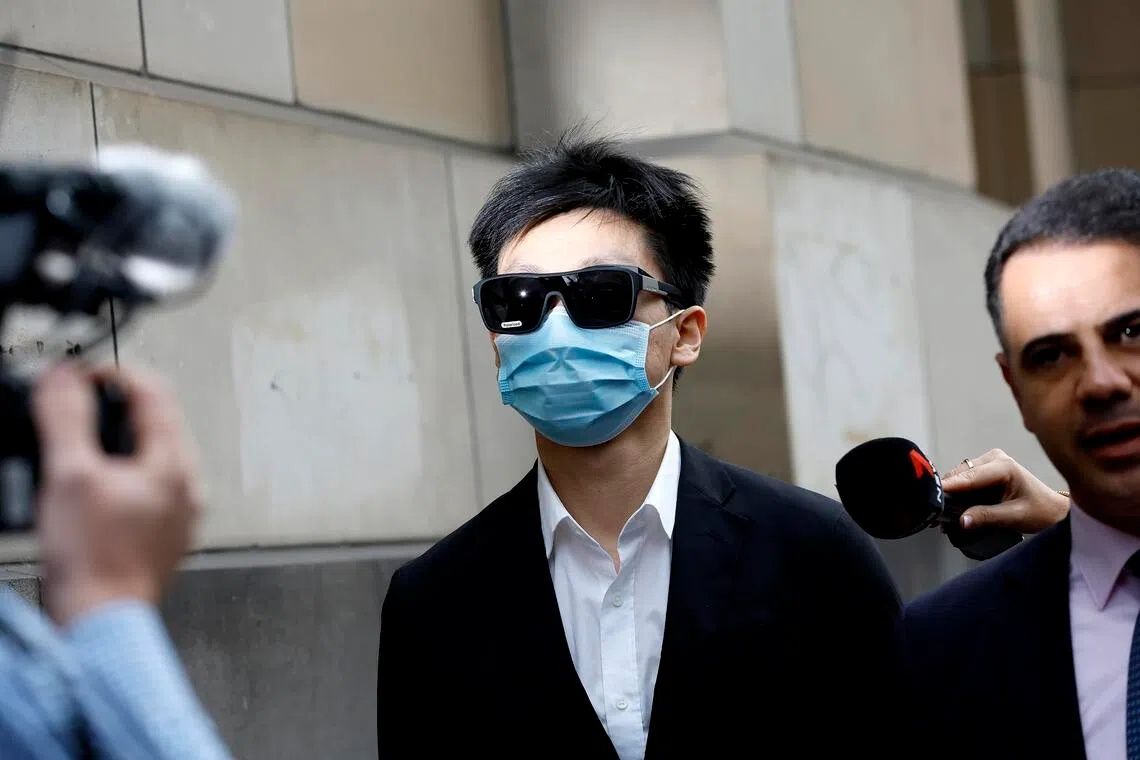
A trainee doctor from Singapore has entered guilty pleas to charges of clandestinely recording hundreds of colleagues in compromising situations at three leading Melbourne hospitals. Ryan Cho, 28, faced the Melbourne Magistrates Court on Thursday to admit to 13 consolidated charges stemming from a sprawling investigation into intimate images illegally obtained between 2021 and 2025. The case has rattled Australia's medical community and exposed significant workplace safety gaps in major healthcare institutions.
Cho's admission came after police uncovered a sophisticated operation spanning his years as a medical trainee at Austin Hospital, Royal Melbourne Hospital, and Peter MacCallum Cancer Centre. Investigators seized multiple electronic devices from his home, discovering more than 10,000 video and image files documenting over 500 victims. This substantial archive, which included approximately 4,500 videos, revealed the systematic nature of his offending and the scale of breach affecting hospital staff. The discovery emerged after personnel at Austin Hospital found a concealed mobile phone in a staff toilet that had been actively recording, prompting immediate intervention and subsequent police involvement.
The charges against Cho encompassed stalking, installing optical recording devices in private spaces, and producing intimate images without consent. When asked to confirm his pleas before Magistrate Michelle Mykytowycz, who acknowledged numerous victims present in court and others participating via video link, Cho stated "guilty" to all 13 counts. The consolidation of 910 original charges into this more manageable number reflected legal agreements between prosecution and defence, streamlining proceedings while maintaining the gravity of the offences.
Cho's medical career in Australia has effectively ended. Australian health regulators suspended his registration in 2025, effectively terminating his work as a physician. His professional credentials, earned through studies at Monash University, have been revoked following the revelations. The suspension represents one of many cascading consequences stemming from his actions, extending far beyond legal ramifications to encompass the irreversible damage to his standing within the medical profession.
The investigation exposed troubling details about Cho's methodology. Beyond his workplace recordings at the three hospitals, he had also targeted individuals with whom he shared accommodation, demonstrating that his behaviour extended beyond professional boundaries into his personal living situations. This pattern suggests premeditation and deliberate exploitation of access and trust relationships, compounding concerns about the vulnerability of those working and living in close proximity to him during this period.
Cho's background provides limited explanation for his conduct. He has resided in Australia since 2017 and obtained permanent residency status in April 2025—just months before his arrest in July. His defence barrister, Julian McMahon, characterised him as a "complicated young professional man" with "complex psychological issues," though no prior criminal history existed. His father, Wilson Cho, a logistics manager from Singapore, attended proceedings but previously stated through the court that he had remained unaware of his son's alleged conduct until facing legal charges.
The path forward involves a structured court process with significant implications. Cho remains free on strict bail guaranteed by a A$50,000 surety lodged by his parents, who have committed to residing in Melbourne throughout proceedings to monitor compliance. His bail conditions are extraordinarily restrictive: weekly police reporting obligations, absolute prohibition on witness contact, hospitalisation restrictions except emergencies, and bans on possessing cameras or video equipment outside his residence. He has already surrendered his passport, eliminating any possibility of international flight. These conditions will remain in effect until his pre-sentence hearing commences on November 23, a three-day proceeding in Melbourne's County Court where victim impact statements will be presented.
The institutional failures revealed through this case extend beyond individual wrongdoing. Approximately 100 victims, predominantly women, have lodged human rights complaints against the three hospitals, alleging systemic sexual harassment and workplace discrimination. These complaints have been escalated to the Australian Human Rights Commission, suggesting that victims and their legal representatives view the hospitals themselves as bearing responsibility for inadequate workplace protections and monitoring systems. The failures in detecting and preventing Cho's activities raise disturbing questions about security protocols in healthcare facilities and the adequacy of safeguarding mechanisms protecting staff in vulnerable situations.
For Malaysian and Southeast Asian observers, this case underscores broader concerns about professional accountability and institutional governance in the region's relationship with Australia's healthcare system. Several dimensions warrant attention: first, the case highlights risks facing healthcare professionals seeking advancement through overseas training and employment; second, it demonstrates how individuals from the region working in Australian institutions can cause profound reputational damage to their home countries; and third, it exposes how trust-based professional environments can be exploited by individuals with insufficient ethical boundaries or psychological stability.
The involvement of a Singaporean national in such widespread offending in a neighbouring country inevitably affects regional perceptions. Medical professionals from Malaysia, Singapore, and other Southeast Asian nations contribute significantly to Australia's healthcare workforce, and cases involving serious misconduct from the region risk stigmatising otherwise exemplary colleagues. However, this case also validates Australia's institutional capacity to investigate thoroughly, prosecute fairly, and provide victims with formal avenues for justice—processes that may serve as instructive benchmarks for regional legal systems grappling with similar workplace violations.
Tony Carbone, managing partner at Carbone Lawyers representing victims in the human rights commission proceedings, anticipates that additional hospital employees will join the legal action against the three institutions. This prediction suggests that the case's full dimensions have not yet emerged publicly and that ongoing litigation will likely expose further institutional vulnerabilities. The November sentencing hearing will provide the first opportunity for courts to assess appropriate penalties for offences of this magnitude and sophistication, with potential implications extending across Australian and potentially international jurisprudence regarding intimate image-based offences in professional contexts.

