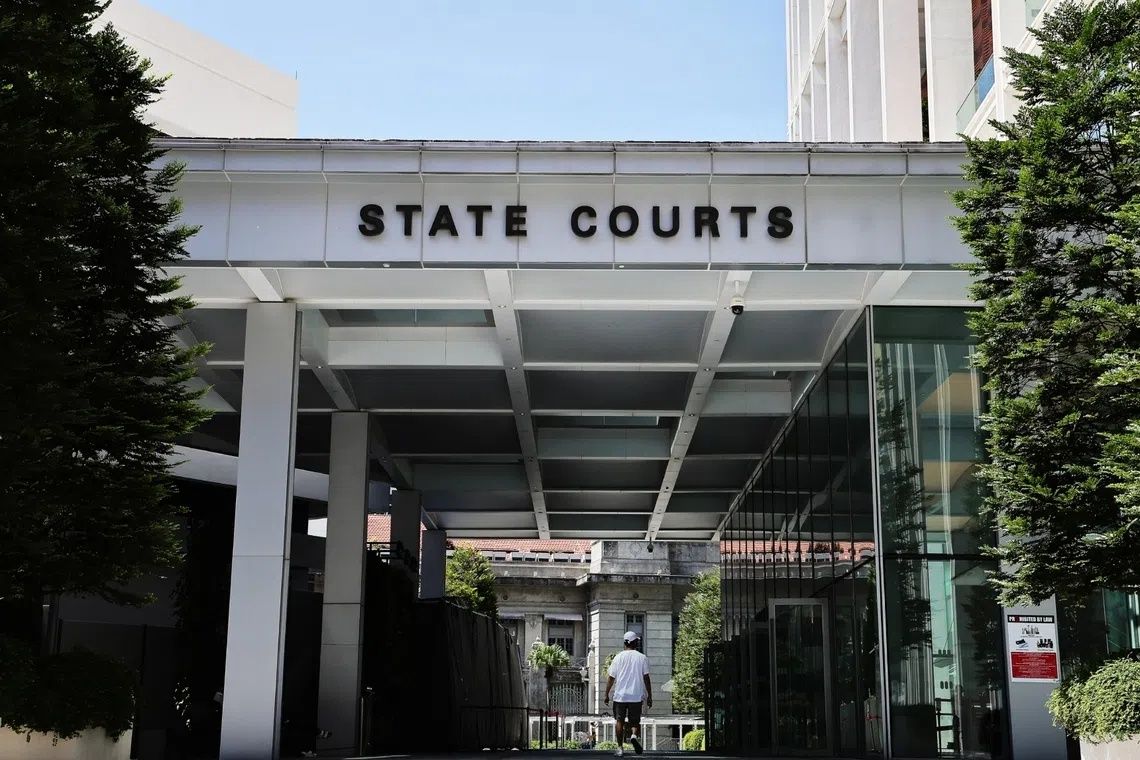
Lim Thiam Poh, the sole proprietor of Thiam Lee Tradings Construction, has been sentenced to one year imprisonment after admitting to leading a conspiracy to channel at least S$127,000 in bribes to a senior official at Singapore's zoological facilities. The scheme, executed between February 2014 and June 2015, allowed his construction company to secure contracts valued at approximately S$2.4 million from the Singapore Zoological Gardens. On Wednesday, August 5th, a Singapore court convicted Lim on five graft charges involving a minimum of S$59,000, with ten additional related charges factored into the sentencing determination.
The corruption network extended beyond Lim himself, implicating two other key figures whose roles proved instrumental to the operation's success. Barry Chong Peng Wee, the then-facilities management director at the Singapore Zoological Gardens, received the bulk of these illicit payments. Chong, who has since departed from the institution, was separately sentenced to six years' imprisonment in April 2025 for his role as the corrupted official who steered lucrative contracts toward Lim's company. A third conspirator, Too Say Kiong, who operated as a foreman at Shin Yong Construction (SYC), served as the intermediary facilitating the arrangement and was sentenced to two years and two months' jail in October 2023.
The organisational context of these offences reveals how the conspiracy functioned within the operational structure of what was then Wildlife Reserves Singapore (WRS), now operating as the Mandai Wildlife Group. The Singapore Zoological Gardens itself has subsequently rebranded to Singapore Zoo. At the time the crimes were committed, this facility operated as a subsidiary within the broader WRS portfolio. Deputy Public Prosecutor Hairul Hakkim outlined in court how Too Say Kiong, who joined Shin Yong Construction in 1990 and remained until mid-2015, occupied a position enabling him to broker introductions between contractors and the zoo's procurement processes.
The pathway to corruption began when Lim approached Too in January 2024 seeking direct contract opportunities with WRS, having previously operated as a subcontractor to Shin Yong Construction between 2008 and 2014. Too presented a straightforward proposition: to obtain contracts directly from WRS, Lim would need to provide Barry Chong with a "commission" equating to 20 per cent of his company's profit. Additionally, Lim was obliged to remunerate Too himself with "referral fees" for every project WRS awarded directly to Thiam Lee. Notably, these payments would only be triggered when Lim's net profit on any given contract exceeded S$20,000, creating a graduated system of corruption tied to profitability thresholds.
Lim's acceptance of these terms rapidly bore fruit. Once the arrangement took effect, WRS began channelling major contracts directly to Thiam Lee rather than distributing opportunities among its established contractor base. Lim then established a regular delivery mechanism, periodically presenting Too with sealed envelopes containing the agreed commissions destined for Chong alongside the referral payments owed to Too personally. This systematic approach transformed what might appear as informal kickbacks into a structured corrupt practice embedded within the normal rhythm of business operations.
The prosecution's case centred on the deliberate mechanics of this scheme and its corrupting effect on the contracting process. The Deputy Public Prosecutor emphasised that Lim's motivation stemmed from straightforward greed, exploiting his established relationship with Too to circumvent open and competitive bidding processes. More significantly, WRS itself suffered concrete harm through this arrangement. The prosecutor argued that the wildlife organisation was unable to execute its fundamental responsibility of selecting the best-qualified contractors at competitive rates. Instead, the contract awards became determined by the corrupt financial arrangement rather than by professional merit, cost-effectiveness, or quality considerations. This distortion of procurement integrity extended across approximately S$2.4 million in public-facing contracts over an 18-month period.
Court documents provided no explanation regarding how authorities initially discovered the conspiracy, though all three defendants faced charges filed in 2021. The three-year gap between the offences' commission and formal charging suggests an investigation spanning considerable time. During sentencing arguments on August 5th, the prosecutor advocated for the court to impose a sentence of up to one year, three months and six weeks, reinforcing that Lim's actions reflected deliberate profiteering rather than any mitigating circumstance.
The judiciary's approach to sentencing across the three conspirators reveals a careful calibration reflecting individual culpability within the scheme. Chong, as the corrupted official who wielded decision-making authority, received the harshest penalty at six years. Too, functioning as broker and facilitator, received an intermediate sentence of two years and two months. Lim, as the paying party seeking to manipulate the system for commercial advantage, received the lightest term at one year. This graduated structure aligns with established sentencing principles distinguishing between those offering bribes and those receiving them, with public officials typically receiving harsher punishment for breaching fiduciary duties.
For Malaysian business operators and procurement officials, the Lim case serves as instructive precedent regarding Singapore's sophisticated anti-corruption enforcement. Singapore's Corrupt Practices Investigation Bureau operates with institutional independence and investigative capacity that has proven effective at unravelling elaborate schemes operating beneath surface-level business transactions. The scheme's longevity—operating for approximately 18 months before detection—demonstrates that corruption, however systematic, eventually surfaces. The substantial financial exposure, reaching S$2.4 million in diverted contracts, exemplifies how initial modest corruption payments can metastasize into economy-wide distortions affecting legitimate competitors and public entities.
Lim's bail has been established at S$75,000 pending appeal possibilities, with his imprisonment scheduled to commence on August 19th. His case joins a body of recent Singapore corruption prosecutions targeting private-sector actors and public officials, underscoring renewed enforcement rigour. For Malaysian enterprises engaging with regional procurement processes, the judgment underscores the operational and reputational risks of corrupt shortcuts. The case also highlights vulnerabilities within institutional procurement systems where individual officials wielding significant contract authority can, without robust oversight mechanisms, redirect millions in public or quasi-public expenditure toward favoured vendors.

