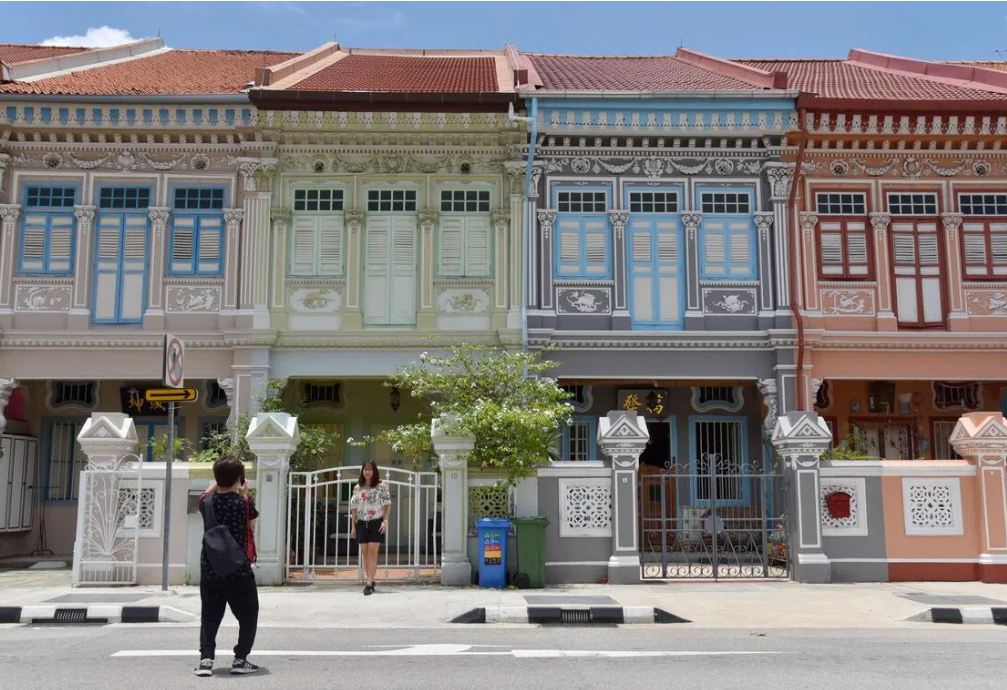
Singapore is rolling out a fresh incentive package designed to lure international visitors into exploring the city-state's diverse neighbourhoods through a partnership between the Singapore Tourism Board and ride-hailing platform Grab. Commencing in August and extending through October, the campaign will distribute two targeted ride vouchers to tourists who subscribe to Grab's Singapore Travel Pass, a bundled discount programme covering transport, dining, and cultural experiences. The timing is strategic, coinciding with both the Singapore Grand Prix in early October and the Singapore River Festival in September, periods when visitor numbers typically surge across the region.
The first voucher offers a straightforward proposition: a 20 per cent discount on rides to four precincts identified as neighbourhood discovery hotspots—Katong-Joo Chiat, Tiong Baru, Mandai, and Sentosa. Each customer can redeem this discount twice, encouraging multiple visits to different districts. The second voucher caters to evening travellers, providing a one-time 20 per cent reduction on journeys to established nightlife destinations including Holland Village, Clarke Quay, Boat Quay, and Robertson Quay, but only between 7pm and 4am. This deliberate after-dark discount seeks to activate Singapore's evening economy, drawing tourists to entertainment precincts during typically slower visitor hours.
The initiative represents a calculated effort to shift tourist behaviour from concentrated shopping and business districts towards what Singapore's tourism authorities describe as authentic neighbourhood experiences. Alejandro Osorio, managing director of Grab Singapore, framed the campaign as a means of showcasing the distinct character embedded across different parts of the city-state. His emphasis on exploring Singapore "neighbourhood by neighbourhood" reflects a broader strategic pivot by Southeast Asian tourism boards away from conventional attractions towards localized, experiential travel. For visitors, this approach promises access to heritage areas, street food culture, and community-oriented activities that differentiate Singapore from other regional destinations.
The campaign's reach extends across Southeast Asian markets through targeted digital advertising, positioning Singapore competitively within a region increasingly saturated with leisure travel options. Terrence Voon, STB's executive director for Southeast Asia, highlighted Grab's extensive presence across the region as a distribution advantage, suggesting that the partnership leverages existing customer relationships and digital infrastructure already familiar to travellers from Thailand, Vietnam, Indonesia, and China. By promoting the vouchers through Grab's own platform and cross-border digital networks, STB maximizes visibility among demographic segments already engaged with ride-hailing services.
This current initiative builds upon STB's broader "We don't wait for fun" campaign launched earlier in the year, which deliberately targets younger travellers aged 25 to 39—a demographic segment historically valuable for extended stays, higher spending per capita, and repeat visitation. That campaign, rolled out across nine markets including major source countries China, Indonesia, Thailand, and Vietnam, specifically highlighted lesser-known districts such as New Bahru and Joo Chiat. The Grab partnership operationalizes this strategy by providing concrete financial incentives for younger travellers to actually visit these neighbourhoods rather than simply browsing them online.
Singapore's tourism sector has demonstrated robust recovery and growth, with 2025 marking a watershed moment for the industry. International visitor arrivals reached 16.9 million last year, surpassing the previous year's 16.5 million and representing meaningful expansion in a highly competitive regional market. More impressively, tourism receipts climbed to an all-time high of $32.8 billion in 2025, underlining the sector's capacity to generate substantial economic returns beyond mere visitor volume. These figures validate STB's expansionist strategy and justify the organization's continued investment in promotional campaigns and public-private partnerships.
Projections for 2026 indicate Singapore's tourism authority expects international arrivals to grow further to between 17 million and 18 million visitors, with corresponding tourism spending estimated at $31 billion to $32.5 billion. While the spending projection represents a slight moderation from 2025's record, the volume growth suggests STB's focus remains on expanding visitor numbers through campaigns like the Grab initiative. The discrepancy between visitor growth expectations and spending projections may reflect a deliberate strategy to attract higher volumes of budget-conscious or younger travellers, prioritizing market share and brand visibility over per-capita spending extraction.
The financial commitment underlying this expansionist vision became clearer when Trade Minister Grace Fu announced in May that tourism projects would receive $740 million in government funding over the next five years. This substantial injection indicates Singapore's determination to maintain competitiveness against regional rivals investing heavily in tourism infrastructure and marketing. The Grab campaign, while seemingly modest in scope, represents precisely the type of innovative public-private collaboration that such funding enables. By leveraging a private company's platform and user base rather than building entirely government-owned infrastructure, Singapore achieves cost-effective market reach.
For Malaysian observers, Singapore's approach offers instructive lessons regarding tourism competitiveness and targeted promotional strategy. While Malaysia possesses significant natural and cultural advantages in attracting regional tourists—lower costs, extensive island networks, diverse indigenous heritage—the Singapore model demonstrates how technology platforms and data-driven targeting can amplify promotional impact. The Grab partnership exemplifies how Southeast Asian tourism boards can collaborate with pan-regional platforms to segment and reach specific demographics efficiently. Malaysia's tourism authorities might similarly explore partnerships with ride-hailing and travel platforms prevalent across the region to provide concrete incentives that drive visitor traffic beyond traditional beach and shopping destinations.
The timing and mechanics of Singapore's campaign also reveal sophisticated understanding of visitor behaviour patterns. Coupling voucher releases with high-profile events like the Grand Prix creates promotional momentum and media attention that amplifies the campaign's reach beyond paid advertising. The after-dark discounting specifically targets leisure travellers who might otherwise concentrate their evening spending in familiar areas, effectively redistributing visitor expenditure across previously overlooked precincts. This redistribution not only benefits taxi and ride-hailing services but also supports smaller restaurants, bars, and retail businesses in secondary neighbourhoods.
From Grab's perspective, the partnership generates valuable user acquisition and engagement metrics while simultaneously enhancing the company's position as an essential travel companion within Singapore's tourism ecosystem. By bundling ride discounts with broader travel passes covering food and activities, Grab positions itself as a comprehensive travel platform rather than merely a transportation service. This strategic positioning mirrors global trends toward vertical integration in the tourism technology sector, where platforms increasingly offer end-to-end experience curation rather than single-service provision.
The initiative also reflects evolving tourist expectations across Southeast Asia, where younger, digitally-native travellers increasingly expect seamless integration between transportation, accommodation, dining, and entertainment booking within single applications. Singapore's campaign meets this expectation by embedding transport incentives within a comprehensive travel pass ecosystem accessible through a familiar, widely-used application. Competitors seeking to maintain regional market share must develop comparable integrated offerings or risk appearing outdated and inconvenient to the demographic segments driving tourism growth.
Ultimately, Singapore's Grab partnership represents sophisticated destination marketing in the digital age—moving beyond traditional advertising toward behavioural incentives embedded within platforms tourists actively use. By offering concrete discounts for specific neighbourhoods rather than generic "visit Singapore" messaging, the campaign acknowledges that modern tourists make granular decisions about which areas to visit and when. The three-month window, combination of daytime and nightlife vouchers, and specific precinct focus all demonstrate meticulous campaign design rooted in understanding how contemporary travellers actually plan and execute their experiences. As Southeast Asian destinations compete intensely for tourism share, such precision-targeted, technology-enabled campaigns will increasingly determine competitive advantage.

