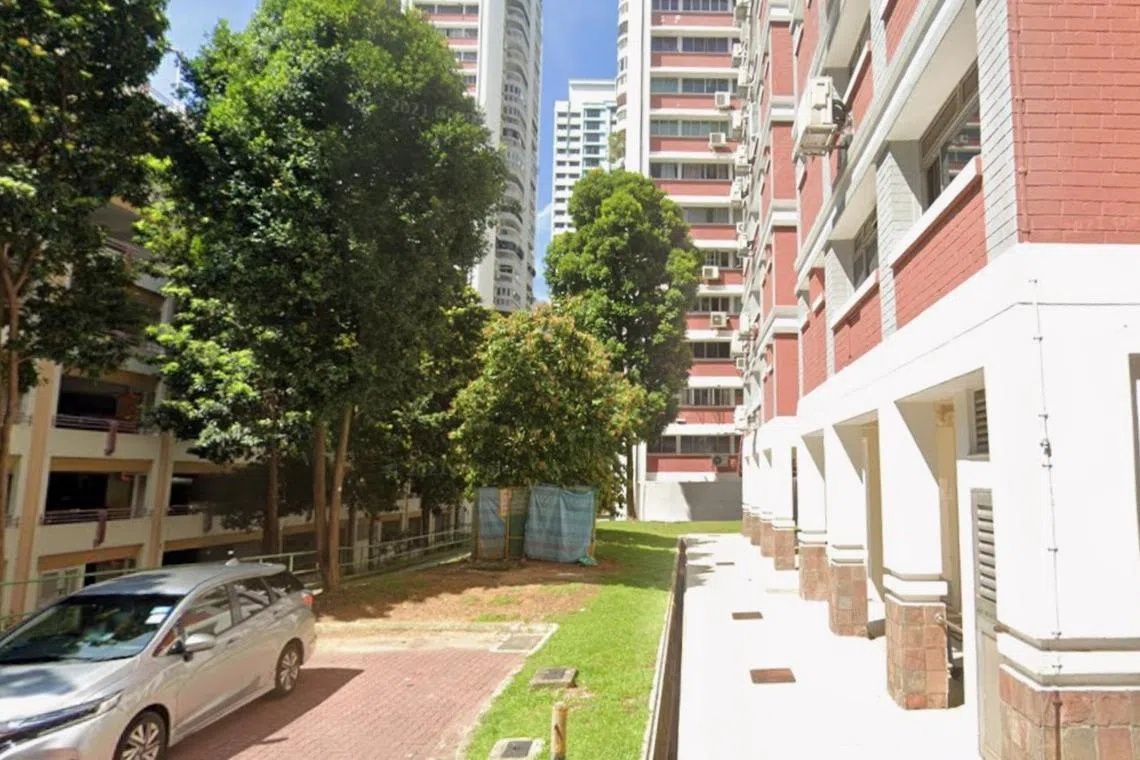
A 46-year-old woman has been taken into custody in Singapore following a violent incident involving a knife attack on another woman at a public housing block in the Bukit Merah district. The altercation occurred on the evening of July 4 at 7 Kim Tian Place, prompting emergency services to respond shortly before 7.40pm when police received a distress call requesting immediate assistance.
The 43-year-old victim sustained injuries during the confrontation and was transported to Singapore General Hospital while conscious, indicating that she survived the initial attack despite the severity of the weapon involved. Medical personnel assessed her condition as stable enough for conscious transfer, suggesting the injuries, while serious enough to warrant hospitalisation, did not pose an immediate threat to her life at the point of transport.
The arrested woman faces charges related to causing grievous hurt using a weapon, one of the more serious categories of assault under Singapore's criminal law. Police investigators recovered the knife used in the incident as evidence, securing the weapon at the crime scene. The choice of weapon and the deliberate nature of the attack elevate the severity of the charges beyond simple assault, reflecting the jurisdiction's strict approach to violence involving implements.
The incident unfolded at the void deck—the open ground-level common area—of the Housing Board block, a public space typically used by residents for gathering and recreation. Local reporting by Chinese-language publication Shin Min Daily documented bloodstains visible at the scene, providing visual evidence of the violence that occurred in this shared community space. The location of the attack in a common area rather than a private residence raises concerns about the safety of public spaces within Singapore's extensive public housing estates.
Singapore's public housing system accommodates approximately 80 per cent of the population, making Housing Board blocks central to the social fabric of the nation. Incidents of violence at these locations carry particular significance as they affect resident confidence in the safety of their neighbourhoods and communal facilities. Such occurrences, while statistically uncommon given Singapore's low crime rates, tend to generate heightened concern among housing estate residents who depend on these shared spaces for daily activities.
The relationship between the perpetrator and victim—identified as acquaintances rather than strangers—adds a domestic or personal dimension to the incident. Violence between known parties often stems from disputes or grievances that have built over time, distinguishing this case from random acts of violence. Understanding the nature of their prior relationship may prove crucial to investigators examining potential motives and circumstances leading to the attack.
Singapore maintains one of Asia's lowest violent crime rates, with strict enforcement and severe penalties serving as deterrents. The country's approach to weapons offences, particularly those involving knives, reflects a zero-tolerance policy aimed at maintaining public order. Attacks involving weapons are treated with considerable seriousness by the court system, typically resulting in substantial custodial sentences when convictions are secured.
Police investigations into the incident remain ongoing as officers gather statements from witnesses present at the scene and examine forensic evidence collected at the void deck. The investigation phase will focus on establishing the precise sequence of events, identifying any witnesses, and determining the specific circumstances and motivations behind the attack. Such thoroughness is standard procedure for violent crime investigations in Singapore's criminal justice system.
The incident highlights a recurring challenge for public housing authorities across Singapore—maintaining safety in communal spaces while respecting residents' freedom of movement. Housing Board estates typically feature security measures including closed-circuit television systems and occasional security patrols, yet confrontations between residents can occur despite these precautions. The case underscores the unpredictability of interpersonal violence and the difficulty in preventing attacks between individuals with prior relationships.
For Malaysian observers, the incident demonstrates how even developed economies with sophisticated law enforcement infrastructure and comparatively low crime rates still experience sporadic violent incidents. The case serves as a reminder that comprehensive security systems and strict legal frameworks provide deterrence rather than absolute prevention of crime. It also illustrates how personal disputes, regardless of geographic location or economic development level, can escalate into serious violence.
The swift police response and medical treatment highlight Singapore's emergency services efficiency, with officers arriving within minutes of the distress call and the victim receiving prompt hospitalisation. Such responsiveness, while reducing harm in individual incidents, does not eliminate the underlying risk of violence between known parties in shared residential spaces.

