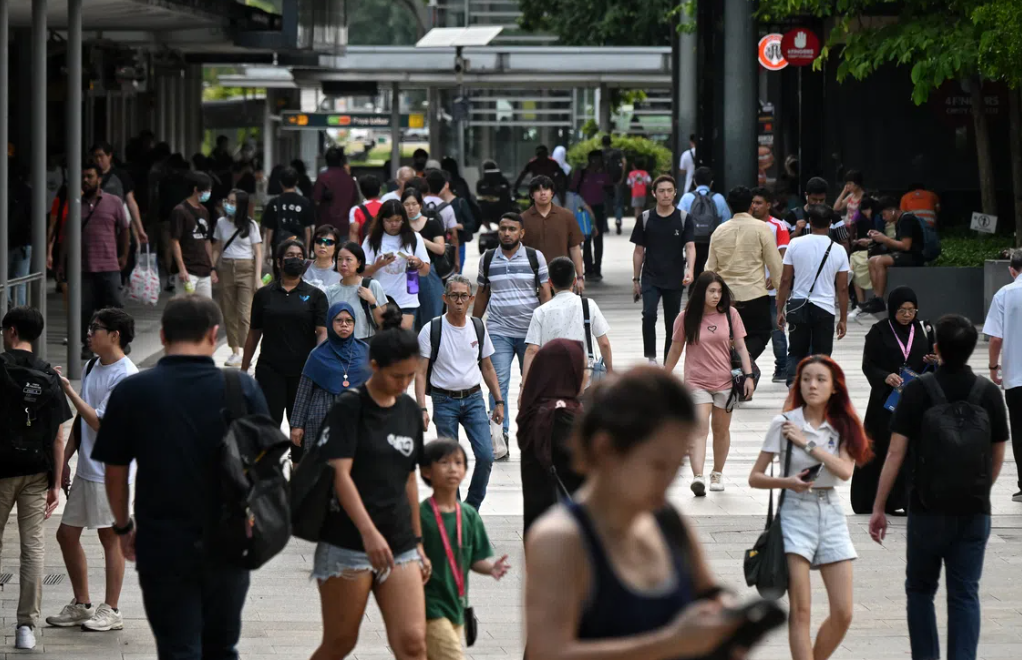
Singapore's Ministry of Finance has confirmed that over 2.4 million residents will receive a one-time special cash payment ranging from S$400 to S$600 beginning September 9, marking a significant intervention by the government to address household pressures from sustained inflation. This targeted assistance forms part of a broader cost-of-living relief initiative that allocates nearly S$1 billion specifically to support those experiencing the greatest financial strain from price increases across the economy.
The payment scheme, which was first outlined during Parliament proceedings in April, represents the government's recognition that despite robust macroeconomic performance, many working families and pensioners are struggling with essential expenses. The tiered structure of the assistance has been deliberately designed to concentrate support among lower-income households and those with modest property holdings, reflecting a policy approach that prioritises vulnerability over universal distribution.
Eligibility criteria establish a clear framework for accessing the benefit. Recipients must be Singapore citizens permanently residing in the country and have reached 21 years of age by 2026. Additionally, individuals cannot have declared assessable income exceeding S$100,000 during the 2025 tax year, and they are restricted from owning more than one property. These conditions effectively target middle and lower-income households while excluding high earners and property investors from receiving assistance.
The payment quantum exhibits significant variation based on residential property value, as recorded on the National Registration Identity Card as of December 31, 2025. This mechanism ensures that support is most generous for those living in modest circumstances. A citizen whose home carries an annual value not exceeding S$15,000 and who earned no more than S$22,000 will receive the maximum S$600 payment. Conversely, those whose residential property is valued above S$31,000 will receive S$400, even if they fall within the income threshold. This graduated approach reflects evidence-based targeting that concentrates resources where vulnerability is typically highest.
For Malaysian observers, this payment structure offers interesting comparative lessons. While Malaysia has implemented various assistance schemes including the Bantuan Sara Hidup and Pelan Kebajikan Rakyat initiatives, Singapore's property-value-linked approach provides a more granular assessment of household circumstances than income alone. Since property ownership patterns correlate closely with life-stage financial capacity and long-term wealth accumulation, integrating this metric into benefit calculations captures a dimension of household security that income snapshots might miss.
Accessing the payment requires minimal bureaucratic friction. Eligible residents can verify their status through the govbenefits website using their Singpass digital credentials, eliminating the need for manual applications or lengthy verification processes. The government has encouraged citizens to link their identity card to PayNow, a digital banking service, by August 30 to expedite payment delivery. Those who complete this step will receive funds from September 9 onwards, while others using GIRO banking arrangements will see credits by September 17, with a final batch via GovCash by September 24.
Communication protocols have been carefully designed to prevent scams, a particular concern given Singapore's sophisticated digital population and the inevitable emergence of fraudulent schemes when government payments are announced. Official notifications will arrive via SMS from "gov.sg" and will exclusively inform citizens of their benefits without soliciting responses, clicking links, or requesting information. The government has explicitly warned residents that official representatives will never demand transfers of funds or request access to banking credentials through phone calls or messages. This proactive communication mirrors similar anti-fraud messaging in Malaysia's digital identity and payment systems.
This payment initiative exists within a substantially enlarged fiscal framework. The S$400 to S$600 distribution draws from a S$1 billion cost-of-living package announced in April, which itself supplements the S$155 billion Budget 2026 that Singapore's government has described as its most expansive budget allocation to date. This layered approach to support indicates that policymakers view inflation pressures as sufficiently persistent to warrant multiple, complementary interventions rather than a single one-time measure.
The cost-of-living payment complements several other support measures already implemented or announced. Platform workers including private-hire drivers and taxi operators have been receiving S$200 in cash since late April, addressing income volatility triggered by surging fuel costs following military tensions in the Middle East. In June, the government accelerated distribution of S$500 in Community Development Council vouchers by six months to approximately 1.38 million households, bringing forward relief for everyday expenses. Subsequently, in late July, the authorities committed an additional S$900 million in household and business support to address elevated energy prices, including S$300 more in CDC vouchers per household and utility rebates scheduled for October 2026 and January 2027.
For Southeast Asian policymakers observing Singapore's approach, several strategic considerations emerge. First, the integration of property value as an eligibility criterion demonstrates how digital identity systems and property registries can be leveraged for precise benefit targeting. Second, the sequenced rollout of multiple support measures across several months reflects recognition that shocks to living costs require sustained policy responses rather than single interventions. Third, the emphasis on digital delivery mechanisms and fraud prevention suggests that mature financial infrastructure enables both rapid disbursement and security in payments administration.
The announcement also carries broader implications for regional economic management. Singapore's willingness to deploy nearly S$1 billion in purely cost-of-living relief signals that even one of Asia's wealthiest and most efficiently-managed economies views inflation as a substantive constraint on household welfare. This recognition may inform discussions across ASEAN about coordinated approaches to inflation management and the fiscal space required to protect vulnerable populations when external shocks affect energy and commodity prices.
Singaporeans can expect clear communication about their payment status through SMS notifications timed before and after credits are processed. Those without Singpass-registered mobile numbers will be notified by physical mail sent to addresses recorded on their identity documents. This dual-channel approach ensures that even residents with limited digital engagement receive clear information about their benefits, reflecting an inclusive approach to government service delivery that remains relevant across Southeast Asia as digital divides persist.

