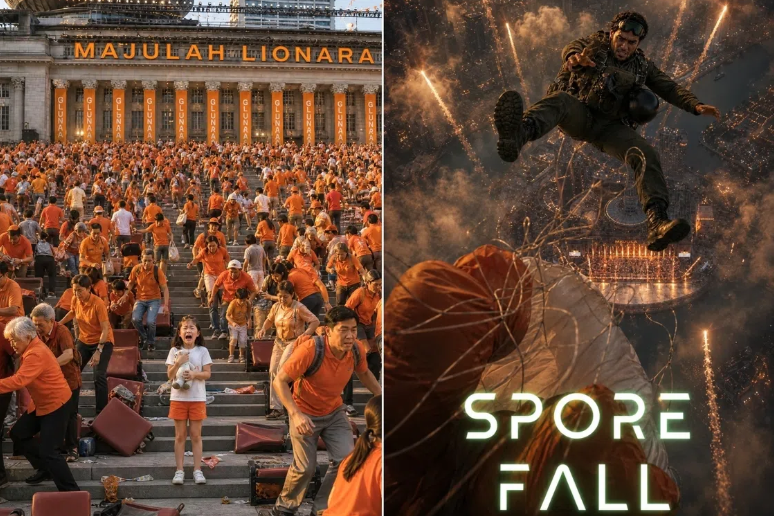
Edenstone, a Singapore-based animation studio, is preparing itself for significant public pushback following the release of a four-minute short film that reimagines the island's iconic National Day Parade in the grip of a catastrophic zombie outbreak. The creators have acknowledged that their provocative project will almost certainly divide viewers and invite substantial criticism, yet they appear committed to the artistic vision regardless of the anticipated controversy. The film, set within the fictional nation of Lionara, derives its distinctive local resonance from the incorporation of recognisable Singapore landmarks, most notably the Marina Bay skyline and the distinctive Merlion monument, grounding the dystopian narrative within a landscape that resonates intimately with domestic audiences.
The short film represents a creative spinoff from Edenstone's ongoing AI animation series, blending human storytelling with computational assistance to produce a work that challenges conventional approaches to celebrating national identity. The narrative follows a lethal spore pathogen that spreads through the crowd gathered for the parade, transforming people into zombie-like beings and fundamentally disrupting what is typically one of Singapore's most cherished civic occasions. Rather than retreating from this deliberately provocative subject matter, studio head Boh has articulated a philosophical justification rooted in confidence in Singapore's cultural resilience. In a press statement, Boh contended that depicting such dystopian imagery during National Day represents "the ultimate act of faith," arguing that the Singapore identity possesses sufficient strength to withstand creative reimagining and reinterpretation without fracturing.
This artistic gambit arrives at a moment of intense global scrutiny regarding artificial intelligence's expanding role within entertainment and creative industries. The emergence of AI-assisted production methods has triggered substantial regulatory responses worldwide, reflecting genuine anxieties about authenticity, creator protection, and the potential displacement of human talent. In China, regulatory authorities have responded to digital fraud concerns by mandating explicit labelling and digital watermarks on all AI-generated content effective from September 1st, establishing a framework designed to ensure transparency about computational involvement in creative work. Meanwhile, in the United States, major entertainment guilds including the Writers Guild of America and the Screen Actors Guild-American Federation of Television and Radio Artists have negotiated strict contractual provisions designed to safeguard both employment opportunities and the intellectual property rights of human creators, particularly regarding the use of actor likenesses and writer material.
Edenstone has positioned itself deliberately within this contested landscape by articulating a clear demarcation between human creative direction and computational assistance. According to the studio's public statements, human authors retain complete responsibility for narrative conception, scriptwriting, character development, emotional construction, and world-building elements that constitute the artistic foundation of the work. The deployment of artificial intelligence is intentionally circumscribed to the acceleration of visual asset production, functioning as a tool that amplifies rather than replaces human creative authorship. This methodological distinction proves crucial for understanding how the studio reconciles the deployment of cutting-edge technology with established concerns about maintaining human agency within creative production.
Boh's statements emphasise that the studio views AI primarily as an accelerant for previously constrained production processes rather than as a wholesale substitution for human creativity. He articulates this philosophy directly: "Technology should serve the story, not the other way around." This formulation inverts the conventional anxiety about technology in entertainment, rejecting the notion that computational capability should dictate creative priorities. Instead, Boh proposes that AI should function instrumentally to scale visual output and overcome historical production bottlenecks that have limited smaller creative enterprises. For Southeast Asian production studios operating with more modest budgets than their American or European counterparts, this technological capability potentially represents a genuine competitive advantage, enabling local talent to execute ambitious visual narratives that would otherwise require substantially larger financial investment.
The studio's overarching mission articulates itself as demonstrating Singapore's capacity to compete effectively at the global entertainment stage, a aspiration that carries particular significance for a regional creative economy seeking to expand its international footprint. Boh frames AI not as a threat to this ambition but rather as an accelerant that transforms previous constraints into creative opportunities. The framing positions technological innovation as integral to Singapore's next chapter of creative development, suggesting that embracing computational tools strategically could enhance rather than diminish the region's competitive standing within global entertainment markets. This perspective offers Malaysian and broader Southeast Asian stakeholders valuable lessons about leveraging emerging technologies to strengthen local creative industries.
The decision to deliberately incorporate recognisable local landmarks within a dystopian narrative serves multiple functions simultaneously. The incorporation of Marina Bay and the Merlion creates immediate visual recognition for Singaporean audiences while simultaneously making the fictional scenario feel disturbingly plausible and proximate. This production choice transforms what might otherwise remain abstract speculation about zombie outbreaks into a scenario that inhabits the geographic and cultural space audiences actually occupy, intensifying both the imaginative engagement and the potential for critical reaction. The choice to set this narrative within a fictional country named Lionara rather than explicitly Singapore itself perhaps represents a deliberate distancing mechanism designed to preserve some artistic licence while maintaining the unmistakable visual and cultural markers that define the setting.
The broader context of this release extends beyond Singapore itself, carrying implications for how Southeast Asian creative industries approach AI integration and cultural representation. As Malaysia, Thailand, Indonesia, and other regional nations develop their own creative sectors, the experience of studios like Edenstone provides valuable precedent regarding both the opportunities and the sensitivities surrounding AI deployment. The willingness to court controversy in service of artistic vision, coupled with transparent communication about the actual division of labour between human creativity and computational assistance, establishes a template that balances innovation with accountability. Regional audiences and policymakers will likely monitor this initiative closely as a test case for how AI can be integrated responsibly within culturally sensitive creative projects.
The film also raises fundamental questions about how national identity intersects with artistic freedom and creative experimentation. The notion that a strong national identity should tolerate dystopian reimagining of sacred civic occasions like National Day parades reflects a particular conception of cultural confidence that may resonate differently across Southeast Asian contexts with varying historical relationships to national symbolism and state commemoration. The studio's gamble essentially rests on the proposition that audiences possess sufficient emotional and psychological security to engage productively with deliberate provocations to national narrative, rather than interpreting such provocation as inherently disrespectful or destabilising. Whether this bet pays off will reveal important truths about Singaporean and more broadly Southeast Asian attitudes toward creative risk-taking and cultural reinterpretation.

