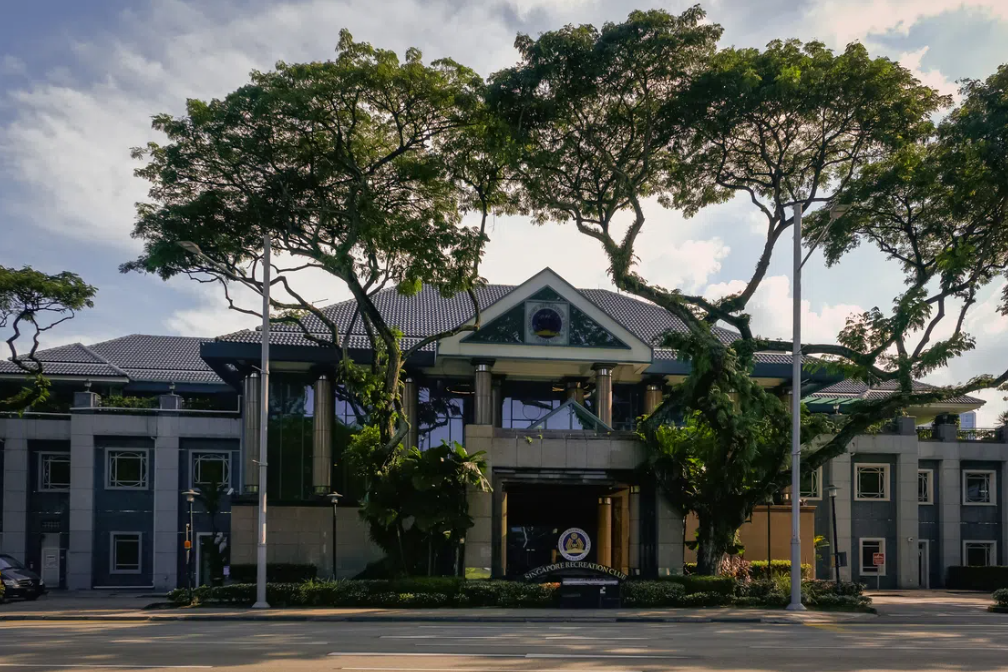
A Singapore High Court judge has cleared the path for a trial to determine the legitimacy of a contentious decision by Singapore Recreation Club members to transform the billiards room into a co-working space. Senior Judge Chan Seng Onn, in written grounds released on August 26, determined that a lawsuit filed by two club members raises questions about the validity of a resolution passed during an extraordinary general meeting that warrant examination in court, effectively reversing a lower court's earlier dismissal of the case.
The dispute involves Sean Kerwin Mathews and Mu Yee Shyong, both members of the club's billiards section, who initiated legal action in November 2025 challenging the club and its management committee's attempt to validate the resolution. At the heart of their challenge lies a fundamental disagreement over voting procedure and membership participation. The two claimants argue that the club's constitution requires major decisions of this nature to be approved by a majority of the members who were physically present at the meeting held on October 18, 2025, a standard they contend was not met.
The mathematics of the dispute illustrate the core contention. Out of the 559 members who attended the gathering, only 151 voted in favour of the second resolution concerning the co-working conversion. The claimants assert that a true majority would have required at least 280 affirmative votes. To reach this threshold, they are arguing that blank ballots—of which there were 55—should be counted as opposition votes, which when added to the 125 votes explicitly cast against the proposal would produce a combined 180 votes against, thereby defeating the resolution regardless of the simple majority claim made by the club's leadership.
The case gained renewed momentum after Judge Chan overturned an earlier decision by an assistant registrar to dismiss the claimants' case entirely on May 13. Chan's reversal on June 24 recognized what he termed triable issues, particularly regarding the application of the club's constitutional rules to the specific resolution under examination. This judicial assessment carries weight because it signals that reasonable people could legitimately disagree about how the club's governing documents apply to the circumstances, a standard courts use to determine whether a case should proceed to full trial rather than being dismissed at an early stage.
A particularly noteworthy aspect of Chan's ruling concerns the treatment of blank and spoilt votes. The judge acknowledged that while such votes typically neither support nor oppose a proposal, the specific voting structure employed at the October meeting created unusual circumstances. The club presented members with two separate voting slips designed to navigate three competing resolutions: approval of the original relocation plan with the increased betterment charges, conversion of the billiards room to a co-working space, or integrating the billiards room within the co-working space. The mechanism deliberately prevented members from rejecting all three options by marking both voting slips, creating what Chan characterized as conflicting instructions and a curtailment of voting rights.
Chang's analysis suggests that the club's management committee may have structured the ballot in a manner that unfairly limited members' genuine choice. He specifically noted that members could not vote "no" against both proposals without having their ballots deemed spoilt, effectively removing their ability to maintain the status quo or express complete opposition to the transformation plan. This concern about constrained voting options resonates beyond Singapore, reflecting broader governance questions about how organizations ensure democratic decision-making while managing competing interests among their membership.
The club's legal representatives contended that invalidating the resolution would serve no practical purpose and would leave the organization in a deadlocked state. However, Judge Chan rejected this argument, noting that a fresh vote properly conducted under the club's constitutional rules could resolve the matter. This reasoning suggests the judge viewed the claimants' pursuit as fundamentally about achieving a fair process rather than merely obstructing a predetermined outcome. The prospect of conducting another vote, presumably with clearer procedures and fairer voting mechanisms, was deemed both feasible and appropriate.
The underlying transaction driving this dispute originated with a separate decision made in March 2024, when club members approved an ambitious S$16.6 million transformation initiative. This plan envisioned relocating the billiards room from level 2 of the clubhouse to basement 2, while converting the vacated level 2 space into a modern co-working facility. The original budget allocated S$1.5 million as a contingency reserve for potential land betterment charges—a tax mechanism reflecting increased land value resulting from infrastructure improvements. When the actual charges rose to S$4.9 million, more than three times the reserved amount, the management committee concluded the relocation was financially untenable and sought alternative approaches.
The October 18 meeting represented the club's attempt to navigate this budgetary impasse, presenting members with three options rather than asking them to abandon the transformation entirely. The voting structure, however, became the flashpoint. Members received two voting slips with distinctly different purposes and constraints. The first slip addressed the original plan directly, offering simple yes-or-no voting on whether to proceed with relocation and approve payment of the S$4.9 million charges. Those voting "yes" were instructed that the second voting slip did not apply to them. The second slip presented a binary choice between the two alternative approaches, allowing members to select either conversion to a co-working space or integration of billiards within a redesigned co-working environment.
Two days after the meeting, the management committee declared success, announcing that the second resolution had passed based on a simple majority of 54.7 percent of valid votes. Of 514 votes cast, 151 supported the conversion proposal while 125 opposed it, with 183 ballots deemed spoilt and 55 left blank. This split became the litigation's focal point, as the claimants sought to recharacterize the blank votes as opposition rather than neutral ballots. The distinction matters enormously: treating blank votes as "no" votes would reduce the resolution's support to less than 30 percent of those present, a dramatic difference in how one interprets the membership's actual sentiment.
For the broader Southeast Asian context, this dispute highlights recurring governance challenges faced by long-established clubs and member-based organizations. The Singapore Recreation Club, with approximately 7,000 members, represents the type of institution common throughout the region where traditions of decision-making sometimes conflict with modern standards of procedural fairness and transparency. The case also underscores how significant capital projects and changing membership expectations can strain organizational structures designed for different eras, requiring careful recalibration of voting rights and decision-making processes.
The trial itself will require the court to interpret the club's constitutional provisions in detail and examine the legislative intent behind its voting requirements. This deeper examination may yield clarification valuable not only to the SRC but potentially to other regional organizations facing similar governance questions. The case also demonstrates how even matters seemingly minor from a commercial perspective—what happens to a single room in a recreational facility—can generate substantial legal disputes when procedural legitimacy is questioned and membership interests feel inadequately represented.
As the trial approaches, the fundamental question remains whether the club's leadership adequately served the membership's democratic interests in how the vote was structured and executed. Judge Chan's decision to allow the case to proceed suggests that reasonable observers could question whether the process was entirely fair, a finding that may well resonate with members frustrated by opaque decision-making processes at their own clubs and organizations across Southeast Asia.

