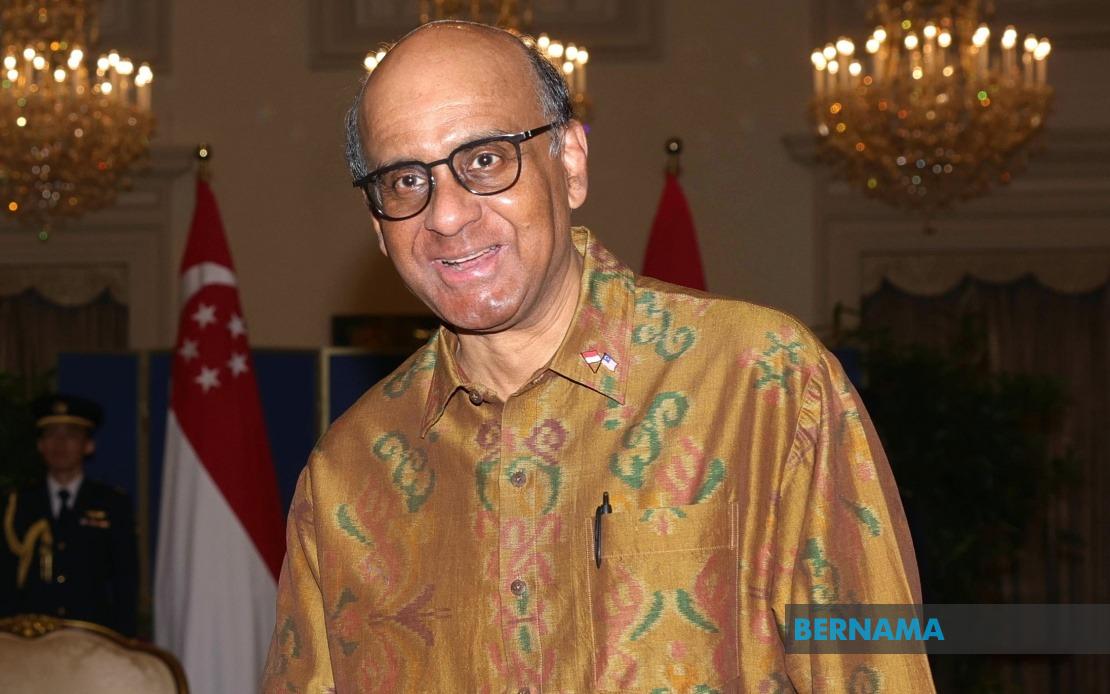
Singapore's President Tharman Shanmugaratnam will arrive in Malaysia on July 13 for a three-day state visit that marks his first official trip to the country since taking office as Singapore's ninth president in September 2023. The visit, scheduled to conclude on July 15, comes at the formal invitation of His Majesty Sultan Ibrahim, King of Malaysia, and represents a reciprocal gesture following the Malaysian monarch's state visit to Singapore in early May 2024.
The Foreign Ministry characterised the visit as a significant reaffirmation of the two nations' enduring bilateral relationship and their commitment to expanding cooperation in areas of shared strategic importance. The carefully choreographed diplomatic engagement reflects the priority both governments place on maintaining and strengthening their partnerships across multiple sectors, from trade and security to cultural and people-to-people exchanges. The state visit protocol itself—involving formal ceremonies and high-level engagements—signals the importance of relations between these two close neighbours that share a complex and deeply intertwined history.
During his time in Malaysia, President Tharman will participate in a formal State Welcoming Ceremony upon arrival, followed by a private audience with His Majesty at Istana Negara, the seat of Malaysian royal power. The visit will culminate in an elaborate State Banquet honouring the Singaporean delegation. Prime Minister Datuk Seri Anwar Ibrahim is also scheduled to meet with the President in a separate courtesy call, ensuring representation from Malaysia's executive branch in the diplomatic proceedings. The President will be accompanied throughout by his spouse, Jane Ittogi Shanmugaratnam, along with several Singapore cabinet ministers and senior government officials, underlining the delegation's high-level composition.
The economic relationship between Malaysia and Singapore remains extraordinarily robust, despite periodic tensions that have characterised their interactions. Singapore stands as Malaysia's second-largest trading partner globally, while Malaysia remains Singapore's primary trading partner among Association of Southeast Asian Nations member states—a testament to the geographic proximity and complementary economic structures of the two countries. This trade nexus demonstrates how political goodwill translates into tangible economic benefits for both nations, creating mutual prosperity and interdependence.
Recent trade figures underscore the dynamism of commercial ties. Total bilateral merchandise trade reached RM402.35 billion, equivalent to US$93.97 billion, in 2025, representing a modest increase of 1.5 per cent compared with the previous year. More impressively, the first five months of 2026 witnessed accelerated growth, with bilateral trade expanding by 14.5 per cent year-on-year to RM189.90 billion (US$47.87 billion), compared with RM165.93 billion (US$37.65 billion) during the corresponding period in 2025. This strengthening trend suggests that bilateral commerce is gaining momentum, potentially driven by regional economic recovery and increased cross-border investment initiatives.
The significance of this state visit extends beyond ceremonial niceties and economic transactions. For Malaysian readers and observers across Southeast Asia, the visit represents an opportunity to gauge the health of one of the region's most important bilateral relationships at a critical juncture. Both nations face complex regional challenges, from maritime security concerns to managing great power competition in the Indo-Pacific, and their ability to coordinate positions carries implications for broader ASEAN cohesion and effectiveness.
President Tharman's assumption of office in 2023 introduced a new chapter in Singapore's leadership and international engagement. As the nation's ninth president, he brings distinct perspectives to the role, and this inaugural state visit to Malaysia provides a platform to reinforce Singapore's commitment to its immediate neighbourhood and to regional stability. The timing of the visit, following His Majesty's May 2024 trip to Singapore, suggests a deliberate pattern of sustained high-level engagement rather than episodic diplomatic gestures.
From Malaysia's perspective, hosting the Singaporean President affirms the country's role as a major regional power and its commitment to maintaining harmonious relations with all neighbours. The formal state visit apparatus—complete with ceremony and protocol—serves not merely as diplomatic theatre but as a mechanism for reinforcing bilateral commitments and establishing frameworks for cooperation on pressing issues. For Prime Minister Anwar Ibrahim, the visit offers an opportunity to discuss matters of mutual concern, from trade facilitation and investment to regional security and maritime cooperation in the Strait of Malacca.
The broader context of ASEAN integration and regional cooperation provides additional weight to bilateral state visits between major member states. Malaysia and Singapore, despite their geographical intimacy and economic interdependence, have at various points in their modern histories experienced tensions over territorial matters, water resources, and other issues. Sustained diplomatic engagement through state visits and high-level meetings serves as a confidence-building mechanism, fostering dialogue and preventing misunderstandings from escalating into substantive disputes that could undermine regional stability and prosperity.

