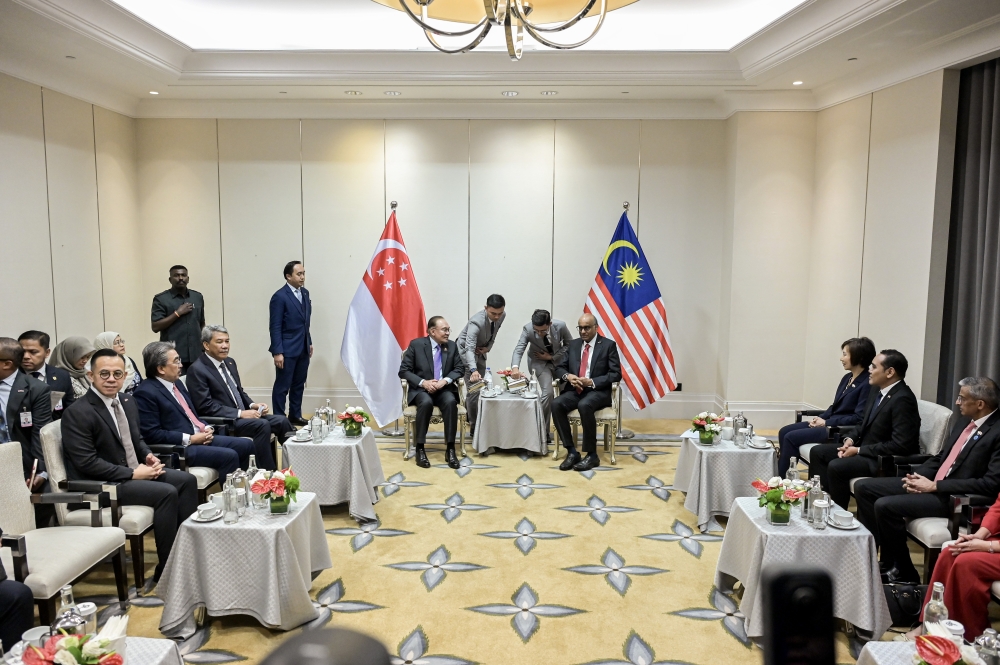
Singapore President Halimah Yacob and Malaysian Prime Minister Datuk Seri Anwar Ibrahim engaged in focused bilateral discussions during a formal courtesy visit in Kuala Lumpur on Monday, signalling continued commitment to deepening ties between the two neighbouring nations. The 40-minute meeting provided both leaders with an opportunity to address matters of mutual concern and chart directions for enhanced cooperation across multiple sectors.
The courtesy call represents a customary diplomatic element of presidential state visits, yet the substantive nature of the discussions underscores the importance both governments place on their bilateral relationship. Such high-level engagements typically serve as platforms for leaders to establish personal rapport whilst addressing broader strategic and economic issues that shape the regional landscape. For Malaysia and Singapore, these interactions remain crucial given their historical ties, shared maritime boundaries, and economic interdependence.
The timing of President Halimah's visit comes amid a broader regional context where Southeast Asian nations are navigating complex geopolitical challenges, including great power competition and economic uncertainty. Both Malaysia and Singapore have vested interests in maintaining stable, productive relations that benefit their citizens and contribute to broader regional stability. The meeting reflects a recognition that bilateral engagement, even at ceremonial moments, carries substantive value in cementing diplomatic foundations.
Bilateral relations between Malaysia and Singapore have historically encompassed areas ranging from trade and investment to security cooperation and people-to-people exchanges. Both nations are members of the Association of Southeast Asian Nations (ASEAN) and share commitment to regional frameworks that promote peace and prosperity. The discussions likely touched upon economic collaboration, given Singapore's position as a major trading partner and investor in Malaysia, with billions of ringgit in bilateral trade occurring annually.
Energy cooperation represents another significant dimension of Malaysia-Singapore relations. Singapore's energy needs and Malaysia's substantial hydrocarbon resources have traditionally formed the basis for mutually beneficial arrangements. Both nations have also collaborated on infrastructure projects and cross-border initiatives that facilitate trade and movement of goods. Transportation linkages, including the causeway connecting both nations, remain vital conduits for economic activity and people movement.
Regional security matters likely featured prominently in the conversation, given maritime challenges in Southeast Asia and broader concerns about maintaining freedom of navigation. Both countries maintain strategic interests in ensuring the Strait of Malacca remains open and secure, as it constitutes one of the world's most critical shipping lanes. Cooperation on these matters affects not only bilateral interests but also global trade flows and regional stability.
President Halimah's visit also carries symbolic weight in maintaining the trajectory of bilateral relations following transitions in government leadership. Such state visits allow newly positioned leaders to establish working relationships and demonstrate commitment to traditional partnerships. For Malaysia, receiving high-level visits from regional partners affirms its status within ASEAN and its continued engagement with neighbouring capitals.
The meeting occurs within a context where both nations are pursuing digital transformation and economic diversification strategies. Potential areas for enhanced cooperation may include fintech collaboration, digital economy initiatives, and innovation partnerships. Singapore's advanced technological infrastructure and Malaysia's growing digital capabilities present opportunities for mutual benefit and regional competitiveness enhancement.
Education and cultural exchanges represent complementary dimensions of bilateral relations that strengthen societal-level connections beyond government-to-government interactions. Universities, research institutions, and cultural organisations in both nations maintain active collaborations. These grassroots connections contribute to mutual understanding and people-to-people familiarity that underpins stronger diplomatic relations.
People mobility remains another consequential area, with significant numbers of Malaysian workers employed in Singapore and Singaporean professionals operating within Malaysia. Immigration policies, labour standards, and worker protections require ongoing coordination between both governments to ensure smooth movement whilst maintaining security and employment standards. Changes to visa regimes or labour policies can significantly impact cross-border communities.
Environmental cooperation, including managing air quality issues that periodically affect both nations due to transboundary haze, constitutes an additional shared concern. Climate change impacts on the region underscore the necessity for regional cooperation on sustainability matters. Both nations have committed to addressing environmental challenges through multilateral frameworks and bilateral arrangements.
Looking forward, the momentum from such high-level engagements typically translates into follow-up discussions at ministerial levels across various sectors. Working groups and technical committees often materialise from presidential or prime ministerial directives to translate broad commitments into concrete outcomes. The 40-minute discussion likely generated actionable items for officials to pursue in subsequent months.
The meeting underscores that diplomatic engagement between Malaysia and Singapore remains robust despite occasional tensions over specific issues. Both nations' commitment to regular high-level dialogue demonstrates recognition that bilateral stability serves broader national interests. As Southeast Asia navigates uncertain regional dynamics, the maintenance of strong bilateral partnerships provides essential anchors for national prosperity and regional coherence.

