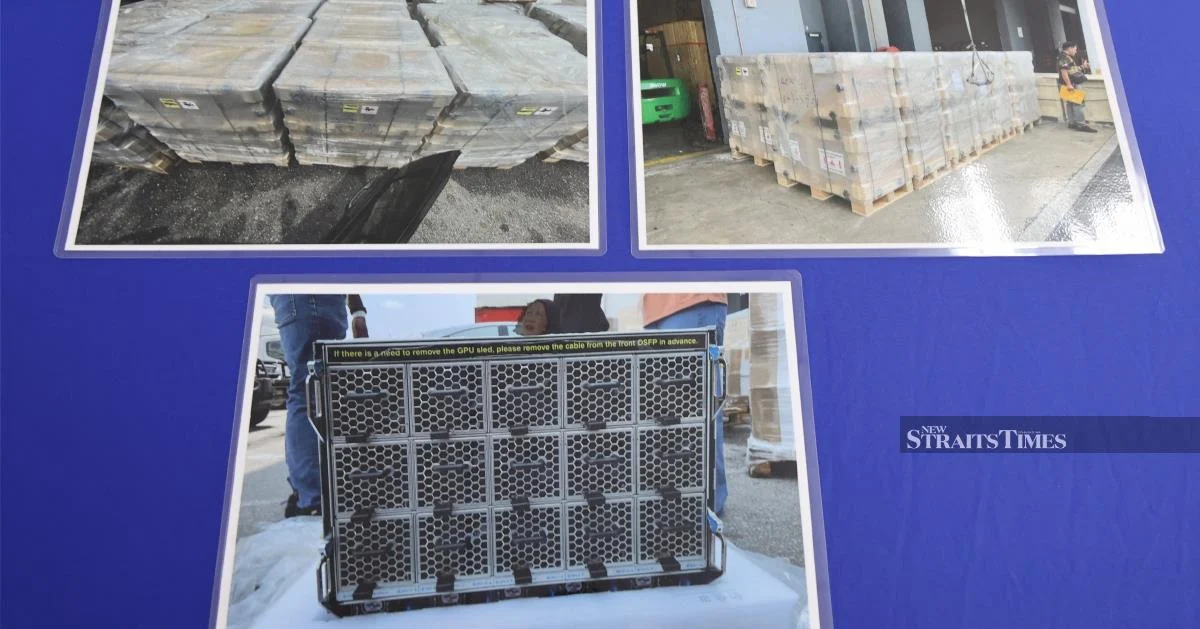
Singapore police have moved to seize control of a luxury residential property valued at more than US$40 million in connection with a significant fraud investigation involving the suspected illegal transfer of advanced artificial intelligence chips that contravened stringent United States export regulations.
The seizure marks an escalation in enforcement action targeting what authorities allege to be a scheme involving the circumvention of American restrictions on the export of cutting-edge semiconductor technology. The bungalow, identified as a high-value asset, has been placed under police control as investigators work to establish connections between the property and the broader scheme under scrutiny.
The case highlights growing concerns across Southeast Asia regarding the diversion of restricted technology destined for American markets. Enforcement agencies throughout the region have been placed on heightened alert following a wave of investigations into similar schemes, with particular focus on wealthy individuals and trading networks suspected of facilitating prohibited transactions in semiconductor components that carry dual-use applications relevant to both civilian and military purposes.
US export controls on advanced artificial intelligence chips represent one of the most tightly regulated categories of technology globally. Washington has implemented comprehensive restrictions aimed at preventing superior computing capabilities from reaching jurisdictions deemed strategic competitors or potential adversaries. These measures have significant implications for technology companies and supply chains across Asia, where Singapore and neighbouring economies serve as major trading and logistics hubs.
The investigation underscores the complex enforcement landscape that technology firms and individuals operating across Asia-Pacific must navigate. Singapore, as a international financial and trading centre, has become an important jurisdiction for regulatory authorities investigating cross-border financial crimes and technology violations. The city-state's cooperation with American law enforcement and its position within global trade networks make it a focal point for such investigations.
The seizure of substantial assets signals the authorities' determination to pursue those suspected of involvement in technology smuggling schemes with considerable resources and apparent sophistication. When investigators identify high-value properties connected to alleged proceeds of fraud, they typically seek to prevent the dissipation of assets that might otherwise be transferred beyond the reach of recovery proceedings. The bungalow's valuation places it among Singapore's most exclusive residential holdings, suggesting individuals of considerable wealth may be implicated in the investigation.
For Malaysian readers and businesses, the implications are noteworthy. Malaysia has emerged as an integral part of the semiconductor supply chain for Asia-Pacific, with significant manufacturing and trading activity concentrated in zones such as Penang and Johor. The enforcement actions in Singapore reflect intensified scrutiny that will inevitably extend across the broader region, including Malaysia's own import-export networks and financial institutions that facilitate technology transactions.
The case also illustrates the interconnected nature of technology regulation across developed and developing economies. US export controls operate beyond American borders through mechanisms including secondary sanctions, which impose penalties on third parties that knowingly facilitate restricted transactions. This extraterritorial reach means that Malaysian firms, financial institutions, and individuals involved in technology trading must ensure rigorous compliance protocols to avoid exposure to severe penalties.
Investigators typically examine property ownership structures, financial transactions, and corporate networks when pursuing cases involving asset seizure and fraud allegations. The presence of a multimillion-dollar bungalow held by individuals connected to alleged export control violations suggests a scheme of considerable scale and sophistication, likely involving multiple intermediaries and jurisdictions across Asia-Pacific.
The broader context of tightening technology competition between the United States and China has significantly elevated the enforcement priority assigned to artificial intelligence and advanced semiconductor cases. Regulatory bodies have received increased resources and political support to pursue investigations aggressively. Singapore's role as a compliance-conscious financial centre means that law enforcement cooperation in such matters typically receives high-level attention and coordination.
For the Malaysian business community, these developments serve as a reminder that compliance with international technology regulations is non-negotiable. Companies involved in semiconductor trading, technology import-export, or provision of financial services must implement robust due diligence procedures and seek appropriate legal counsel familiar with evolving export control frameworks. Penalties for violations extend beyond asset seizure to include substantial monetary fines and criminal prosecution of individuals.
The investigation also highlights the importance of transparency and proper documentation in international trade transactions. Increasingly, customs authorities across Southeast Asia are cross-referencing import and export declarations with intelligence shared through international enforcement networks. Discrepancies between declared purposes, shipment origins, and final destinations trigger deeper scrutiny that can uncover violation schemes.
As the case progresses, outcomes will likely be closely monitored by technology firms, trading companies, and financial institutions throughout Malaysia and the broader region. Successful prosecution and asset recovery would reinforce the commitment of authorities to enforce restrictions rigorously, potentially encouraging voluntary compliance initiatives among businesses uncertain about the boundaries of permissible conduct in semiconductor transactions.

