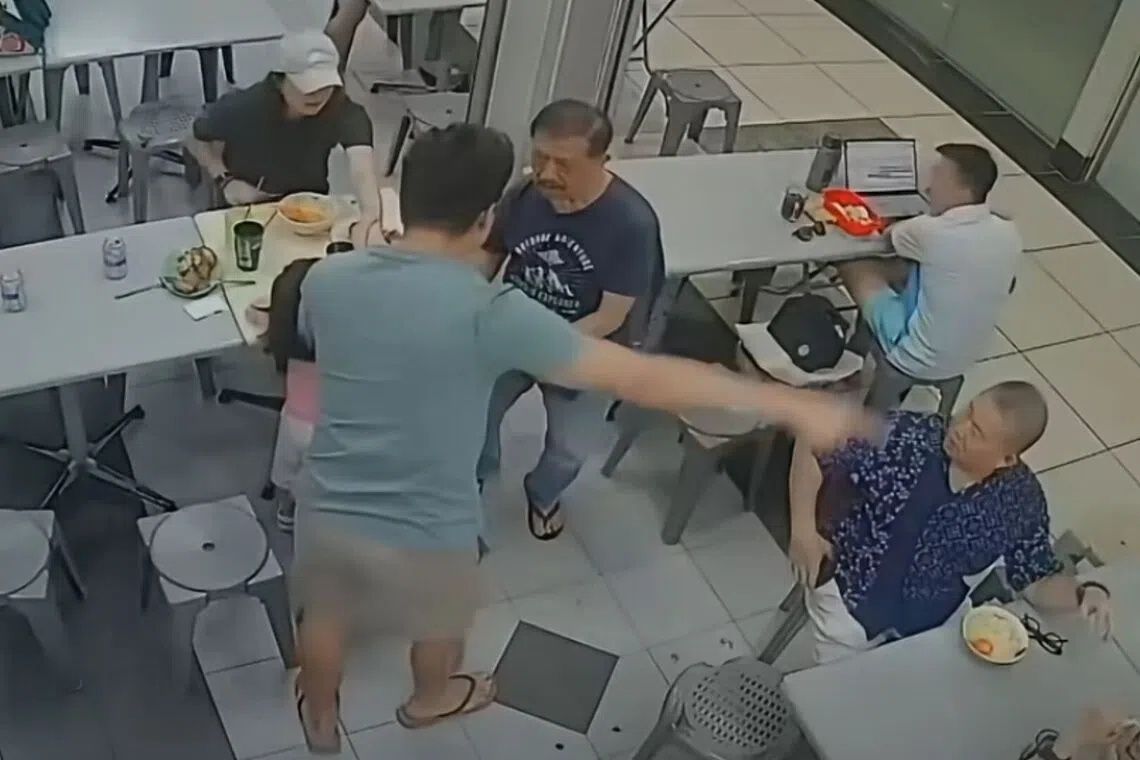
Authorities in Singapore have launched an investigation into a confrontation at a coffee shop in the East Coast district that resulted in an elderly man being forcefully shoved to the ground. The incident, which occurred on August 15, was confirmed by police on Sunday, August 16, after a report was formally lodged by a family member. The case has drawn attention to questions about public conduct, intergenerational tensions, and appropriate responses to perceived transgressions in shared spaces.
The elderly man at the centre of the dispute was in his seventies and worked informally at the coffee shop, assisting with operations at a food stall despite mobility challenges that required him to support himself by holding onto tables and furniture as he moved through the establishment. According to the account provided by the man's son through social media, the incident unfolded when the elderly man attempted to walk past a table where a young girl was seated, and he reached out to briefly pat the child on the head—a gesture that some cultures regard as benign or friendly but which clearly triggered an immediate negative response in this instance.
The response was swift and confrontational. A woman seated at the table with the girl quickly moved to deflect the elderly man's hand away from the child. Moments later, a man at the same table—apparently the girl's father—abruptly returned from elsewhere in the coffee shop after apparently observing the interaction and immediately engaged the elderly man in a verbal altercation. What began as a heated exchange escalated rapidly when the man physically shoved the elderly man to the ground with considerable force. The incident was captured on the coffee shop's security camera system, providing a contemporaneous record of the sequence of events.
The elderly man's son documented and shared the incident publicly through a Facebook post published at 7:14 pm on August 15, seeking to identify the man responsible for the aggressive action. In his initial appeal, the son requested that anyone with information about the incident or the identity of the man who pushed his father come forward. The post garnered attention from the online community, highlighting how incidents in public spaces can quickly mobilise broader audiences through digital platforms, particularly when they involve elderly individuals or perceived disproportionate responses to minor infractions.
The physical consequences of the altercation extended beyond the immediate embarrassment and shock of the incident. The elderly man reported experiencing severe back pain in the aftermath of being thrown to the ground, suggesting that the fall caused genuine injury that may have lasting effects on his health and mobility. For an elderly person already facing locomotor difficulties, such trauma can have compounding effects on physical well-being and independence. The son's public statements emphasised the gravity of his father's suffering, framing the incident not as a trivial clash but as one with meaningful health implications.
Interestingly, the narrative took a somewhat conciliatory turn after the initial confrontation. The man who had pushed the elderly father subsequently approached him to apologise for his actions and offered him a beverage as a gesture of reconciliation. This follow-up interaction suggests that the confrontation, while serious, may have been driven more by a protective instinct regarding the child than by sustained animosity. Nevertheless, the son's initial posts indicated uncertainty about whether a simple apology and refreshment adequately addressed the incident, particularly given the sustained back pain his father continued to experience.
In a follow-up post the next morning at 9:55 am on August 16, the son expressed gratitude to members of the online community who had shown concern for his father's welfare and who had provided potentially useful information about the incident. However, he simultaneously acknowledged that despite the collective effort of social media users, he had not yet been able to definitively establish the identity of the man involved. This situation reflects the limitations of crowdsourced investigations and the gap between public interest in an incident and the practical resolution of identifying specific individuals without official channels.
The police confirmation that investigations are ongoing indicates that the matter is being treated seriously within the formal law enforcement system, moving beyond social media appeals and into the official justice and public order framework. The incident raises broader questions about appropriate conduct in public spaces, particularly regarding physical contact with children who are not one's own. Different cultural norms exist regarding such gestures—some societies view gentle head patting as innocuous or even affectionate, while others regard it as an unwarranted invasion of personal space, particularly involving minors.
For Singapore, a multicultural society with residents from diverse cultural and ethnic backgrounds, such incidents underscore the importance of understanding and respecting varying social conventions. The case also illustrates how quickly situations can escalate when parents or guardians perceive a threat to children in their care, even when the threat may be minimal or unintentional. The proportionality of the physical response—whether pushing an elderly person to the ground was justified by the head pat—remains a point of contention and will likely be central to any police assessment and potential charges.
The incident carries implications for elderly citizens navigating public spaces and interacting with others, particularly in busy commercial environments like hawker centres and coffee shops. It highlights the vulnerability of senior citizens to physical confrontation and raises awareness about the potential consequences of seemingly minor social interactions. For Malaysian observers following this story, it provides a lens into how neighbouring Singapore handles disputes involving elderly individuals, children's safety, and questions of public conduct—issues that resonate across the broader Southeast Asian context where multigenerational and multicultural interactions in public spaces are similarly commonplace and occasionally contentious.

