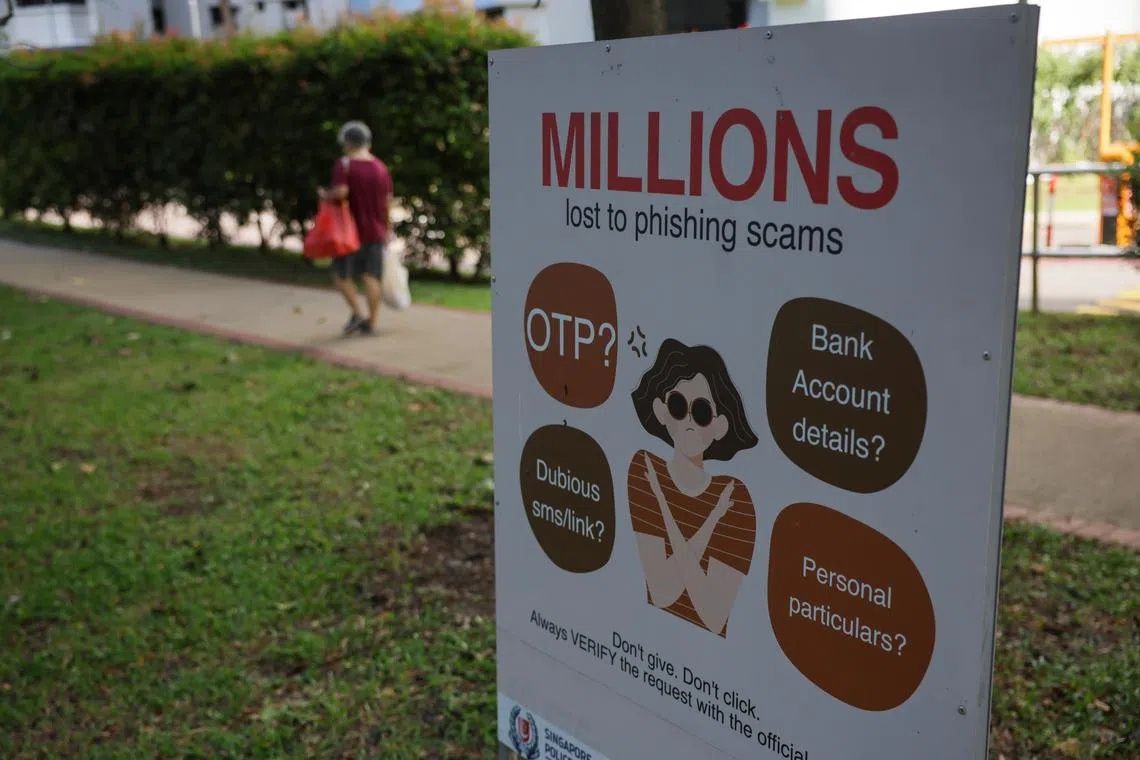
Singapore police have intensified their crackdown on organised scam operations, announcing the arrest of 230 suspects following a two-week enforcement drive that exposed the scale of fraud plaguing the island's financial system. Among those under investigation is a 16-year-old, highlighting how scam syndicates have been drawing even teenagers into their criminal networks as money mules and recruiters. The operation, spanning June 18 to July 1, represents a coordinated effort across multiple police divisions to dismantle the infrastructure supporting these illegal schemes.
The 230 individuals under investigation comprise 159 men and 71 women, ranging in age from just 16 years old to 77, and are suspected of playing various roles within scam ecosystems. Some are believed to be the orchestrators directly running fraudulent operations, while others are suspected money mules who facilitate the movement and laundering of illicit proceeds through local banking channels. This diversity of roles underscores how scam syndicates operate as sophisticated criminal enterprises with defined hierarchies and specialised functions, rather than loose collections of opportunistic fraudsters.
The scope of the crackdown is remarkable, with police uncovering involvement in more than 713 separate scams across multiple fraud categories. E-commerce scams—where victims are deceived through fake online shopping platforms—represent one major category, alongside friend impersonation scams where perpetrators pose as acquaintances seeking urgent financial transfers. Job recruitment scams targeting job seekers, schemes impersonating government officials, investment fraud promising unrealistic returns, and rental scams demanding deposits for properties that don't exist round out the criminal portfolio investigators have documented.
The investigation involved officers from the Commercial Affairs Department and all seven police land divisions, demonstrating the level of institutional resources dedicated to combating organised fraud. This coordinated approach reflects recognition that scam operations frequently operate across geographical boundaries within Singapore and leverage multiple channels simultaneously. The breadth of the operation suggests that authorities have developed sophisticated intelligence networks capable of identifying interconnected scam rings that might otherwise appear as isolated incidents to individual victims.
Those under investigation face serious criminal charges that carry substantial penalties. The cheating offence alone carries potential imprisonment of up to 10 years, while money laundering convictions can result in up to 10 years imprisonment and fines reaching S$500,000. Individuals operating unlicensed payment services face up to three years in prison and fines of S$125,000. For scammers and syndicate recruiters, Singapore law mandates mandatory caning of six to 24 strokes upon conviction, a particularly severe punishment reflecting the authorities' determination to deter participation in organised fraud.
Money mules and those facilitating scams face their own draconian penalties, including up to 12 strokes of caning if convicted. This escalating severity of punishment distinguishes between masterminds and lower-level operatives, yet still imposes significant consequences on those who enable scam operations by providing SIM cards, banking credentials, or laundering services. Beyond criminal penalties, convicted mule operators may face restrictions on banking services and mobile subscriptions, effectively cutting them off from the financial infrastructure that makes their participation valuable to scam networks.
The Singapore Police Force has released encouraging statistics suggesting their enforcement efforts are yielding results. Scam cases declined from over 50,000 in 2024 to 37,308 in 2025, while losses fell from S$1.1 billion to S$913.1 million during the same period. These figures represent meaningful progress, though the absolute numbers remain concerning and indicate that scamming continues to impose substantial costs on Singapore's population. The financial losses alone exceed S$900 million, representing resources diverted from productive economic activity and individual financial security.
E-commerce scams emerged as the most prevalent category in 2025, with 6,703 reported cases resulting in S$16.7 million in cumulative losses. This prevalence reflects how the shift toward digital commerce has created expanded opportunities for fraudsters to intercept transactions and deceive consumers through counterfeit platforms and spoofed seller accounts. The concentration of fraud in the e-commerce sector suggests that retailers and payment platforms may require enhanced verification mechanisms and consumer education to reduce vulnerability.
For Malaysian readers and businesses operating across the region, Singapore's scam situation carries relevance given the interconnected nature of Southeast Asian commerce and finance. Cross-border payment systems, shared business networks, and digital platforms enable scammers to target victims across multiple jurisdictions, including Malaysia. The tactics documented in Singapore—friend impersonation, job recruitment fraud, investment schemes—are not geographically confined and frequently target Malaysian consumers through similar mechanisms.
The Singapore authorities have established multiple reporting channels for public engagement with law enforcement. The ScamShield helpline at 1799 provides information and guidance, while 1800-255-0000 serves as the general police hotline for reporting suspected scam activity. Online reporting mechanisms at www.police.gov.sg/i-witness allow individuals to submit information confidentially. These channels reflect a deliberate strategy to lower reporting barriers and encourage victim participation in investigations.
The operation underscores a critical vulnerability in scam prevention: the human element. Scammers succeed by exploiting psychological vulnerabilities, social trust, and information asymmetries rather than purely technical hacking. The involvement of even teenagers in mule networks suggests that financial desperation, peer pressure, and insufficient understanding of legal consequences drive recruitment into these criminal enterprises. Prevention therefore requires not only law enforcement action but also broader public education, financial literacy programmes, and social support systems addressing underlying vulnerabilities that make individuals susceptible to recruitment.
Singapore's coordinated approach to organised scam networks offers lessons for regional governments grappling with similar challenges. The combination of targeted enforcement operations, graduated penalties reflecting different culpability levels, restrictions on financial access for convicted offenders, and public reporting mechanisms creates a multi-layered deterrent strategy. As digital payment systems continue expanding throughout Southeast Asia, similar comprehensive approaches may become increasingly necessary across the region.

