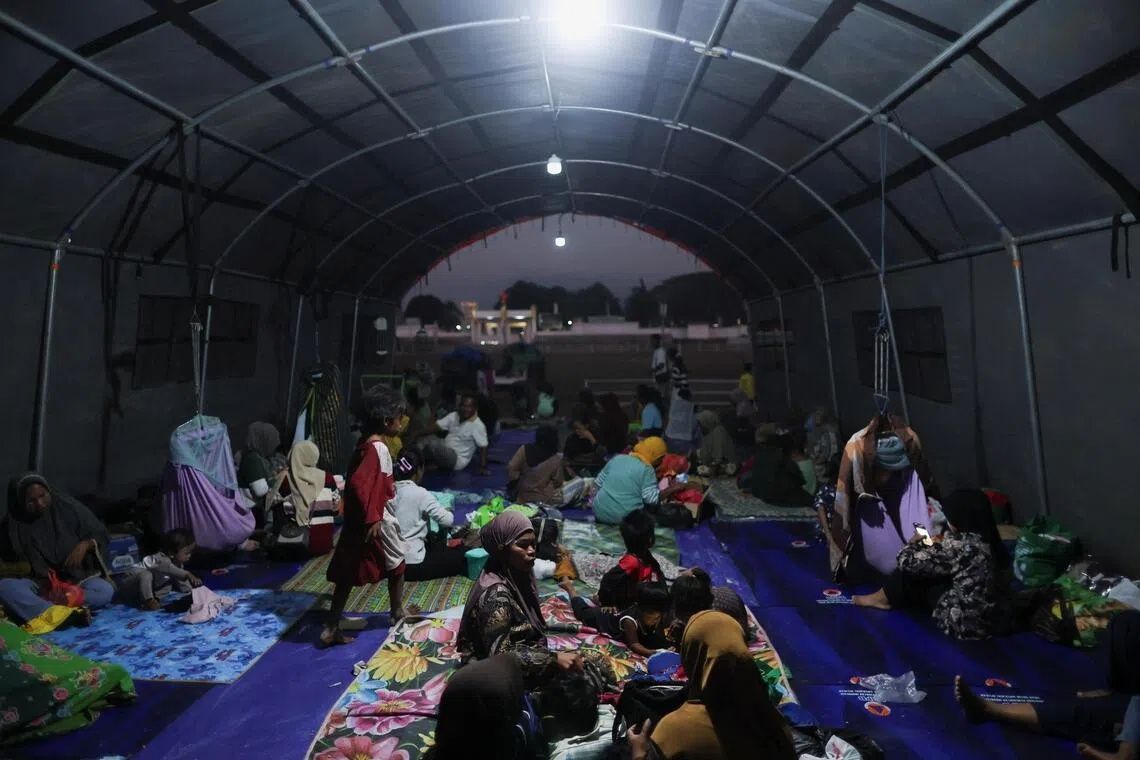
Singapore's Prime Minister Lawrence Wong has conveyed formal condolences to Indonesian President Prabowo Subianto in the aftermath of a severe earthquake that devastated communities off the coast of Flores in eastern Indonesia on August 15. The disaster claimed the lives of more than 50 people, left at least 135 others injured, and caused extensive damage to hundreds of residential and commercial structures across the affected region. Wong's expression of sympathy, communicated through a personal letter and a public Facebook statement issued on August 16, underscores Singapore's commitment to standing alongside its larger Southeast Asian neighbour during times of crisis and humanitarian need.
The primary tremor, which registered 7.7 on the magnitude scale, struck the Flores area early on August 15, triggering widespread panic and prompting immediate evacuation efforts. According to officials from Indonesia's national disaster management agency, approximately 5,000 residents fled their homes as the initial quake hit, seeking safety from collapsing structures and falling debris. The seismic event proved particularly devastating given the density of settlements in the region and the structural vulnerability of many buildings in rural and semi-urban areas of eastern Indonesia. The scale and intensity of the quake overwhelmed local emergency response capacity in the initial hours following the disaster.
The geological aftermath of the primary earthquake added considerably to the chaos and danger facing survivors and rescue workers. In the hours immediately following the initial 7.7-magnitude tremor, the region experienced an extraordinary sequence of nearly 1,000 aftershocks, according to the national disaster agency spokesman. This relentless seismic activity prevented displaced residents from returning to their homes to retrieve essential belongings, complicating recovery efforts and extending the period during which people remained vulnerable to further structural collapse. The psychological toll on communities already traumatised by the initial disaster cannot be underestimated, as residents remained in a state of heightened alert and anxiety.
Adding another layer of complexity to the humanitarian emergency, a second significant earthquake measuring 6.1 on the magnitude scale struck off the northern coast of Sumatra just hours after the initial Flores disaster. Although this secondary tremor caused no immediate reported casualties, it raised concerns about potential tsunami generation and extended the geographical scope of the disaster response across multiple regions simultaneously. The back-to-back seismic events highlighted Indonesia's persistent vulnerability to tectonic activity, situated as it is along the Pacific Ring of Fire, one of the world's most seismically active zones. The dual disasters strained Indonesia's national emergency response apparatus across vast distances.
In his Facebook statement, Wong articulated Singapore's solidarity with the Indonesian people during the crisis. He expressed profound sadness at the loss of life and the widespread destruction caused by the seismic events. Wong's message conveyed sympathy not only to the families directly bereaved by the earthquakes but also to the broader Indonesian population affected by displacement, injury, and property loss. The statement carefully balanced formal diplomatic protocol with genuine expressions of human concern, reflecting the depth of bilateral ties between the two nations. Such expressions of solidarity carry particular weight in Southeast Asia's diplomatic culture, signalling a commitment to mutual support beyond the routine conduct of statecraft.
Rescue operations and humanitarian assistance became urgent priorities immediately after the earthquakes struck. Rescue officials working on the ground reported that survivors were in critical need of emergency aid across multiple categories. Essential supplies identified as lacking included emergency shelter tents for the thousands of displaced persons, adequate food provisions for affected communities, medical supplies and personnel to treat the injured, access to clean drinking water to prevent disease outbreaks, and portable electricity generators to restore basic services. The scale of these humanitarian needs reflected the severity of the disaster and the challenges facing authorities attempting to coordinate relief efforts across damaged infrastructure and difficult terrain.
Singapore's expression of condolences carries broader significance within the regional context of Southeast Asian cooperation and disaster management. As a compact, wealthy city-state with advanced emergency response capabilities, Singapore has historically offered technical assistance and expert personnel during major regional disasters. The Prime Minister's statement opens the door to potential bilateral assistance through established channels, including the possibility of deploying Singapore rescue specialists, medical teams, or logistical support to complement Indonesian efforts. Such coordination between ASEAN members during humanitarian crises represents a practical manifestation of the regional bloc's fundamental principle of mutual aid.
The Flores earthquake underscores the persistent vulnerability of Indonesia's eastern regions to natural disasters. Despite significant investments in early warning systems and disaster preparedness infrastructure, the scale of casualties and damage in the latest event demonstrates ongoing gaps in structural resilience and emergency response capacity. The region's geographic remoteness, limited transportation links, and lower population density in surrounding areas complicate the speed and efficiency of external assistance reaching affected communities. Policymakers across Southeast Asia, including in Malaysia, must reflect on whether existing disaster management frameworks adequately address the needs of populations in geographically challenging areas.
The humanitarian response to the Flores earthquake will likely shape regional discussions about disaster preparedness in the months ahead. Indonesia's experience dealing with concurrent seismic events in different regions provides valuable lessons for ASEAN nations about resource allocation, inter-agency coordination, and the importance of pre-positioned emergency supplies. Malaysia, which faces its own seismic and geological hazards, may draw upon Indonesia's experience to strengthen its own disaster management protocols. The international community's response, beginning with diplomatic expressions of sympathy and potentially progressing to material assistance, demonstrates the network of solidarity upon which Southeast Asian societies increasingly depend as natural disasters become more frequent and severe.

