A 55-year-old man was taken into custody on July 5 in Singapore's Bedok North district following a tense incident in which police deployed a Taser device to apprehend him after he repeatedly refused to surrender a saw he was wielding near a residential block. The episode highlighted the operational protocols Singapore's police force employs when confronting individuals armed with dangerous implements in populated areas, particularly when verbal de-escalation attempts fail to produce compliance.
Authorities responded to the scene at Block 539 Bedok North Street 3 at approximately 3.25pm following a public report. Officers arrived to find the man brandishing the saw in what police described as threatening circumstances near the Housing Board block, which sits in a densely populated residential neighbourhood serving thousands of families. The appearance of an armed individual in such settings immediately triggered law enforcement concern for public safety given the potential for harm to nearby residents and their properties.
When police officers arrived and instructed the man to relinquish the saw, he not only refused their initial directions but continued to ignore their repeated warnings. Rather than complying with standard police instructions, the man exhibited behaviour that suggested either disregard for authority or possible psychological distress. Officers reported that he shouted incoherently throughout the encounter, which raised questions about his mental state and the underlying cause of his actions. This combination of non-compliance and erratic behaviour fundamentally changed the nature of the police response from a routine intervention to a use-of-force situation.
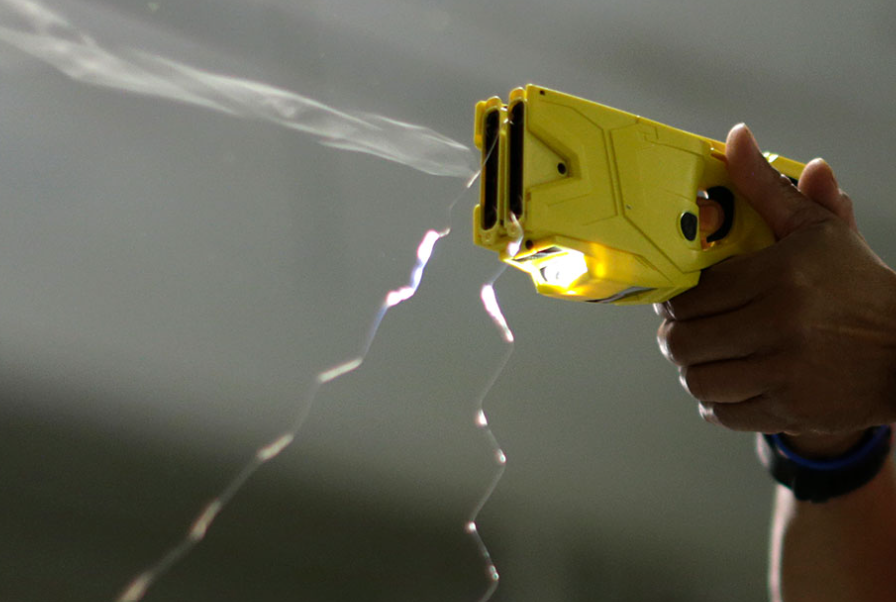
Constrained by the man's refusal to cooperate and the continuing threat posed by his possession of the saw in a public space, police determined that escalation measures were necessary. Rather than attempt physical restraint with an armed individual, which carries significant risk of injury to both officers and the suspect, they deployed a Taser device. The electric stun weapon served the dual purpose of incapacitating the man while reducing the likelihood of serious injury compared to other potential interventions. This tactical choice represents a middle ground between continued negotiation and more potentially harmful physical confrontation.
Following the Taser deployment, officers successfully arrested the man and secured his custody. He was transported to Changi General Hospital while conscious, allowing medical professionals to evaluate both his physical condition following the Taser use and any underlying health issues that may have contributed to the incident. The hospital assessment proved critical not merely for immediate medical needs but also for documenting his condition during initial police detention, an important procedural safeguard in Singapore's law enforcement system.
Authorities levied multiple charges reflecting the various aspects of his conduct during the encounter. The most straightforward charge involved public nuisance, acknowledging that his behaviour with the saw in a residential area endangered public peace and safety. Additionally, he faced charges relating to possession of an offensive weapon in a public place, a serious matter in Singapore where weapons restrictions are strictly enforced. These charges together address the immediate danger his actions posed to the community.
Beyond the initial incident, police raised suspicions that drug consumption may have contributed to his behaviour. The incoherent shouting and resistance to authority suggested possible intoxication or drug influence, prompting officers to refer the suspected drug-related offence to the Central Narcotics Bureau for further investigation. This referral mechanism allows specialist drug enforcement authorities to pursue their own investigative lines while police handle the assault-related aspects of the case. The dual investigation approach recognises that what appeared as a weapon-related incident may have substantial drug-dependency elements that warrant separate treatment.
Notably, the incident resulted in no reported injuries beyond the deployment of the Taser against the suspect himself. Police maintained control of the situation without harm extending to residents, responding officers, or other bystanders. The absence of secondary injuries underscores the success of the tactical response chosen by officers, who managed a potentially volatile situation involving an armed individual in a residential setting without escalation to more dangerous outcomes.
For Malaysian observers, this incident demonstrates the operational realities facing Singapore's police when responding to armed individuals in public spaces. The case illustrates how even developed urban jurisdictions with well-resourced police forces must balance public safety imperatives against proportional response standards. The methodical approach—initial verbal warnings, escalation to Taser deployment, medical follow-up, and multi-agency investigation—reflects institutional procedures designed to handle such situations while maintaining accountability. As Malaysia's own police forces and security services confront similar challenges in maintaining order within densely populated urban centres, the Singapore case provides practical insight into how structured protocols and appropriate equipment deployment can resolve dangerous situations without excessive harm. The involvement of the Central Narcotics Bureau further demonstrates how substance abuse intersects with public safety crises, a concern equally relevant across Southeast Asia's urban environments.

