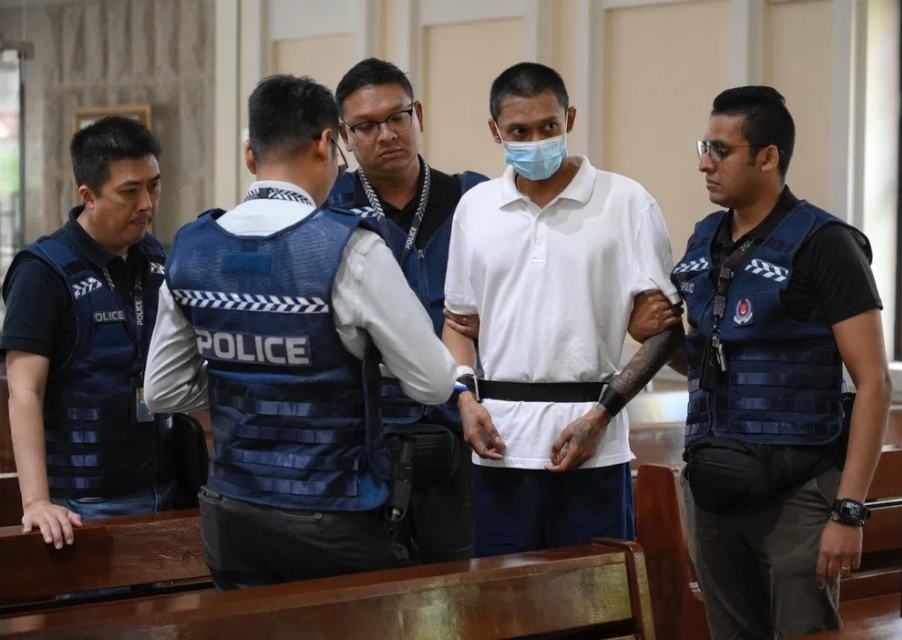
A Singapore court has handed down a jail sentence of four years and three months to a 38-year-old man who launched a violent knife attack on a Catholic priest during evening mass at St Joseph's Church in November 2024. Basnayake Keith Spencer also received nine strokes of the cane after pleading guilty to voluntarily causing grievous hurt with a dangerous weapon and illegal weapon possession. The assault, which occurred in front of approximately 900 worshippers including children, has sent shockwaves through Singapore's religious community and reignited concerns about security in places of worship across the region.
The attack unfolded with alarming speed during the administration of communion on November 9, 2024, at approximately 6.15 pm. According to court proceedings, Basnayake had arrived at the church alone around 5.30 pm and remained relatively inconspicuous during the early stages of mass. However, just as Father Christopher Lee, then 57 years old, stood ready to distribute communion to parishioners, Basnayake suddenly produced a 23-centimetre foldable knife with a 10-centimetre blade and thrust it directly into the priest's mouth. The assault was entirely unprovoked and deliberately timed to strike during a sacred moment of worship.
The injuries sustained by Father Lee were severe and multifaceted. The priest suffered an 8-centimetre laceration on his tongue, a 3-centimetre cut on his upper left lip, and a 4-centimetre wound at the corner of his mouth. Blood pooled extensively from the stab wound to the bottom of his mouth, and he was immediately rushed to the nearest hospital for emergency treatment. The physical trauma, however, was only part of the ordeal. Father Lee required 40 days of hospitalisation leave following his discharge on November 15, 2024, just six days after the incident, and underwent months of speech therapy to manage the lasting effects of his injuries. The psychological impact of such a violation during a sacred ritual has undoubtedly weighed heavily on both the victim and the congregation.
What prevented the situation from deteriorating into mass chaos was swift action by alert parishioners. Recognising the immediate danger posed by the armed assailant, Father Lee himself acted with remarkable presence of mind by grabbing the rear pocket of Basnayake's jeans to prevent further attacks. Members of the congregation, including an off-duty police officer present at the service, immediately restrained Basnayake and pinned him down until police arrived at the scene. His arrest was swift, yet the prosecution would later reveal that Basnayake was carrying multiple weapons, including a 14.5-centimetre penknife, a flip knife, and a fishing gaff—a pole with a sharp hook—suggesting premeditation or at minimum a concerning tendency towards weapon possession.
Court records uncovered a deeply troubling pattern in Basnayake's history of violence. In 2019, he had been convicted of voluntarily causing hurt with a dangerous weapon and sentenced to one year in jail after stabbing his then-girlfriend in the buttocks with a kitchen knife whilst under the influence of methamphetamine. The prior conviction illustrated a recurring cycle of drug-fuelled aggression punctuated by weapon use, raising critical questions about the adequacy of rehabilitation efforts and post-release monitoring systems. Despite his detention and imprisonment following the 2019 incident, Basnayake appeared to pose an undiminished threat to public safety upon his return to the community.
During the August 2024 sentencing hearing, the prosecution presented compelling evidence regarding Basnayake's mental and pharmacological state at the time of the attack. He had consumed five pills throughout the afternoon and evening—two to maintain focus and three to calm himself after realising the service was specifically for children. The prosecutor characterised him as being in a drug-induced psychotic state at the moment of the assault, yet crucially maintained that he retained sufficient awareness and intentionality to deliberately target Father Lee and execute the attack with precision. This distinction proved significant during sentencing, as it clarified that whilst substance abuse may have contributed to his actions, it did not negate criminal responsibility or the gravity of his deliberate choices.
The prosecution had recommended a custodial term between four years and three months and four years and eleven months, coupled with nine strokes of the cane. The defence counsel, Ashwin Ganapathy of the Public Defender's Office, sought leniency by requesting a jail term of less than four years, arguing that Basnayake expressed remorse, shame, and a desire for proportionate punishment. However, District Judge Shaiffudin Saruwan rejected the defence's entreaty, emphasising that the unprovoked nature of the attack, the severe physical harm inflicted upon a defenceless victim, and the timing during a sacred ritual demanded the full force of the law. The judge specifically noted the potential for mass panic and cascading injuries had congregation members not intervened decisively.
The sentence handed down reflects Singapore's courts taking an uncompromising stance on violence within religious spaces. The assault occurred not merely against an individual but against the sanctity of collective worship during a vulnerable moment when children were present. This aggravating factor—the targeting of a religious ceremony with children in attendance—elevated the severity of the offence in judicial assessment. The presence of an off-duty police officer at the service also highlighted how Singapore's security infrastructure, though robust, depends significantly on community vigilance and rapid response from trained individuals present in public spaces. Had the congregation not acted with such determination, outcomes could have been infinitely more tragic.
For religious communities across Southeast Asia, the St Joseph's Church incident serves as an uncomfortable reminder that places of worship remain potential targets for violence, whether motivated by ideological extremism, personal grievance, or untreated mental illness exacerbated by substance abuse. Singapore, despite its reputation for strict security measures and low crime rates, cannot claim complete immunity from such incidents. The case also illuminates systemic challenges in managing individuals with documented histories of violent offending, particularly when substance abuse and possible mental health issues intersect. Post-release rehabilitation and community monitoring of high-risk offenders require continual refinement and increased resourcing across the region.
Barsnayake has spent more than one year and nine months in remand following his arrest in November 2024, meaning his time already served will be credited towards his four-year-three-month sentence. He was denied bail in December 2024 after prosecutors successfully argued that he presented an extraordinarily high risk of reoffending and posed a clear danger to the public. The judge's sentencing remarks underscored that the nature and context of the offence—its unprovoked character, its commission during a sacred ritual, its devastating impact on a priest serving his congregation, and its potential to incite mass panic—justified the substantial custodial term imposed. The nine strokes of the cane, whilst representing a proportional but secondary punishment to imprisonment, emphasised the court's absolute rejection of violent transgression.
The reverberations of this case extend beyond criminal justice considerations. Religious leaders throughout Singapore and the broader Southeast Asian region have quietly reassessed security protocols at their institutions. Many churches, temples, and mosques now grapple with the tension between maintaining welcoming, open spaces for spiritual practice and implementing security measures that reflect contemporary threats. The incident has prompted discussions about mental health screening, substance abuse intervention programmes, and the adequacy of existing frameworks for tracking and supporting individuals with documented violent histories. These conversations, though difficult, are essential for building societies where religious community remains accessible yet protected.
The prosecution's success in securing the recommended sentence demonstrates the judiciary's commitment to protecting vulnerable spaces and individuals. Father Lee's ordeal—the physical trauma, the psychological violation of assault during sacred ritual, the long rehabilitation process—stands as testimony to the real human cost of violence within communities of faith. As Basnayake begins his sentence, questions remain about what rehabilitation opportunities exist within Singapore's correctional system to address his apparent substance abuse dependencies and violent propensities. The broader challenge facing Southeast Asian societies involves balancing accountability with genuine rehabilitation prospects, ensuring that sentences protect communities today whilst building pathways toward genuine transformation.

