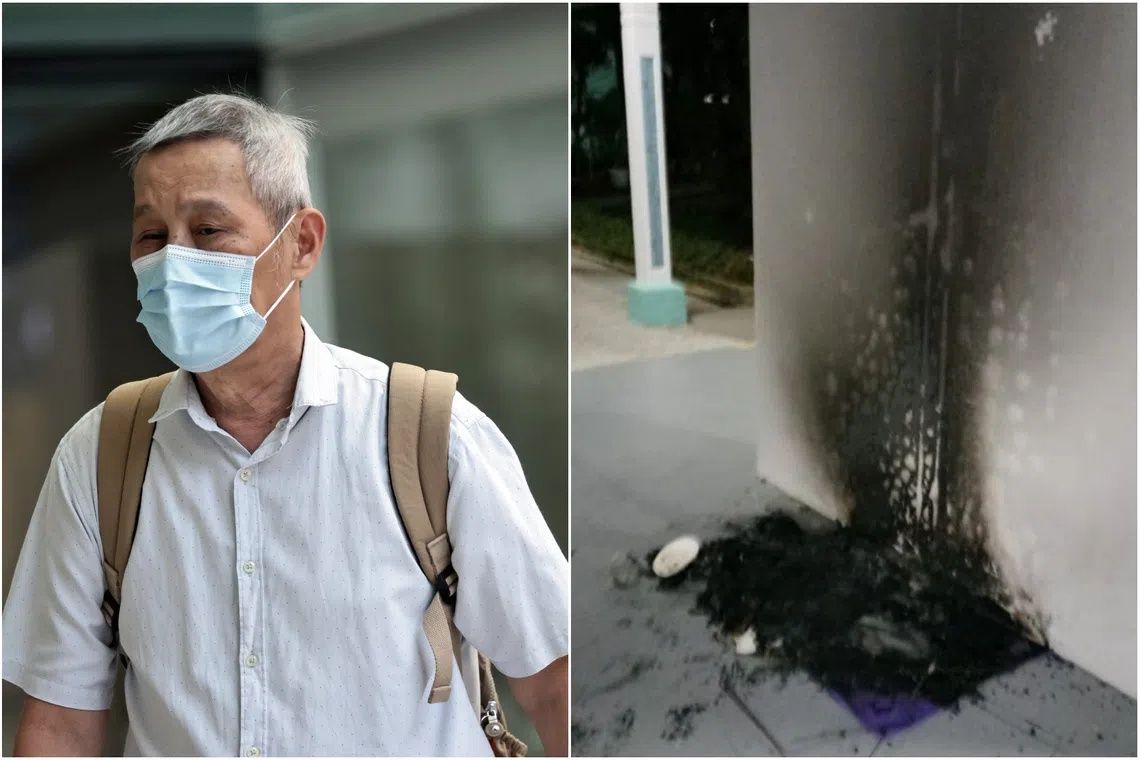
A retired Singapore resident has been handed a three-month jail sentence for deliberately igniting cardboard cat houses at a void deck in Bukit Batok, drawing attention to the tensions that can arise in densely populated neighbourhoods over animal welfare initiatives. Koh Teng Boo, 68, pleaded guilty to charges of committing mischief by fire on Tuesday, August 4, after a series of arson incidents that damaged the common area of his residential block and sparked a broader conversation about balancing community concerns with care for stray animals.
The dispute began when cardboard structures designed to shelter community cats appeared near a pavilion and void deck adjacent to Koh's home at Bukit Batok East Avenue 4 in September 2025. These makeshift houses were equipped with food and water to sustain the neighbourhood's stray cat population. While the initiative was intended to provide refuge for homeless animals, Koh grew increasingly frustrated with the installation, believing it created environmental and hygiene problems for nearby residents. He observed that the presence of cat food attracted birds to the area, and he expressed concern that the structures would become a magnet for pests, potentially compromising the cleanliness of the shared living space that residents relied upon daily.
Despite his reservations, Koh initially pursued formal channels to address his grievance. He lodged a complaint with his Member of Parliament, hoping that official intervention would result in the removal of the cat houses. However, when no visible action materialised in response to his appeals, frustration mounted. In October 2025, Koh took matters into his own hands by collecting three of the cardboard cat houses and placing them into an incense burner bin before setting them alight. The incident caused significant damage estimated at S$913 to the flooring and walls surrounding the void deck area.
The confrontation might have ended there, but the situation escalated when Koh discovered that fresh cat houses had been installed around the block within two days of the fire. Rather than deterring further complaints, the reappearance of the structures seemed to strengthen Koh's resolve. On November 17, he returned to his MP's office to reiterate his concerns, this time emphasising that his objection was not rooted in animosity towards cats themselves but rather in the unhygienic conditions he believed the practice introduced to the neighbourhood. He noted that residents were carelessly discarding litter into the cat houses, compounding what he saw as a sanitation issue affecting the common areas where families and elderly residents spent time.
The situation deteriorated further in the early hours of November 19 when Koh, after consuming alcohol, encountered another cat house on his way home around 1:30 am. Acting impulsively, he used a lighter to ignite the structure and then abandoned the scene without ensuring the fire was properly extinguished. Investigations failed to establish precisely when or how the blaze was eventually put out. Koh's actions that night appeared to reflect accumulated frustration rather than a calculated plan, yet the consequences were serious. The next day, undeterred by the previous night's incident, Koh set fire to yet another cat house. This time, however, two passers-by witnessed the flames and managed to extinguish the fire before it spread further. Koh was apprehended shortly after this second arson attempt.
The legal consequences of Koh's actions reflect the seriousness with which Singapore's courts treat arson and property damage. Deputy Public Prosecutor Stephen Yeo articulated during the trial that while Koh claimed his actions stemmed from frustration over the lack of response to his parliamentary petition, such motivation did not justify taking the law into his own hands. The prosecutor highlighted that the Jurong-Clementi-Bukit Batok Town Council incurred substantial costs of S$913 to repair the damage inflicted on communal infrastructure. Courts in Singapore can sentence individuals convicted of mischief by fire to as much as seven years imprisonment and significant financial penalties, giving some perspective to Koh's three-month sentence. In a move that demonstrated some acknowledgment of his concerns, Koh has since made full restitution to the town council, settling the financial obligations arising from his destructive actions.
This case illustrates the friction that can develop in Singapore's intensely urbanised residential environment when community initiatives clash with residents' practical concerns about daily living standards. While animal welfare organisations and community volunteers operate with genuine humanitarian intentions in establishing feeding and sheltering stations for stray cats, such efforts can generate legitimate worries among neighbours about pest control, hygiene, and the shared enjoyment of public spaces. The tension between compassion for animals and residents' quality of life represents a persistent challenge in East and Southeast Asian cities where high-density living is the norm.
For Malaysian readers, the case carries particular relevance given similar tensions that emerge in Malaysian housing estates and condominiums when residents, volunteers, or animal rights advocates establish unofficial feeding stations or shelters for stray animals. While Malaysia lacks Singapore's rigid enforcement regime, neighbourhood disputes over stray animal management frequently escalate without formal resolution mechanisms, occasionally leading to confrontations between animal welfare advocates and residents concerned about hygiene and safety. The Singapore case demonstrates how critical it is for local authorities to proactively engage with both animal welfare stakeholders and residents to establish clear, agreed-upon protocols for community animal care initiatives before disputes become entrenched.
Moreover, Koh's attempt to escalate his complaint through the parliamentary system illustrates the importance of responsive governance channels. That he felt compelled to resort to arson after his MP apparently failed to deliver visible progress suggests gaps in how feedback from constituents is processed and acted upon, at least from the resident's perspective. While the courts correctly rejected his justification for taking destructive action, the case also implicitly critiques bureaucratic responsiveness in addressing genuine community concerns within reasonable timeframes.
The three-month jail sentence will likely resonate differently across Southeast Asia depending on local attitudes towards both animal welfare and property protection. In Singapore, with its strict law-and-order framework, the sentence reinforces that vigilantism is unacceptable regardless of the grievance. However, the case also serves as a cautionary tale about the potential consequences of allowing tension between community groups—whether animal welfare advocates or concerned residents—to fester without formal intervention from authorities. Housing estates, void decks, and common areas require clear management policies that explicitly address how community concerns will be heard and addressed within defined timeframes, reducing the likelihood that frustration will boil over into illegal action.

