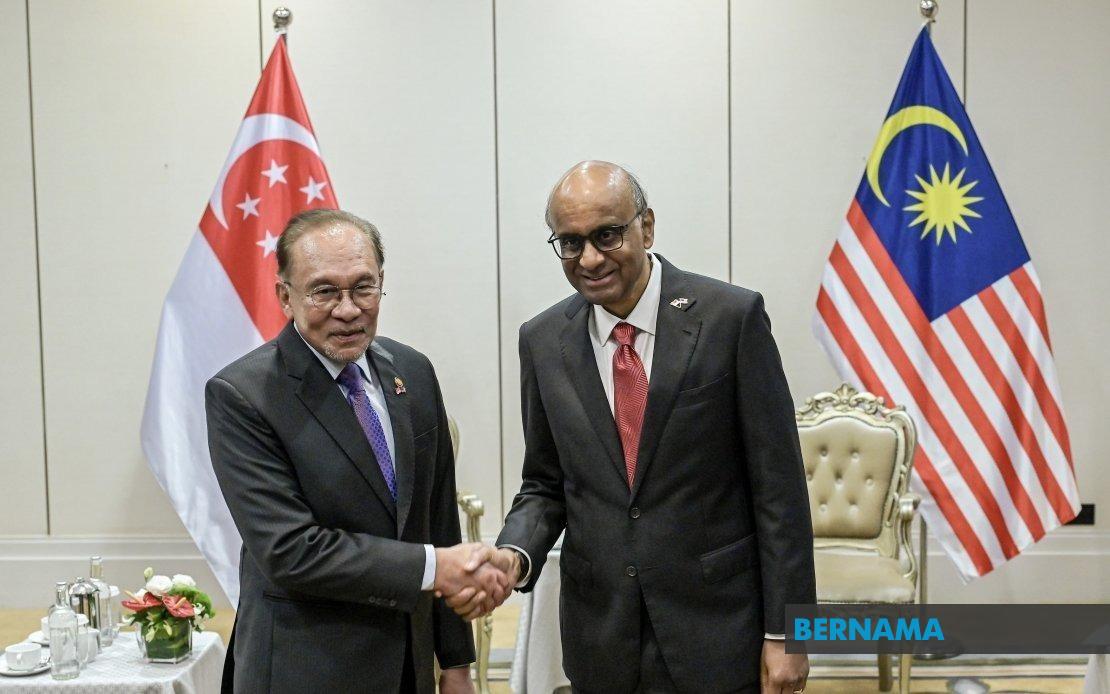
Singapore and Malaysia have signalled their intention to broaden bilateral cooperation in a range of strategically important sectors, reaffirming a partnership that remains central to regional stability and prosperity. The commitment emerged during the courtesy meeting between Prime Minister Datuk Seri Anwar Ibrahim and Singapore's President Tharman Shanmugaratnam on Monday, as the latter undertakes his first state visit to Malaysia from July 12 to 15. According to Singapore's Foreign Ministry, both leaders emphasised the urgency of advancing shared interests in food security and energy resilience—two interconnected challenges that have become increasingly pressing across Southeast Asia amid global supply chain disruptions and the transition to renewable resources.
The official engagement began with full ceremonial honours, with President Tharman and his wife Jane Ittogi Shanmugaratnam receiving a formal state welcome at Istana Negara. His Majesty Sultan Ibrahim, King of Malaysia, and Her Majesty Raja Zarith Sofiah, Queen of Malaysia, personally received the visiting dignitary on Monday, underscoring the significance that Kuala Lumpur accords to the bilateral relationship. The protocol extended beyond the federal capital, with the president subsequently meeting Sultan Selangor Sultan Sharafuddin Idris Shah and Selangor Menteri Besar Datuk Seri Amirudin Shari on Tuesday, reflecting an effort to deepen engagement at the subnational level—a dimension that has gained traction in recent years as Malaysian states pursue independent economic and diplomatic partnerships.
Beyond the traditional pillars of trade and investment, the two nations have identified several emerging areas where collaboration could yield tangible benefits for their populations. Technical and vocational education featured prominently in discussions, highlighting a mutual recognition that skills development remains critical for economic competitiveness in an increasingly knowledge-driven regional economy. Climate adaptation and flood mitigation have assumed greater urgency following successive severe weather events across both nations, prompting both Singapore and Malaysia to explore joint approaches to infrastructure resilience and disaster preparedness. The growth of technology start-ups and innovation ecosystems has also emerged as a priority, with both countries seeking to capitalise on their complementary strengths—Singapore's established financial and technological infrastructure alongside Malaysia's expanding talent pool and entrepreneurial dynamism.
The bilateral conversation also touched upon the broader geopolitical landscape, with particular attention to developments unfolding in West Asia. President Tharman and Prime Minister Anwar reaffirmed their commitment to upholding international law and the rules-based multilateral order, specifically emphasising the United Nations Convention on the Law of the Sea (UNCLOS) and the principle of freedom of navigation. For maritime nations like Singapore and Malaysia, whose prosperity depends heavily on unimpeded sea lanes and predictable international norms, this reaffirmation carries substantial weight. Both nations have strategic interests in ensuring that regional waters remain open and secure, a concern that has become more acute given ongoing tensions in various parts of the Indo-Pacific.
The emphasis on UNCLOS reflects a deeper anxiety among Southeast Asian states regarding the sanctity of international maritime law amid great power competition. Singapore, as one of the world's busiest transshipment hubs, and Malaysia, with substantial maritime territory and resources, both benefit enormously from a transparent, rules-based system that discourages unilateral claims or the use of coercive power to alter the status quo. The reiteration of this commitment during the state visit suggests both governments remain aligned in their approach to managing regional stability, despite periodic friction over bilateral issues such as maritime boundaries and air traffic control.
The deliberate inclusion of Selangor in the presidential itinerary signals a strategic choice to strengthen ties at the state level. President Tharman's engagement with Selangor leadership represents a departure from traditional bilateral diplomacy focused exclusively on federal authorities. This approach acknowledges that Malaysian states now function as important economic actors in their own right, with significant foreign investment portfolios and autonomous development agendas. Singapore has increasingly recognised that its relationship with Malaysia extends beyond federal-level negotiations, and that cultivating ties with prosperous, business-friendly states like Selangor can unlock additional avenues for cooperation and commercial partnership.
Food security cooperation between the two nations assumes particular significance given Singapore's heavy dependence on food imports and Malaysia's position as a regional agricultural producer. With global food systems facing mounting pressures from climate change, geopolitical tensions, and supply chain volatility, both countries have incentives to deepen their engagement in agricultural technology, supply chain optimisation, and sustainable farming practices. Malaysia's agricultural sector, concentrated heavily in palm oil, rubber, and other commodities, could benefit from Singapore's expertise in agri-technology and precision farming. Conversely, Singapore's demand for high-quality agricultural products represents a stable, nearby market for Malaysian producers seeking to diversify beyond traditional export destinations.
Energy cooperation carries equally substantial implications, particularly as both nations navigate the transition to cleaner energy sources while maintaining economic growth. Singapore, with virtually no fossil fuel reserves, has long depended on liquefied natural gas imports and increasingly on renewable energy imports from neighbouring countries. Malaysia, conversely, possesses substantial oil and gas reserves alongside growing renewable energy capacity. Enhanced cooperation in energy trading, grid interconnection, and renewable energy development could benefit both nations—providing Malaysia with additional markets for its energy exports whilst securing Singapore's long-term energy needs and supporting broader regional decarbonisation efforts.
The bilateral engagement also underscores the importance of people-to-people connectivity and educational exchange in strengthening the relationship between the two nations. Technical and vocational education initiatives can help address skills shortages in both countries whilst building networks of young professionals who will shape bilateral relations in coming decades. Such initiatives also create tangible benefits for ordinary citizens, as improved vocational training translates into better employment prospects and higher incomes. For Malaysia, which has substantial youth populations in states like Selangor seeking quality education and career opportunities, enhanced access to Singapore's world-class vocational institutions represents a meaningful advantage.
Climate adaptation and flood mitigation initiatives carry particular urgency in the Malaysian context, where annual monsoon seasons bring devastating floods that disrupt communities and damage critical infrastructure. Singapore's experience in water management and innovative flood mitigation technologies could offer valuable lessons and solutions for Malaysian authorities grappling with increasingly severe weather events. Conversely, Malaysia's larger landmass and diverse geography could provide Singapore with opportunities to pilot or test climate adaptation approaches at scale. Joint research initiatives and information-sharing mechanisms in this domain could benefit the broader Southeast Asian region, establishing best practices applicable across the Mekong region and Indian Ocean littoral states.
The state visit itself, marked by full ceremonial honours and high-level engagements across multiple tiers of Malaysian government, sends a powerful signal about the durability and importance of the bilateral relationship. Despite occasional tensions—whether over maritime boundaries, air traffic control protocols, or water agreements—both governments remain committed to managing differences within a framework of friendship and cooperation. President Tharman's inaugural visit to Malaysia as president establishes a positive trajectory for bilateral relations, laying groundwork for sustained engagement across multiple sectors and governance levels. The specific identification of concrete areas for cooperation, from energy and food security to education and climate adaptation, transforms rhetorical commitments into actionable partnerships with the potential to generate tangible benefits for both nations' citizens and contribute to broader Southeast Asian stability and prosperity.

