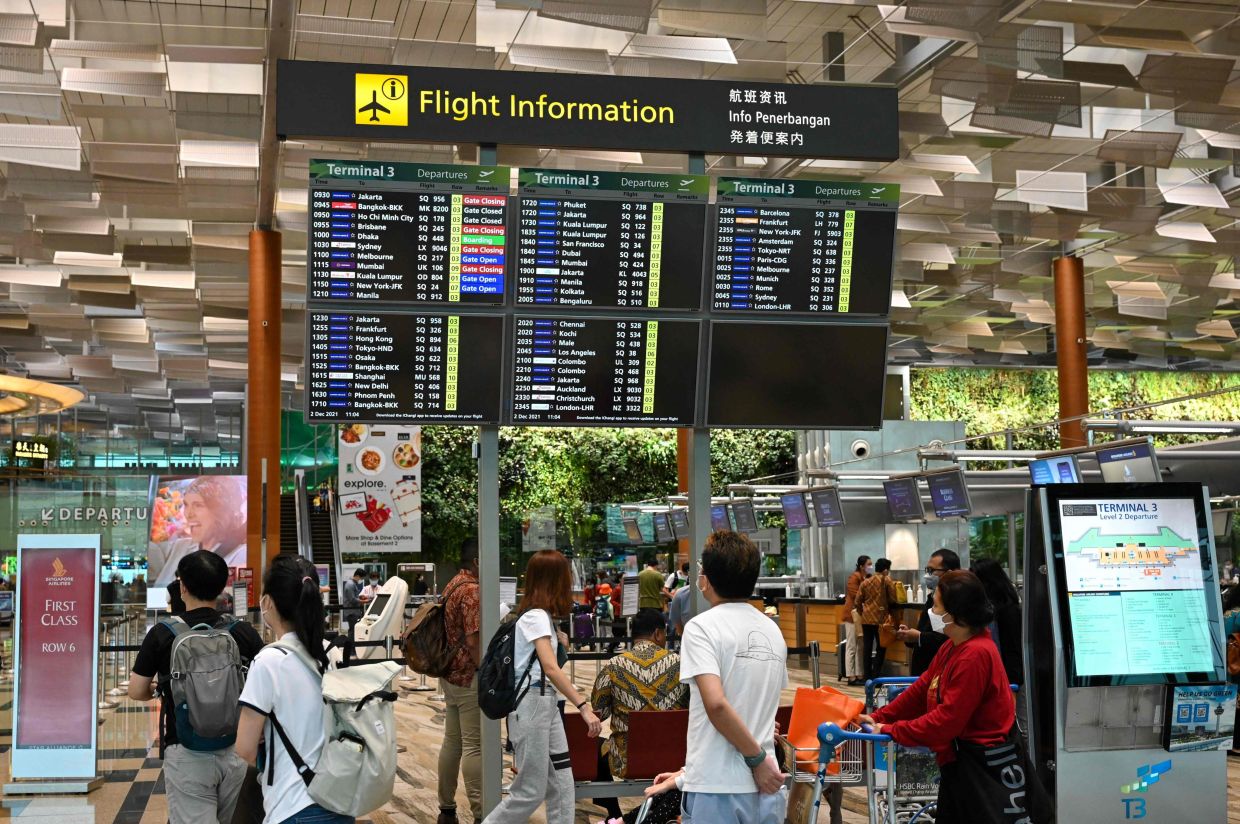
A Singapore court has imposed custodial sentences on a Hong Kong mother and her adult son for their roles in a tumultuous confrontation at Changi Airport's Terminal 3 that spiraled from a family dispute into physical altercations with both a concerned bystander and a police officer. Chan Sui-kwan, aged 65, received a six-month jail term for voluntarily causing hurt with intent to deter a public servant from performing official duties, while her son Chan Wing-kwan, 42, was sentenced to 10 days' imprisonment for the lesser charge of voluntarily causing hurt. The convictions underscore the serious consequences of airport violence in Singapore, where security breaches and assaults on law enforcement carry substantial penalties.
The incident originated on the afternoon of June 30, 2024, when Chan Wing-kwan became increasingly agitated after misinterpreting the actions of nearby passengers as mockery directed at him. His escalating frustration manifested in a physical confrontation with his mother, whom he kicked as tensions mounted between them. A 69-year-old bystander, observing the disturbance and apparently concerned for Chan Sui-kwan's welfare, approached to offer assistance or check on her condition. However, rather than welcoming the intervention, the mother instructed the man to depart the area, while her son responded with aggressive posturing, explicitly challenging the bystander to physical combat.
The situation deteriorated sharply when the pair relocated to another section of Terminal 3's interior. In this secondary location, Chan Wing-kwan again assaulted his mother, and when the same bystander attempted to summon police assistance by activating emergency communication channels, the son launched a direct attack on him. The ensuing physical struggle witnessed Chan Wing-kwan delivering repeated punches to the bystander's head and body, inflicting visible injuries that included a haematoma—a collection of blood outside blood vessels—on the man's head, abrasions across his knee area, and bruising to his fingers. The injuries, while not life-threatening, provided clear evidence of the force deployed during the altercation.
Police officers responding to reports of the disturbance arrived at Terminal 3 and conducted initial interviews with both the mother and son, documenting their passport information as part of standard procedure before returning the travel documents to them. The authorities appeared to have processed the incident as a relatively routine dispute at this juncture, and the pair were not immediately taken into custody. However, their presence at the airport continued into the afternoon hours, and officers subsequently encountered them again in the departure hall area of the terminal.
During this second police encounter, Chan Sui-kwan's behaviour became increasingly obstructive and confrontational. She refused to surrender her passport when requested by officers and began creating a deliberate public disturbance, necessitating her formal arrest. As law enforcement moved to restrain her physically and effect her arrest, she mounted vigorous resistance against the officers' efforts. During the struggle, she bit a police officer on his right forearm, breaking the skin and leaving a visible 1-centimetre mark alongside additional bruising. This assault on a public servant elevated the charges against her and led directly to the more serious conviction for voluntarily causing hurt with intent to deter a police officer.
The judicial timeline for these cases reflects the complexities sometimes encountered in Singapore's court system. Chan Sui-kwan was not brought before the courts until November 18, 2024, several months after the incident, while her son faced charges commencing on April 24 of the previous year. Critically, both defendants failed to appear at a scheduled court hearing on July 22, prompting the issuance of arrest warrants for their apprehension. They were subsequently located and brought into custody, leading to conviction on July 29, with sentencing announced the following Monday.
The case carries broader implications for international travellers transiting through Singapore's airports and highlights the city-state's zero-tolerance approach to violence within transportation hubs. Changi Airport, one of Asia's busiest aviation centres and a crucial gateway for Malaysian, regional, and international passengers, maintains exceptionally strict security protocols and expects all individuals within its premises to comply with local laws. The conviction of foreign nationals for assault at the airport sends a clear message that tourists and transiting passengers cannot rely on leniency when they commit offences, regardless of their nationality or the circumstances they claim provoked their conduct.
For Malaysian readers and travellers, the case underscores the importance of maintaining composure during disputes in foreign jurisdictions, particularly within high-security environments like airports where police presence is substantial and response times are rapid. The escalation from a private family quarrel to assaults on third parties and law enforcement demonstrates how quickly situations can deteriorate and result in serious legal consequences. Singapore's courts have consistently demonstrated their commitment to prosecuting violence against police officers with particular severity, viewing such offences as threats to public order and official authority.
The incident also reflects the challenges faced by airport security and law enforcement when managing multi-party conflicts involving tourists or visiting nationals who may be unfamiliar with local expectations and legal frameworks. While the bystander's attempt to assist Chan Sui-kwan appeared motivated by genuine concern, the family's hostile response to his intervention created circumstances that ultimately led to serious violence and multiple arrests. The case illustrates how assumptions about cultural norms or expectations regarding assistance and personal space can contribute to misunderstandings that spiral into criminal conduct.
Beyond the immediate sentencing outcomes, this case raises questions about airport passenger welfare protocols and the means by which authorities distinguish between genuine disputes requiring intervention and situations where bystander involvement may inadvertently escalate tensions. The decision by initial responding officers not to immediately arrest the pair, despite the documented assault on the bystander, appears to have prolonged the incident and created circumstances for the subsequent assault on police. The subsequent course of events—the couple's continued presence at the airport, their reappearance in the departure hall, and the mother's refusal to cooperate with police—suggests a pattern of non-compliance that precipitated the more serious charges.

