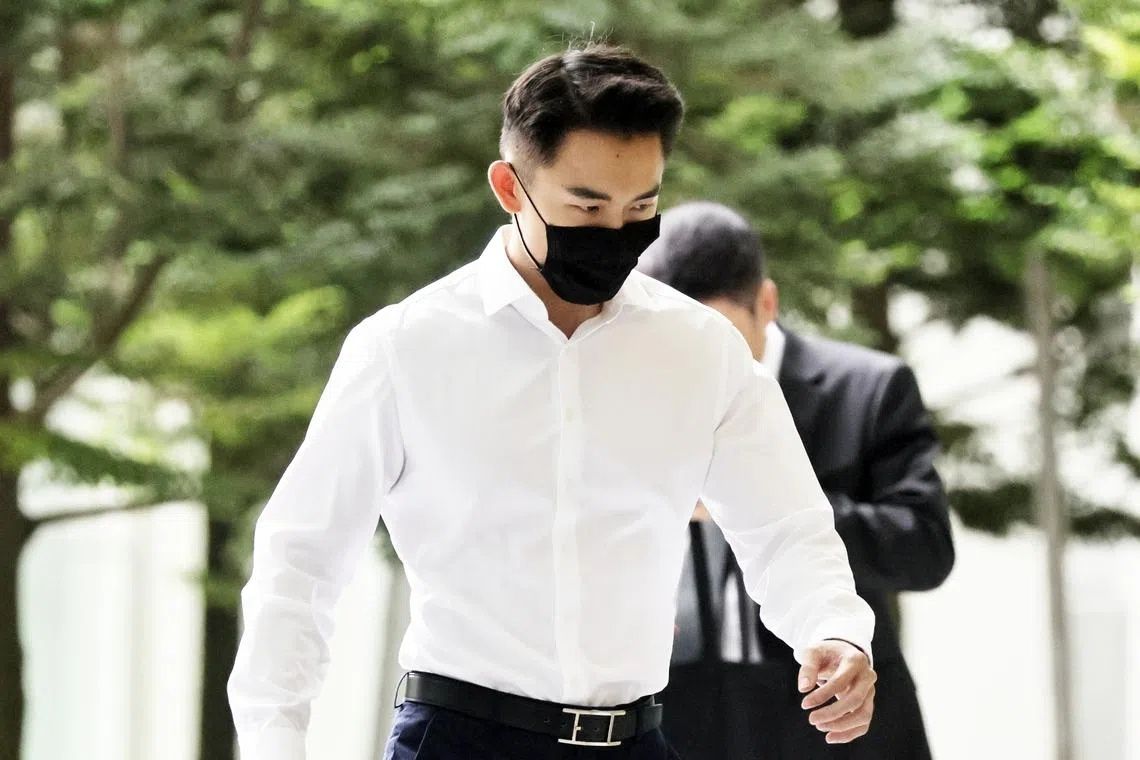
A 36-year-old doctor in Singapore has been found guilty of consuming MDMA, or ecstasy, following a high-profile police operation at a luxury hotel in the island state's Sentosa district. Rayson Lee Rui Sheng was one of 49 men detained during a coordinated raid on a villa at the Sofitel Singapore Sentosa in August 2023. On Tuesday, June 30, Lee and a 29-year-old associate, Tan Li Ming, were each convicted on a single count of drug consumption after their bodily samples tested positive for controlled substances. The case highlights the Singapore authorities' uncompromising stance on narcotics use, particularly among the professional classes, and underscores how high-profile drug busts continue to shape public health discourse across Southeast Asia.
The incident unfolded in the early hours of August 9, 2023, when police received information about suspicious activity at the villa where approximately 50 individuals had gathered. Officers arrived shortly after 5.30 a.m. and discovered substances believed to be controlled drugs on the premises. The Central Narcotics Bureau was subsequently deployed to the scene, where investigators seized multiple drug-related items including ecstasy, ketamine, and various paraphernalia associated with drug consumption. The scale of the operation—arresting 49 party attendees—reflected authorities' determination to disrupt what appeared to be an organized gathering centred on recreational drug use.
Analytical testing by the Health Sciences Authority revealed that both Lee and Tan had consumed MDMA, while their hair samples indicated exposure to both ecstasy and ketamine at some point prior to their arrest. Tan's hair samples showed particularly significant evidence of historical drug use, suggesting a pattern rather than an isolated incident. These findings became central to the prosecution's case, as they contradicted the defendants' assertion that they were unknowing victims of drink spiking. District Judge A Sangeetha, presiding over the case, noted that the scientific evidence provided a compelling foundation for rejecting the men's explanations.
Both defendants mounted a vigorous defence, arguing that someone at the party had deliberately contaminated their beverages without consent. Lee claimed he had consumed three drinks provided by strangers whose identities remained unknown to him. Tan's account was more elaborate: he described witnessing a small group of unidentified men drawing liquid from a bottle using a syringe and injecting the mixture into plastic cups. Tan alleged that after drinking from one such cup, he observed white residue at the bottom. He further claimed that when he questioned an unknown person about the procedure, he was told the substance was "G-water"—a term he professed not to understand at the time.
The prosecution team, represented by Deputy Public Prosecutors Jocelyn Teo and Dhiraj G Chainani, systematically dismantled these defences. Prosecutors argued that the defendants' accounts lacked credibility and were riddled with internal contradictions. They highlighted that despite claiming to be unwitting victims, both men continued to consume additional drinks throughout the evening, a behaviour inconsistent with genuine concern about their safety. The DPPs further contended that neither Lee nor Tan could identify any specific individual who had allegedly spiked their drinks, relying instead on what prosecutors characterized as vague references to "strangers" and "unidentified foreign nationals."
Judge Sangeetha found the defendants' testimonies unconvincing, particularly their claims of innocence. The court noted that their hair samples demonstrated prior drug consumption, indicating that neither man was inexperienced with controlled substances. This historical evidence suggested a pattern of drug use inconsistent with the narrative of unwitting victimization. The judge also observed that the defendants' strategy during trial appeared designed to introduce "hypothetical scenarios and unexplored possibilities" rather than substantive evidence. The ruling underscores how forensic evidence, when combined with behavioural patterns documented during proceedings, can override self-serving accounts of intoxication.
The defendants' legal team, led by lawyer Tania Chin, did not challenge the chemical analysis conducted by the Health Sciences Authority. Instead, they focused their defence on casting doubt about the circumstances of consumption. Their argument that police had failed to seize certain plastic cups that might have contained drug residue was rejected by the prosecution. The DPPs pointed out that even if such cups had been recovered and tested positive, this would merely confirm that the men had consumed drug-laced beverages—not that such consumption was genuinely unknowing. This logical rebuttal exposed the fundamental weakness in the defendants' position: acknowledging drug presence in cups while simultaneously claiming ignorance strains credibility.
Lee's personal account revealed details that the court found problematic. He stated that he had attended an acquaintance's birthday celebration, initially arriving around 8 p.m. on August 8 before departing to visit a nightclub in Clarke Quay. There, he was introduced to Tan, with the two men subsequently travelling separately to the villa in the early morning hours. Lee's testimony that he did not observe pills, drug paraphernalia, or anyone actively consuming drugs contradicted the nature of his own consumption and the broader circumstances of the gathering. This gap between his claims of awareness and his simultaneous assertions of ignorance weakened his credibility with the court.
Tan's defence was similarly problematic. His vivid description of witnessing the syringe-based preparation of drinks suggested he possessed detailed knowledge of what was occurring, yet he claimed not to understand what "G-water" represented. Prosecutors highlighted this inconsistency mercilessly, arguing that a reasonable person observing such obvious drug preparation would either avoid consuming beverages or immediately seek assistance. Instead, Tan's own actions—consuming the drink and subsequently remaining at the party—contradicted his characterization as an innocent victim.
The case carries implications for Singapore's broader approach to drug enforcement and prosecution. The conviction demonstrates that the authorities maintain rigorous evidentiary standards and that courts are reluctant to accept claims of unknowing consumption when forensic evidence and behaviour patterns suggest otherwise. For Malaysian observers, the case underscores how Southeast Asian jurisdictions, while varying in sentencing approaches, share a common commitment to prosecuting drug use aggressively. The difficulty the defendants encountered in mounting a successful drink-spiking defence suggests that regional courts scrutinize such claims intensely.
Lee's reference to consuming a pill in Thailand during June 2023 further complicated his defence narrative. This admission of prior drug use in another jurisdiction, while technically separate from the August charges, demonstrated to the court his familiarity with recreational drugs and his willingness to consume unknown substances. The temporal proximity—just two months before the Sentosa incident—painted a picture of someone actively engaged in drug consumption across multiple settings.
The broader context of the Sentosa raid reflects evolving enforcement strategies in Singapore. Large-scale operations targeting specific venues or gatherings have become more common, often preceded by intelligence gathering. The involvement of the Central Narcotics Bureau alongside uniformed police suggests a coordinated, intelligence-led approach to narcotics enforcement. For Southeast Asia more broadly, this case exemplifies how professional and affluent individuals remain targets of drug enforcement operations, challenging any perception that such enforcement is focused exclusively on lower-income populations or street-level dealers.
The convictions of Lee and Tan, while not resulting in sentences detailed in the available reporting, send a clear message about the futility of mounting unsubstantiated defences in Singapore's courts. The judicial system's insistence on credible evidence and consistent behaviour—rather than accepting speculative narratives—reflects a rigorous approach that appears likely to influence legal strategy across the region. For medical professionals like Lee, the conviction carries additional professional consequences beyond criminal penalties, as medical boards typically review drug-related convictions closely. This case will likely inform how healthcare workers in Singapore and the region approach social gatherings where drugs may be present.

